
TL;DR:
- Remittance alerts provide crucial information on hidden costs, exchange rates, and transfer status, helping users save money. These notifications, delivered through multiple channels, enable timely decisions and transparency in international money transfers. Proper setup and understanding of alert features can significantly reduce fees and enhance transfer security.
If you send money internationally on a regular basis, you already know how quickly costs can spiral beyond what any app initially showed you. The role of remittance alerts goes far beyond a simple ping on your phone. These notifications are the difference between transferring money at a favorable rate and getting hit with fees you never saw coming. Pre-transaction quotes often differ significantly from the true total cost once fees and exchange rate markups are applied. This guide breaks down what remittance alerts are, why they matter, and how to use them to protect your money.
Table of Contents
- Key Takeaways
- The role of remittance alerts and how they actually work
- Why remittance alerts matter more than most senders realize
- How to set up remittance alerts and make them work for you
- Comparing alert features across remittance providers
- My honest take on alerts after years of watching senders get burned
- How Idealremit helps you stay ahead with smarter alerts
- FAQ
Key Takeaways
| Point | Details |
|---|---|
| Alerts reveal hidden costs | Rate and fee alerts show the true total cost before you commit to a transfer. |
| Timing matters | Setting rate alerts before sending lets you lock in better exchange rates and avoid costly windows. |
| Multiple alert types work together | Combining pre-send rate alerts with post-send status alerts gives you full control over every transfer. |
| Provider transparency varies | Some services show full fee breakdowns upfront, while others only reveal costs after you initiate. |
| Privacy is part of the picture | Remittance apps collect extensive user data, so reviewing privacy settings alongside alert settings is worth your time. |
The role of remittance alerts and how they actually work
A remittance alert is a notification sent to you at a specific point in your transfer process. That sounds simple, but there are actually several distinct types, each serving a different purpose.
Rate alerts notify you when the exchange rate for your target currency reaches a threshold you set in advance. If you regularly send money to Morocco, Mexico, or the Philippines, a rate alert means you're not guessing when to send. You're acting on data.
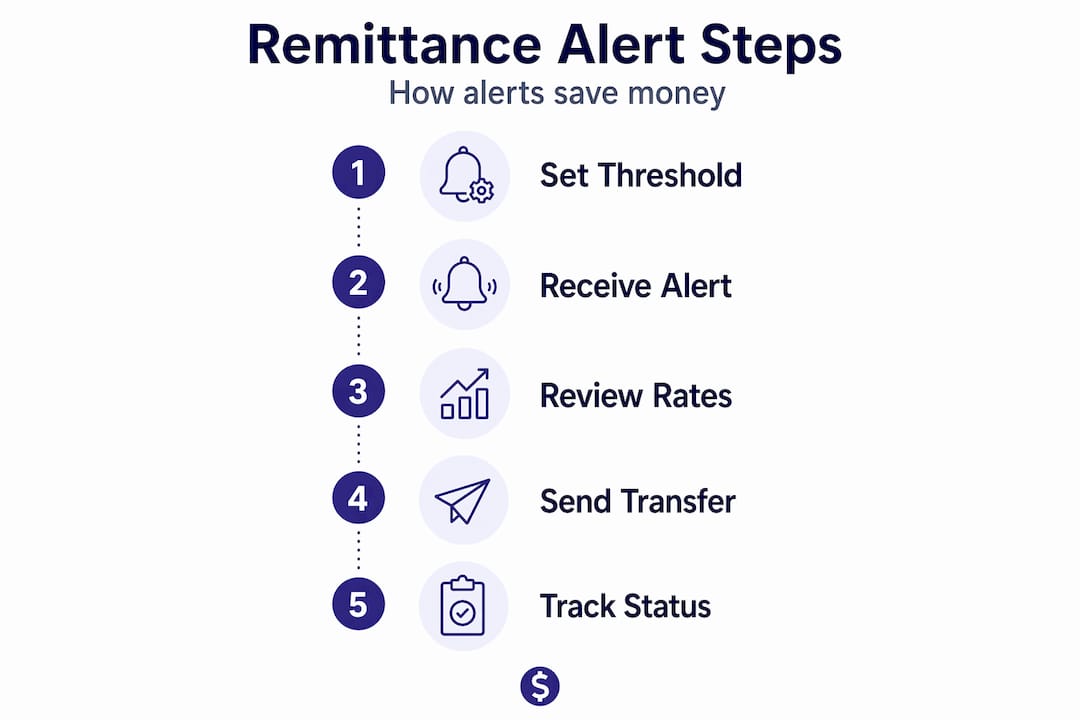
Fee alerts tell you what a transfer will cost in total, including service fees and any exchange rate markup applied on top of the mid-market rate. This is where a lot of senders get caught off guard. App-based sending does not guarantee cheaper or more transparent pricing.
Status alerts track the movement of your transfer after you've sent it. These notifications update you when a payment moves from "processing" to "sent" to "delivered," so you're never left wondering whether the money arrived.
Most major platforms deliver these alerts through a combination of channels:
- Push notifications via a mobile app
- Email alerts with transaction summaries
- SMS messages for status updates or security flags
- In-app dashboards with live rate tracking
Bank-provided tracking features like those found in the ANZ Plus app now include estimated delivery times and fraud monitoring across more than 250 destinations. That kind of integration is becoming the baseline expectation, not a premium feature.
Pro Tip: Set rate alerts at two thresholds: your ideal rate and your acceptable minimum. This gives you flexibility without waiting forever for perfect conditions that may never arrive.
Why remittance alerts matter more than most senders realize
Here's the uncomfortable truth about international money transfers: most users send under $200 multiple times a year, and the average global sending cost sits around 6.5%. On a $150 transfer, that's nearly $10 gone before the recipient sees a cent. Multiply that across twelve transfers a year, and you're losing over $100 annually to costs you may never have fully seen.
The importance of remittance notifications becomes clear when you look at what they actually expose:
- The gap between advertised and real costs. A quote might show a competitive exchange rate, but the fee added at checkout changes the math completely. Alerts that show the all-in amount, including fees and the rate applied, give you an honest number to compare.
- Rate timing opportunities. Exchange rates shift constantly. An alert that catches a favorable rate window for your currency pair could save you more than any coupon or loyalty program ever would.
- Transfer delays and when to escalate. Tracking status includes discrete states like processing, sent, and delivered. When a transfer stalls, knowing which stage it's stuck at tells you whether to wait or request a SWIFT trace.
- Fraud and compliance flags. Alerts go beyond pricing. FinCEN recommends vigilance on suspicious cross-border financial activity. Legitimate remittance alert systems include security notifications that flag unusual account behavior before it becomes a real problem.
"The most effective remittance alerts provide the all-in final delivered cost including fees and exchange rates, not just mid-market rates." Understanding why exchange rates matter is the foundation of using any alert system well.
The impact of alerts on remittance decisions is real and measurable. A sender who acts on a rate alert at the right moment, rather than sending out of habit on a Friday afternoon, can consistently deliver more money to their family without spending a single cent more.
How to set up remittance alerts and make them work for you
Knowing the benefits of money transfer alerts means nothing if your notification settings are still at their defaults. Here's how to actually set alerts up and get the most out of them.
- Enable app notifications first. Go into your remittance app's settings and turn on all push notifications. Most apps have them off or set to minimal by default. This is the fastest fix with the biggest payoff.
- Set a target rate alert. In apps that support it, such as those available through comparison platforms like Idealremit, enter the exchange rate you want to hit for your specific currency pair. The app will alert you when the market reaches that level.
- Activate status notifications for every transfer. Make sure you're getting updates at each stage: initiation, processing, delivery. Real-time updates before sending are critical, but post-send status alerts are how you catch problems early.
- Add email as a backup channel. Apps crash. Phones get lost. Having alerts mirrored to your email means you won't miss a critical fee disclosure or a fraud flag just because your phone was on silent.
- Review your alert content, not just the subject line. Many senders open a status alert, see "Transfer processing," and close it. The actual numbers inside, including the exact rate applied and the fees charged, are where your real information lives.
- Compare alerts across providers before committing. Use a provider comparison tool to see which services offer the most transparent notifications. The alert system of a provider tells you a lot about how honest they are about their pricing overall.
A common pitfall: relying on a rate alert that only shows the mid-market rate, not the rate your provider is actually offering. Always check that the alert reflects the provider's real rate. A full fee breakdown at every stage, as Wise consistently provides, should be your benchmark for what good looks like.
Pro Tip: If a provider doesn't offer pre-send rate alerts with the total delivered amount, treat that as a red flag. Transparency in alerts mirrors transparency in pricing.

Comparing alert features across remittance providers
Not all remittance alert systems are built the same. The table below compares what you can realistically expect from different tiers of providers.
| Feature | Full-transparency providers | Mid-tier providers | Basic providers |
|---|---|---|---|
| Pre-send rate alerts | Yes, with all-in cost shown | Partial, mid-market only | Rarely available |
| Fee disclosure in alerts | Full breakdown before confirmation | Disclosed at checkout only | Often omitted |
| Status update frequency | Real-time at each stage | 1 to 2 updates total | Delivery confirmation only |
| Fraud and security alerts | Yes, with account monitoring | Limited to login alerts | None or minimal |
| Alert delivery channels | App, email, SMS | App and email | App only |
| Privacy controls for alerts | Granular opt-in settings | Standard opt-in | Limited user control |
Few companies have robust privacy safeguards for the data collected through alerts. Industry advocates call for stricter data minimization, which means you should check what data your alert system shares and with whom. Reviewing your privacy settings in the same session that you configure your alerts is a smart habit.
The trade-off between convenience and completeness is real. SMS alerts are immediate but often truncate fee information. In-app alerts are more detailed but depend on a stable app experience. The best remittance communication strategies combine multiple channels so that speed and accuracy don't become an either/or choice.
My honest take on alerts after years of watching senders get burned
I've spent years watching people make expensive transfer decisions that better alerts would have prevented. The gap between what senders believe they're paying and what they actually pay is not small. It's often 20 to 30 percent higher than the initial quote suggested.
The thing most users miss is that rate alerts and status alerts solve completely different problems. A rate alert before you send is a cost-saving tool. A status alert after you've sent is a tracking tool. They are not interchangeable, and treating them as such is where I see people leave money on the table. You can't use a delivery notification to fix a bad rate you already locked in.
I'm also skeptical of anyone who says they fully trust one app to handle all of this. I always cross-reference an alert with a security checklist and verify the rate independently before sending significant amounts. Apps can glitch. Rates in alerts can be cached. One extra step of verification, taking thirty seconds, can mean the difference between a good transfer and a costly one.
On privacy: the data remittance apps collect through alert systems is more extensive than most users realize. Know what you're opting into before you turn on every notification type available.
— Brahim
How Idealremit helps you stay ahead with smarter alerts
Idealremit was built for exactly the situation this article describes: you want to send money internationally and you need to know the real cost before you commit, not after.
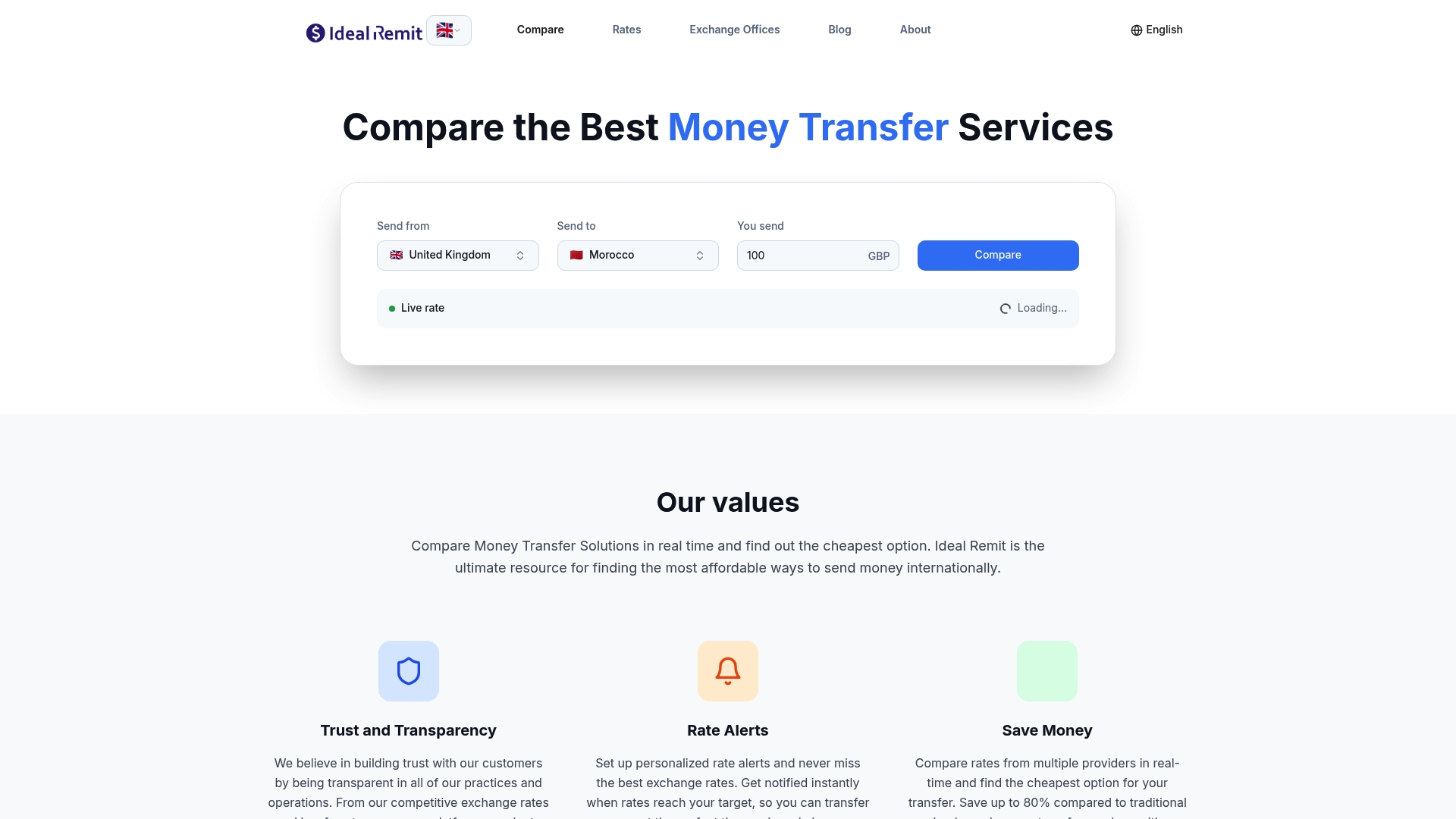
On Idealremit, you can set personalized rate alerts for your specific currency pair and get notified when the rate hits your target. The platform aggregates live rates from providers like Western Union, Wise, Remitly, and MoneyGram, so you're comparing real numbers, not marketing headlines. Every comparison includes the full fee breakdown, giving you the all-in cost that most apps hide until checkout. With coverage across 100-plus countries and savings of up to 80% compared to traditional banks, the right alert at the right moment can genuinely change how much your family receives. Start comparing rates and set your first alert today.
FAQ
What is the role of remittance alerts in saving money?
Remittance alerts notify you when exchange rates hit your target threshold and reveal the true all-in cost of a transfer, including fees. Acting on these alerts before sending helps you avoid costly rate windows and hidden charges.
How do remittance alerts work in practice?
Alerts are delivered via app push notifications, email, or SMS at key points in your transfer, including before you send (rate and fee alerts) and after (status updates like processing, sent, and delivered).
How do you set up remittance alerts effectively?
Enable push notifications in your app, set a target exchange rate for your currency pair, activate status updates for every transfer stage, and add email as a backup. Always verify that the alert shows the all-in cost, not just the mid-market rate.
Why use remittance alerts instead of just checking rates manually?
Exchange rates move constantly. Manual checks mean you're always reacting. A pre-set rate alert means the market comes to you, so you send at the right time without monitoring rates around the clock.
Are remittance alert systems secure?
Most reputable providers include fraud and security flags within their alert systems, but privacy protections vary widely. Review your app's data-sharing settings alongside your notification preferences to understand what information is being collected and shared.