
TL;DR:
- Transparency in money transfer involves upfront disclosure of fees, exchange rates, delivery times, and terms of service before confirmation. It reduces hidden costs, builds trust, and improves compliance by enabling real-time tracking, standardized messaging, and clear fee explanations. Leading providers like Wise demonstrate that full transparency drives customer loyalty, operational efficiency, and competitive advantage in cross-border payments.
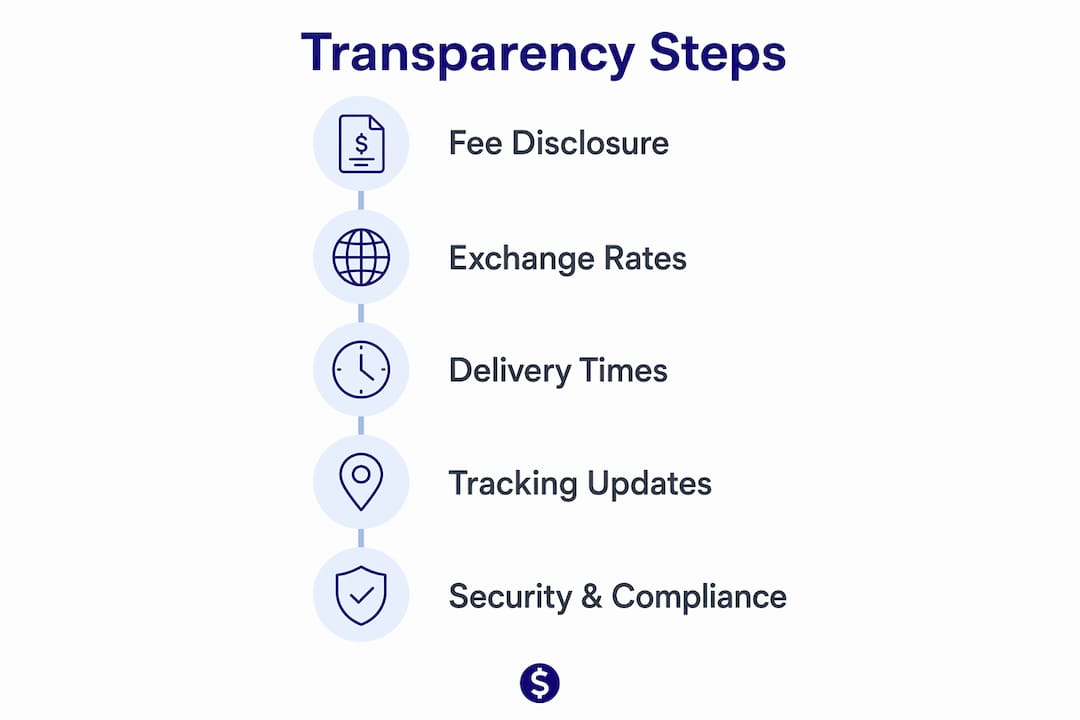
Transparency in money transfer is defined as the upfront disclosure of all fees, exchange rates, delivery times, and terms of service before a transaction is confirmed. Without it, senders lose money to hidden charges and recipients receive less than expected. The G20 roadmap mandates that providers show total costs and delivery times before confirmation, signaling that transparency is now a regulatory baseline, not a competitive bonus. For individuals sending remittances and businesses managing cross-border payments, understanding what transparency means in practice is the difference between a fair deal and an expensive surprise.
How does transparency in money transfer affect cost clarity?
The role of transparency in money transfer starts with pricing. Every provider must show the total transaction cost, including the sending fee, any receiving fee, and the foreign exchange markup, before you commit. When that information is missing or buried, you pay more than you planned.
The funding method alone creates dramatic cost differences. Consumer Reports found that fees for a $200 transfer range from $2.47 for a bank transfer to $14.39 when using a credit card. That is a nearly sixfold difference on a single transaction, and most users never see that comparison before they click "send." Transparent providers surface this data at the point of decision, not after.
Exchange rate markups are the second, often larger, hidden cost. "Zero-fee" labels frequently mask exchange rate markups that cost consumers billions annually. A provider advertising no fees may still apply a 2% to 4% spread on the exchange rate, which on a $1,000 transfer means $20 to $40 disappears silently.
Intermediary banks compound the problem. Correspondent bank deductions can add $15 to $50 per intermediary hop without any disclosure to the sender. This is what analysts at Global Finance Magazine call the "black hole" in cross-border payments. A provider may genuinely charge zero fees, yet the recipient still gets less because an intermediary bank quietly deducted its cut.
Regulators are responding. Nigeria's Central Bank now requires International Money Transfer Operators to benchmark rates against Bloomberg BMatch for real-time price discovery, closing the gap between official and parallel market rates. This kind of regulatory mandate forces providers to compete on disclosed, verifiable pricing rather than opaque markups.
Pro Tip: Before sending any transfer, check the mid-market rate on Google or XE.com, then compare it to the rate your provider offers. The difference is the hidden markup you are paying.
Here is a quick breakdown of how funding method affects total cost transparency:
| Funding method | Typical fee range | Exchange rate risk | Transparency challenge |
|---|---|---|---|
| Bank transfer | Low ($2 to $5) | Low | Intermediary deductions |
| Debit card | Moderate ($3 to $8) | Low to moderate | FX markup varies |
| Credit card | High ($10 to $20) | Moderate | Cash advance fees added |
| Digital wallet | Variable | Moderate | Markup often undisclosed |
For a deeper look at how funding methods compare on cost and speed, Idealremit's guide on bank transfer alternatives breaks down the real numbers across popular providers.
What is the role of transparency in payment speed and tracking?
Knowing when your money arrives matters as much as knowing what it costs. Transparency in delivery time and payment status is the second pillar of trustworthy remittance. The G20 roadmap requires providers to display expected delivery times and offer payment tracking before a transfer is confirmed. This is not a nice-to-have feature. It is a baseline standard that the world's largest economies are now enforcing.
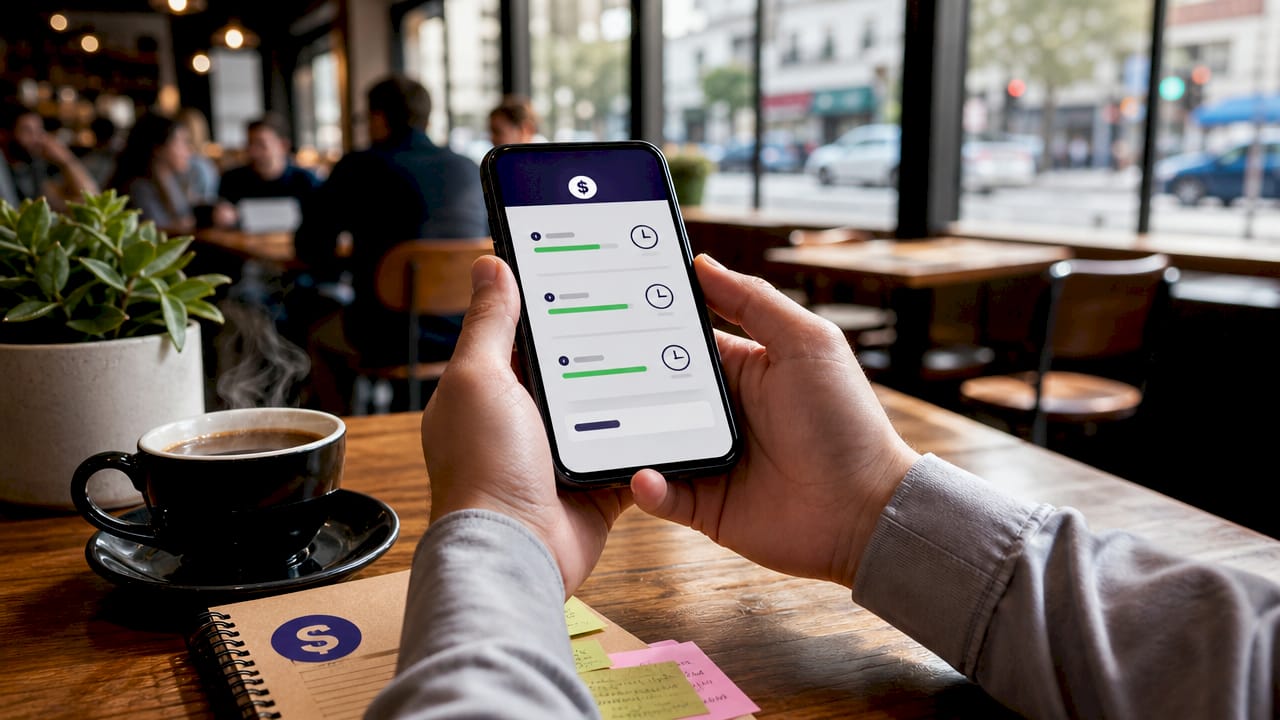
Real-time tracking reduces uncertainty for both senders and recipients. When a provider like Flip shows live payment status updates in its mobile app, support ticket volume drops because users can answer their own question: "Where is my money?" That operational benefit translates directly into lower costs for the provider and a better experience for the customer.
Transparency in timing also helps consumers plan. A migrant worker sending money home for a school fee deadline needs to know whether the transfer takes 30 minutes or three business days. Providers that display this clearly before confirmation earn trust. Those that bury delivery estimates in fine print or show only best-case scenarios erode it.
Look for these signals when evaluating a provider's commitment to tracking transparency:
- Live transaction status updates accessible via app or SMS
- Estimated arrival time shown before payment confirmation
- Compliance badges or regulatory license numbers displayed prominently
- Notification alerts when funds are received by the recipient
Pro Tip: Screenshot the delivery time estimate shown before you confirm a transfer. If the money arrives late, that record is your evidence when contacting customer support.
How does transparency enhance security and compliance?
Transparency in financial transactions is not just a consumer benefit. It is a structural defense for the entire payment system. Providers that share clean, standardized data move money faster and trigger fewer compliance delays.
Societe Generale analysts describe transparency as a defensive shield that reduces false-positive compliance alerts and improves both security and speed. The mechanism is ISO 20022, a standardized messaging format that carries richer data about the sender, recipient, and purpose of a payment. When compliance systems receive complete, structured data, they flag fewer legitimate transactions as suspicious. Fewer false positives mean fewer delays and lower operational costs.
Know Your Customer (KYC) and Anti-Money Laundering (AML) requirements depend on transparent data sharing. A provider that collects and transmits complete sender and recipient information enables faster automated screening. One that passes incomplete data forces manual review, which slows the transfer and increases the risk of regulatory penalties.
The security benefits extend to fraud detection. When payment data is structured and traceable, anomalies stand out. A sudden change in recipient country, an unusual transaction amount, or a mismatch between declared purpose and payment pattern becomes visible in a transparent system. In an opaque one, fraud hides in the gaps.
Key compliance transparency markers to look for in a provider:
- Full disclosure of KYC document requirements before registration
- Clear explanation of why a transfer was delayed or flagged
- Published AML policy and regulatory license information
- ISO 20022 compatible messaging for institutional transfers
For a practical checklist on evaluating provider security standards, the Idealremit security checklist guide covers the key questions to ask before sending.
How do leading providers compare on transparency?
Not all providers treat transparency the same way. The difference between a transparent and an opaque provider is measurable in dollars and in trust.
Wise is the most cited example of fee transparency done right. The platform shows the mid-market exchange rate, the exact fee in local currency, and the estimated arrival time on a single screen before you confirm. Wise calls transparency a "secret growth lever," noting that providers showing full fees and payment status see higher customer retention and more product adoption. That is a commercial argument for honesty, and it works.
Other providers take a less direct approach. Some display fees only after you enter recipient details. Others show a favorable exchange rate on the homepage but apply a different rate at checkout. This gap between advertised and actual cost is where consumer trust breaks down.
For businesses, the stakes are higher. Fee transparency enables accurate pricing, structured contracts, and predictable cash flow. A freelancer receiving $5,000 from a U.S. client needs to know exactly what will land in their account, not discover a $150 shortfall after the fact. Businesses that build payment planning around disclosed costs avoid cash flow surprises and negotiate better terms with clients.
The trust advantage of transparency also compounds over time. Customers who understand exactly what they are paying are more likely to return, refer others, and adopt additional services. That is why trusted remittance providers consistently outperform opaque competitors on retention metrics.
Key takeaways
Transparency in money transfer is the single most effective tool for reducing hidden costs, building trust, and satisfying compliance requirements across international remittances.
| Point | Details |
|---|---|
| Upfront cost disclosure | Always verify total fees, FX markup, and intermediary charges before confirming a transfer. |
| Funding method matters | Bank transfers cost as little as $2.47 vs. $14.39 for credit cards on a $200 transfer. |
| Tracking builds trust | Providers showing real-time payment status reduce uncertainty and support costs for users. |
| ISO 20022 improves security | Standardized messaging reduces false-positive compliance alerts and speeds up legitimate transfers. |
| Transparency drives retention | Providers like Wise prove that full fee disclosure increases customer loyalty and product adoption. |
Why transparency is the real competitive edge in remittances
I have spent years watching the remittance industry treat transparency as a compliance checkbox rather than a business strategy. That framing is wrong, and the providers still holding onto it are losing ground fast.
The most revealing shift I have seen is how Wise turned radical honesty into a growth engine. Showing the mid-market rate and the exact fee on one screen sounds obvious. But when every competitor was hiding markups in the exchange rate, that single design decision made Wise the default choice for millions of informed senders. The lesson is not that transparency is nice. It is that opacity is a liability the moment a better-informed competitor enters your market.
For businesses, I think the underused insight is this: fee transparency is a negotiation tool. When you know the exact cost of a cross-border payment before it leaves your account, you can build that cost into contracts, set client expectations accurately, and avoid the awkward conversation about why an invoice payment came up short. Most businesses I talk to still treat transfer fees as an afterthought. The ones that treat them as a line item in their pricing model consistently manage cash flow better.
The 2026 regulatory push, from G20 mandates to Nigeria's Bloomberg BMatch requirement, is accelerating what the market was already demanding. Providers that invested early in ISO 20022 adoption, real-time tracking, and clear fee disclosure are not just compliant. They are faster, cheaper to operate, and more trusted. The technology investment required is real, but the providers treating it as a cost rather than an asset are misreading the market entirely.
My practical advice: if a provider cannot show you the total cost, the exchange rate, and the delivery time on one screen before you confirm, treat that as a red flag. Not because they are necessarily dishonest, but because they have not built the systems that make honesty possible at scale.
— Brahim
Compare providers transparently with Idealremit

Idealremit is built on the principle that you should see every cost before you commit. The platform compares money transfer services side by side, showing real-time exchange rates, total fees, and estimated delivery times across providers including Wise, Remitly, Western Union, and MoneyGram. You can set personalized rate alerts, track live exchange rates, and calculate potential savings across more than 100 destination countries. For users tired of discovering hidden fees after the fact, Idealremit surfaces the full picture upfront, so the decision you make is based on complete information, not marketing copy. Start comparing at Idealremit and find the most transparent option for your next transfer.
FAQ
What does transparency mean in money transfers?
Transparency in money transfers means full upfront disclosure of all fees, exchange rate markups, delivery times, and terms of service before a transaction is confirmed. The G20 roadmap now requires providers to meet this standard as a baseline.
Why do "zero-fee" transfers still cost money?
Zero-fee transfers often apply exchange rate markups that function as a hidden fee. Consumer Reports testing found these markups cost consumers billions annually, making the mid-market rate comparison the only reliable way to measure true cost.
How does transparency affect money transfer security?
Transparent data sharing using ISO 20022 messaging reduces false-positive compliance alerts, speeds up AML screening, and improves fraud detection. Societe Generale analysts identify this as a key mechanism for making cross-border payments both faster and safer.
What are intermediary bank deductions and why do they matter?
Intermediary banks can deduct $15 to $50 per hop in a cross-border payment chain without notifying the sender. These deductions explain why recipients sometimes receive less than expected even when the sending provider advertises zero fees.
How can I tell if a money transfer provider is truly transparent?
A transparent provider shows the exact fee, the exchange rate compared to mid-market, and the estimated delivery time on one screen before you confirm. Providers that require you to enter full recipient details before revealing the total cost are not meeting the transparency standard.