$442B Lost in 2025: How Expats Can Avoid Remittance Scams
If someone contacts you unexpectedly and pressures you to send money by wire, gift card, or crypto, stop. Hang up, verify the request through a phone number or website you already trust, and never pay through a method you can’t reverse. That single habit, backed by FTC guidance and tools like Idealremit’s provider comparisons, blocks most remittance fraud before it starts.
TL;DR:
- Most remittance scams rely on creating urgency to pressure victims into paying through irreversible methods like wire transfers or crypto.
- Verifying unexpected requests by calling a trusted number and requesting video confirmation can prevent scammers from succeeding.
- Using credit cards or reputable remittance platforms offers better protections and traceability compared to wire or cash pickups.
- Immediate action includes contacting your bank, reporting the fraud, changing passwords, and preserving evidence to improve recovery chances.
- Comparing provider rates and licensing with a tool like Idealremit helps ensure safer, traceable transfer options before sending money.
Table of Contents
- What Are the Most Common Remittance Scam Types?
- What Red Flags Signal a Money Transfer Scam?
- Which Payment Methods Are Safest for Sending Money Abroad?
- What Should You Do If You Already Sent Money to a Scammer?
- How Idealremit’s Comparison Tools Support Safer Transfers
- A Few Mental Rules Worth Keeping
- Check Your Provider Before You Send, Not After
- Sources
- FAQ
What Are the Most Common Remittance Scam Types?
Scammers running money transfer schemes tend to recycle the same five playbooks, dressed up differently depending on who they’re targeting. Once you recognize the pattern, the specific story stops mattering.
- Impersonation scams: Someone claiming to be from the IRS, Social Security, or your bank calls demanding immediate payment to avoid arrest or account closure. Real government agencies never ask for wire transfers, cryptocurrency, or gift cards as payment.
- Family emergency scams: A “relative” calls in distress, often using AI voice cloning to sound convincingly like a real person, insisting they need cash wired now and begging you not to tell anyone else in the family.
- Marketplace and overpayment scams: A buyer sends a check for more than the agreed price and asks you to wire back the difference. The original check later bounces, and you’re out the full amount.
- Investment and job scams: You’re promised huge returns or a work-from-home salary, but first you need to wire an “activation fee” or transfer crypto to unlock your earnings.
- Cash pickup and courier scams: Someone arranges for you to wire money that a “courier” will collect in person, often targeting people new to a country or unfamiliar with local norms.
Each of these relies on the same trick: creating urgency so you act before you think.
What Red Flags Signal a Money Transfer Scam?
Certain warning signs show up in nearly every version of this fraud. Watch for a request to pay by wire, cryptocurrency, or gift card instead of a traceable method. Notice if the caller insists on secrecy, tells you not to discuss the request with family or a bank teller, or pressures you to act within minutes. Mismatched contact information, like a “bank” calling from a personal cell number, is another giveaway.
Run every unexpected payment request through this checklist before you touch your wallet:
- Pause. Do not respond immediately, no matter how urgent the message sounds.
- Call a known number. Use a number saved from a previous statement or the official website, never one given in the suspicious message itself, since best practice from the Social Security Administration is to always verify independently.
- Ask for video or a safe word. If it’s a family emergency, request a video call or a private phrase only your real relative would know.
- Search for complaints. Look up the company or phone number online alongside the word “scam” before sending anything.
- Confirm recipient details twice. For cross-border transfers, double-check the account number and name match exactly what the recipient told you directly, not what appeared in an email or text.
Pro Tip: Set up a family safe word now, before you ever need it. AI voice cloning can mimic a loved one’s voice convincingly enough to fool close relatives, and a pre-shared phrase is one of the few defenses that actually works against it.
Which Payment Methods Are Safest for Sending Money Abroad?
Not all payment methods carry the same risk if something goes wrong. Wiring money or arranging cash pickup for someone you haven’t met in person is close to handing over cash on the street. The FTC warns plainly that wired funds are usually gone the moment they’re collected.
Compare your options before choosing one:
- Wire transfers and cash pickup: Fast, but almost impossible to reverse once the recipient collects the funds.
- Cryptocurrency: Similarly irreversible, and a favorite among scammers precisely because there’s no chargeback process.
- Credit cards: Usually carry dispute protections, giving you a real path to recover funds if something goes wrong.
- Bank transfers: Faster and cheaper than cards, but recourse is limited once the money clears.
- Reputable remittance platforms: Offer tracking, receipts, and verification steps that make fraud easier to catch and easier to trace.
For a brand-new recipient, send a smaller test amount first and raise the limit only after you’ve confirmed everything checks out.
What Should You Do If You Already Sent Money to a Scammer?
Speed matters more than almost anything else once you suspect fraud. Every hour you wait reduces the odds of getting funds back.
- Contact your bank or payment provider immediately. Ask about a recall, reversal, or freeze, and reach out to both the sending and receiving institutions with your transaction ID ready.
- Report the fraud. File a report at ReportFraud.ftc.gov, notify local police, and alert the payment platform’s fraud team directly.
- Secure your accounts. Change passwords, turn on multifactor authentication, and check for any other suspicious activity tied to the same login.
- Preserve evidence. Save screenshots, message headers, and receipts. This documentation speeds up any investigation and improves your odds of recovery.
Scale gives some context for how common this is: an estimated $442 billion was lost globally to direct financial fraud in 2025, and 57% of adults worldwide encountered or fell victim to a scam that year. You are not the only one this has happened to, and reporting quickly genuinely helps.
How Idealremit’s Comparison Tools Support Safer Transfers
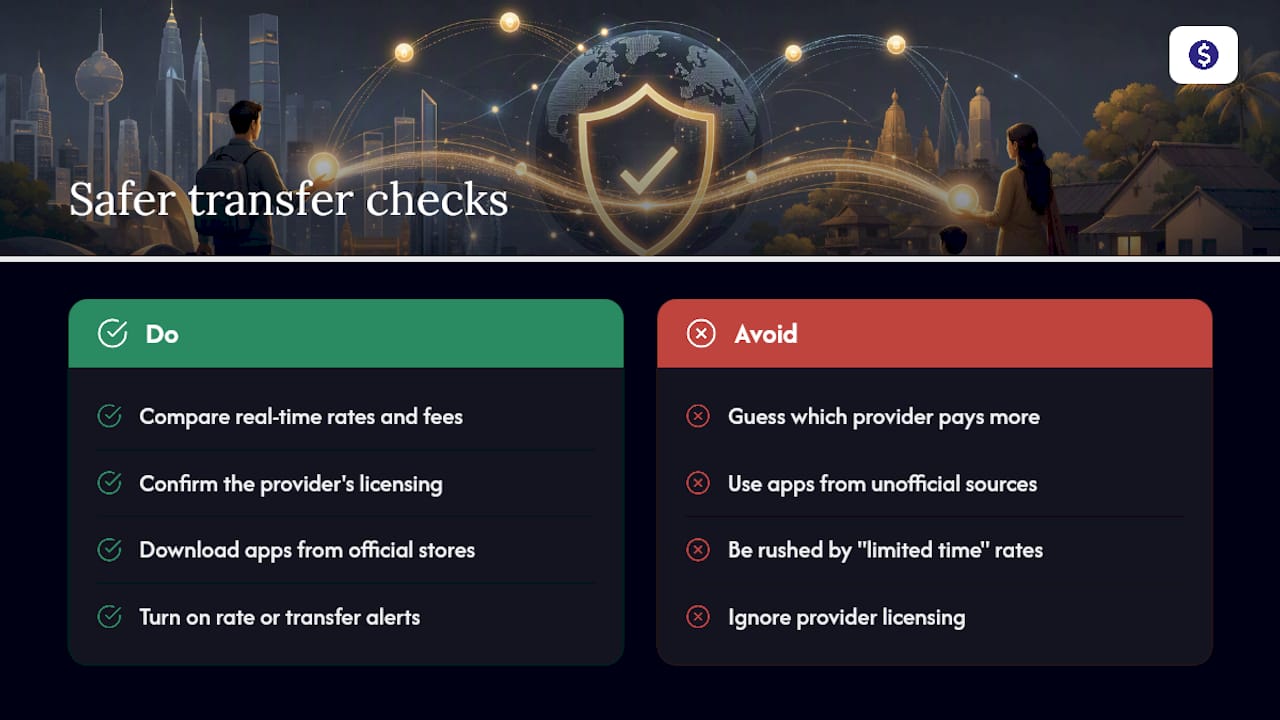
Checking a provider before you send money is part of good verification practice, not an afterthought. Idealremit aggregates real-time rates and fees across supported providers, so you can compare delivered amounts instead of guessing which one actually gives your recipient the most. Before choosing a corridor, confirm the provider carries proper licensing, download apps only from official app stores, and turn on rate or transfer alerts so you’re not rushed into a decision by a “limited time” exchange rate. Small habits like these close off the exact gaps scammers count on.
A Few Mental Rules Worth Keeping
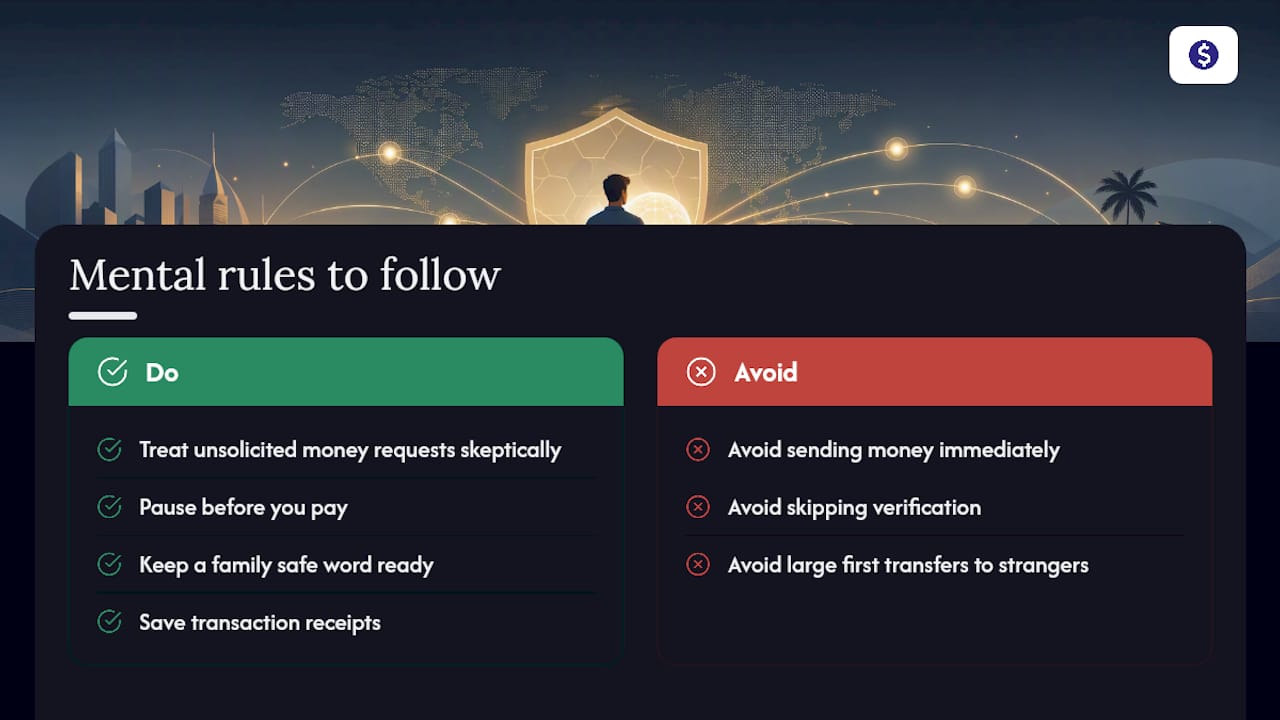
Treat every unsolicited money request the way you’d treat a stranger asking to borrow your car: politely, but with real skepticism. Make “pause before you pay” automatic, not optional. Keep a family safe word ready, save your transaction receipts, turn on account alerts, and cap how much you send to anyone new until trust is earned over several transfers.
The scams that succeed almost always share one ingredient: speed. Slow the interaction down and most of them fall apart on their own.
Check Your Provider Before You Send, Not After
You can get a clear, side-by-side view of what providers actually charge and deliver before you commit any money by comparing real-time rates, fees, and licensing details across supported providers in one place.

That comparison matters most in exactly the moments this article covers. Before sending to a new recipient, check Ideal Remit’s supported providers to confirm you’re using a licensed, trackable option instead of an unfamiliar one a scammer suggested. If you’re sending to a cash pickup location, review local partner details for that corridor so you know exactly who’s handling the funds on the other end. Pair that with Idealremit’s rate alert tools and a quick read of the transfer security checklist, and you’ve built a verification habit that takes minutes, not hours. Start by comparing providers for your next transfer before you enter a single dollar amount.
This article is general information, not a substitute for advice from a qualified financial advisor. Consult a qualified financial professional about your own circumstances before acting on anything here.
Sources
- Pause Before You Pay | A Guide to Avoiding Money Transfer Scams - GCA | Global Cyber Alliance
- How to spot scams: how someone asks you to pay - FTC
- What to know before you wire money - FTC
- Outsmart AI voice scammers - Bitdefender
FAQ
How can I tell if a money transfer request is a scam?
Look for pressure to act fast, a demand for wire transfer, crypto, or gift cards, and any request to keep the payment secret from family or your bank.
Can I get my money back after a wire transfer scam?
Recovery is unlikely but not impossible if you contact your bank and the receiving institution immediately with your transaction ID and request a recall.
What’s the safest way to send money to family abroad?
Use a licensed, trackable remittance provider rather than wiring cash directly, and confirm licensing and fees through a comparison tool like Idealremit before you send.
Should I trust a caller who says they’re from the IRS or Social Security?
No. Legitimate agencies never demand immediate payment by wire, crypto, or gift card, so any such demand is a clear scam signal.
How much does Idealremit cost to use?
Current pricing and provider fees are available directly on the Idealremit site when you compare a specific transfer corridor.