Best Alternatives to Bank Transfers for Sending Money Abroad

TL;DR:
- Alternatives to bank transfers, such as Wise and ACH, are faster, cheaper, and more transparent, reducing costs for international and domestic sends. Selecting the right service depends on transfer size, speed needs, security, limits, and country coverage, with options like Zelle, Venmo, and stablecoins offering specific advantages. Combining Wise for personal international transfers and Western Union or Remitly for cash pickups covers most remittance needs efficiently in 2026.
Bank transfers have a loyalty problem. People keep using them out of habit while quietly absorbing fees that can reach $45 per transaction, exchange rate markups that shave 3 to 5 percent off every send, and processing times that stretch to five business days. If you send money internationally with any regularity, those costs add up fast. The good news is that the alternatives to bank transfers available today are faster, cheaper, and often more transparent than anything your bank offers. This guide walks you through exactly what to look for and which options are worth your time in 2026.
Table of Contents
- Key takeaways
- How to evaluate alternatives to bank transfers
- 1. ACH transfers
- 2. Zelle
- 3. Venmo
- 4. Wise
- 5. Remitly
- 6. Western Union
- 7. OFX
- 8. Stablecoin transfers
- Quick comparison: fees, speed, and security
- Matching the right service to your situation
- My honest take on bank transfer alternatives in 2026
- Find the best rate for your next transfer with Idealremit
- FAQ
Key takeaways
| Point | Details |
|---|---|
| Bank transfers cost more than you think | Hidden exchange rate markups often cost more than visible wire fees combined. |
| Speed varies widely by method | Peer-to-peer apps and stablecoin transfers can settle in minutes while bank wires take days. |
| Match the method to the situation | Small domestic sends, large international transfers, and urgent cash pickups each have an ideal solution. |
| Transparency is non-negotiable | Always compare the total cost including fees and exchange rate markup before sending. |
| Comparison tools save real money | Platforms like Idealremit let you see real-time rates across dozens of providers at once. |
How to evaluate alternatives to bank transfers
Not every alternative is better for every situation. Before you pick a service, you need a clear framework for comparing them. Here are the five factors that actually matter.
Fees and exchange rate transparency. Some services advertise zero fees but make their margin on the exchange rate. A service charging a $5 flat fee with the mid-market rate often costs far less than a "free" transfer with a 2.5 percent markup. Always calculate the total cost of the transfer, not just the advertised fee.
Transfer speed. Domestic peer-to-peer transfers through apps like Zelle can be instant bank-to-bank. International transfers range from minutes with services like Remitly Express to two or three business days with standard options. Know your deadline before you choose.
Security and regulatory compliance. Look for services licensed and regulated in their operating countries. Strong two-factor authentication, fraud monitoring, and clear dispute resolution policies matter more than you realize until something goes wrong.
Transfer limits. ACH transfer limits vary significantly from $3,500 to $25,000 or more per day depending on the bank and account type. New accounts on any platform often have lower limits due to verification status, which can create unexpected friction on your first large send.
Country availability. A service might work perfectly for US to Mexico transfers but have no coverage for the Philippines. Confirm that both the sending and receiving countries are supported before you commit to a platform.
Pro Tip: Before you send your first transfer through a new service, send a small test amount. This confirms the recipient's details are correct and gives you a feel for the delivery time with zero risk.
1. ACH transfers
Automated Clearing House transfers are one of the most underused money transfer alternatives in the US. They move money directly between bank accounts through a domestic network, typically at no cost and with no need for the recipient to download any app. The main trade-off is speed. Standard ACH takes one to three business days, but ACH transfers are dependable and low-cost for domestic transfers when timing is flexible. They're ideal for recurring payments, rent, and payroll. NACHA raised same-day ACH limits to $1 million per payment in 2022, making them viable even for larger business transactions.

2. Zelle
Zelle is built into the mobile banking apps of most major US banks, and it processes transfers in seconds with no fees. Money moves directly from one bank account to another, which makes it more appropriate for larger trusted transfers than wallet-based apps. The critical caveat: Zelle lacks buyer protection for purchases. Use it only with people you know. It's strictly a domestic tool, so it doesn't help you with international transfers, but for paying a landlord or splitting a large expense with family, it's hard to beat.
3. Venmo
Venmo operates as a digital wallet with social features that younger users find intuitive. You fund a Venmo balance and can send money to contacts within the app. Standard transfers to your bank account take one to three business days and are free. Instant transfers carry a 1.75 percent fee, capped at $25. Like Zelle, Venmo is US-only and offers no buyer protection for goods and services payments unless a seller specifically enables it. Think of Venmo as the right tool for casual, trusted payments between friends. For anything international or high-value, you need something else.
4. Wise
Wise is the benchmark for transparent international transfers. It uses the mid-market exchange rate and charges a small, clearly displayed fee. On a $1,000 send from USD to EUR, total fees typically run $4 to $7. That's a fraction of what a bank charges. Personal accounts can send up to $50,000 per 24-hour period. Wise also offers a multi-currency account and debit card, which is useful if you regularly hold or spend in foreign currencies. Delivery time is usually same-day to two business days for most corridors. It's one of the most transparent services available for personal international transfers.
5. Remitly
Remitly focuses specifically on remittance corridors to developing countries. It offers two speed tiers: Economy (two to five business days, lower fees) and Express (minutes to hours, slightly higher fees). A standout feature is cash pickup, which lets recipients collect funds in person at partner locations in countries where bank account penetration is low. It serves over 170 countries and has a strong presence in Latin America, Africa, South Asia, and Southeast Asia. First-time user promotions can be quite generous. If your recipient doesn't have a reliable bank account, Remitly's cash pickup network is one of the strongest available.
6. Western Union
Western Union has been moving money since 1851, and its main advantage today is the same one it's always had: coverage. It operates in more than 200 countries with hundreds of thousands of agent locations. For urgent cash pickups in remote areas, nothing comes close. The trade-off is cost. Western Union fees can reach $50 on international transfers, and exchange rate markups typically run 2 to 5 percent. If speed and physical access matter more than price, Western Union delivers. If you're optimizing for cost, it should be your last option, not your first.
7. OFX
OFX is a strong choice for larger international transfers. It charges no flat transfer fee and applies a relatively modest exchange rate margin. For transfers above $10,000, the savings over a standard bank wire can be substantial. OFX also assigns you a dedicated dealer for large transactions, which means you can call a real person to discuss timing and rates. For transfers above $100,000, dedicated currency brokers like OFX offer better rates and more personalized service than consumer apps. The downside is that OFX is not built for small or urgent transfers.
8. Stablecoin transfers
Stablecoin transfers using USDT or USDC are the most cost-effective option on paper. Stablecoin transfer costs run 0.4 to 1.1 percent all-in, and on the TRC-20 network fees can be as low as $1. That undercuts every traditional option by a wide margin. The catch is complexity. Stablecoin transfers require both parties to have crypto wallets, carry platform risk, involve KYC friction, and have variable tax treatment depending on your country. They make sense for tech-savvy users who already understand how to manage crypto safely. For everyone else, the learning curve and risk factors outweigh the savings.
Quick comparison: fees, speed, and security
| Service | Typical fees | Transfer speed | Best for | Security level |
|---|---|---|---|---|
| ACH | Free | 1-3 days | Domestic, no rush | High (bank-grade) |
| Zelle | Free | Instant | Trusted domestic contacts | High (bank-integrated) |
| Venmo | Free / 1.75% instant | Instant or 1-3 days | Casual domestic payments | Medium (no buyer protection) |
| Wise | $4-$7 per $1,000 | Same day to 2 days | International under $10K | High (regulated) |
| Remitly | Varies by corridor | Minutes to 5 days | Remittances, cash pickup | High (licensed) |
| Western Union | Up to $50 + markup | Minutes to 1 day | Urgent cash pickup globally | High (established) |
| OFX | No flat fee, low margin | 1-2 days | Large international transfers | High (regulated) |
| Stablecoins | ~$1-$5 | Minutes | Tech-savvy, low-cost sends | Variable (user-managed) |
Matching the right service to your situation
Every transfer has a context, and the best service for one situation is often wrong for another.
- Small domestic transfers. Use Zelle if both parties bank at supported institutions. Use Venmo if the recipient prefers a wallet-based experience. Both are free for standard transfers and settle almost immediately.
- Regular international transfers under $10,000. Wise is the strongest single option for cost and transparency. Using Wise and Revolut together covers most personal international transfer needs efficiently and cheaply for users who send to multiple corridors.
- Large international transfers over $10,000. OFX is the right starting point. The lack of flat fees matters more at higher amounts, and the dedicated dealer service is genuinely useful for timing sensitive transactions.
- Urgent cash pickup in developing countries. Western Union and Remitly compete directly here. Remitly Express often delivers faster to specific corridors at lower fees, but Western Union's physical agent network is broader in hard-to-reach areas.
- Tech-savvy users willing to manage complexity. Stablecoins are worth exploring if you're comfortable with crypto wallets and understand the tax implications in your country. Start small, understand the risks, and never send funds you can't afford to lose to a wrong address.
Pro Tip: If you send money to the same country regularly, set up rate alerts on a comparison platform. Locking in a transfer when the rate moves in your favor can easily save you more than any fee reduction.
My honest take on bank transfer alternatives in 2026
I rarely recommend traditional bank wires for personal international transfers anymore. The pricing model is essentially built on the assumption that customers won't comparison shop. They charge a flat fee, apply a hidden markup to the exchange rate, and pocket the difference. Most senders never calculate what they actually paid.
What I've found works well for most people is a two-service setup. Wise for the majority of international transfers under $10,000, because the cost and transparency are simply better than anything else at that scale. And either Remitly or Western Union as a backup for corridors where the recipient needs cash in hand. That combination covers probably 90 percent of personal remittance use cases at a fraction of what a bank charges.
The one thing I'd warn about is conflating convenience with security. Venmo and Zelle are genuinely convenient, but they are not designed for purchases or for sending money to people you don't fully trust. The guidance on transferring money securely is worth reading before you use any new platform.
On stablecoins: I think they're worth understanding but not worth rushing into. The cost advantage is real. So is the complexity. Give yourself time to learn before you move meaningful amounts.
— Brahim
Find the best rate for your next transfer with Idealremit
You now have a clear picture of the strongest money transfer alternatives available. The next step is finding the exact best rate for your specific corridor and amount.
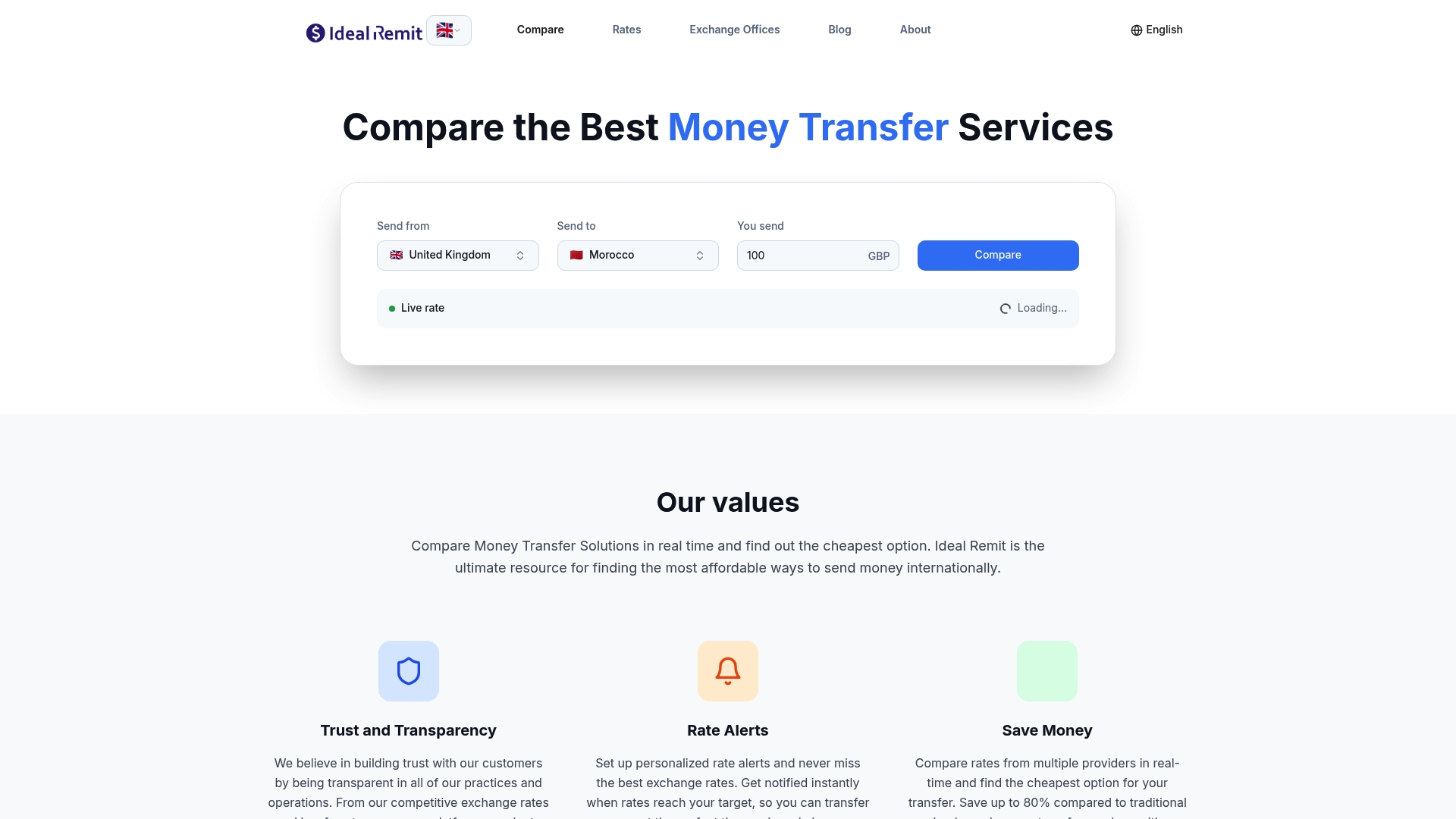
Idealremit aggregates real-time rates, fees, and delivery times from dozens of trusted providers including Wise, Remitly, Western Union, and more. You can compare transfer services for your exact send amount and destination in seconds, set up personalized rate alerts, and see total costs with no hidden markups. Users typically save up to 80 percent compared to sending through a traditional bank. Whether you're sending $200 or $20,000, Idealremit gives you the information to make the most of every transfer.
FAQ
What are the cheapest alternatives to bank transfers?
Wise and ACH transfers are consistently among the cheapest options. Wise charges $4 to $7 on a $1,000 international send, while ACH is typically free for domestic transfers.
Are peer-to-peer payment services safe to use?
Yes, when used correctly. Services like Zelle and Venmo are safe for transfers between trusted contacts, but neither offers buyer protection for purchases or sending money to strangers.
How fast can I send money without using a bank?
Very fast. Zelle and Venmo settle in minutes for domestic transfers. Remitly Express and Western Union can deliver international transfers within hours, depending on the destination and payment method.
What is the best option for large international transfers?
For transfers above $10,000, OFX is a strong choice because it charges no flat fee and applies a lower exchange rate margin. For transfers above $100,000, a dedicated currency broker is worth the extra step.
Do I need a bank account to use these alternatives?
Not always. Western Union and Remitly both support cash pickup at agent locations, which means recipients can collect funds without a bank account. This makes them especially useful for sending money to countries with limited banking infrastructure.