How to send money to Africa online safely and cheaply

TL;DR:
- Sending money to family in Africa requires careful provider comparison to avoid hidden fees and delays. Proper preparation, accurate recipient details, and understanding delivery methods ensure your transfer arrives reliably. Always compare total costs, including exchange rate markups, and verify delivery status to maximize value and safety.
Sending money to family in Africa should be straightforward, but the reality is that picking the wrong service can quietly drain your transfer through inflated exchange rates, unexpected fees, or delays that leave your recipient waiting at the wrong time. Whether you're supporting a parent in Lagos, a sibling in Nairobi, or a child in Accra, the stakes are real. This guide walks you through exactly what to prepare, how to compare your options honestly, the steps to complete a transfer without mistakes, and how to confirm your money lands safely on the other side.
Table of Contents
- What you need before sending money
- Comparing providers and understanding total costs
- Step-by-step: How to make a transfer online
- Verifying delivery and troubleshooting common issues
- What most overlook when sending money to Africa online
- Save more on every transfer with our service
- Frequently asked questions
Key Takeaways
| Point | Details |
|---|---|
| Check both fees and rates | Always add the upfront fee and the exchange rate markup to get the true cost of your transfer. |
| Choose delivery method wisely | Select bank, mobile wallet, or cash pickup based on what your recipient can access most reliably. |
| Prepare accurate recipient details | Double-check names and account numbers to avoid delays or failed transfers. |
| Identity verification is required | Be ready to provide documents and complete verification before your first transfer. |
| Track your money after sending | Use your provider’s status tools and expect variable delivery times based on country and payment method. |
What you need before sending money
Before you even open a transfer app, you'll want everything ready at hand. Starting a transfer without the right details is one of the most common reasons people run into delays or costly errors.
What you need as the sender:
- Government-issued photo ID (passport, driver's license, or national ID card)
- Proof of address (utility bill or bank statement, sometimes required)
- Your bank account, debit card, or credit card to fund the transfer
- Your email address for confirmation and tracking
What you need for your recipient:
- Full legal name, exactly as it appears on their bank account or mobile wallet
- Bank account number and bank name, or mobile money number and network (such as M-Pesa, MTN Mobile Money, or Airtel Money)
- Country and city of residence
- Phone number (often required for mobile delivery methods)
The transfer money securely process depends heavily on this preparation step. A single mismatched character in a recipient's name can trigger a rejection or a hold.
| Information required | Sender | Recipient |
|---|---|---|
| Government-issued photo ID | Yes | Not usually |
| Full legal name | Yes | Yes |
| Bank/mobile account number | For funding | For receiving |
| Proof of address | Sometimes | Rarely |
| Phone number | Yes | Yes |
Remitly advises first-time international senders to complete identity verification before transferring and to compare multiple providers using factors beyond cost, including reliability, customer service, speed, and delivery options. This means you shouldn't just rush through onboarding to save a few minutes.
Pro Tip: Ask your recipient which delivery method they actually prefer and can access before you start. A bank account transfer to someone who primarily uses mobile money could mean they need to make an extra trip just to access their funds.
Choosing the right receive method matters more than most people realize. Bank deposits work well for recipients with active accounts, but mobile money is often faster and more accessible in rural areas. Cash pickup is a solid fallback for recipients who don't have formal banking access. Know which option fits your recipient's situation before you compare providers.
Comparing providers and understanding total costs
With your documents and info ready, it's time to decide which provider will give you the best deal and reliability. This step is where most people leave real money on the table.

The single biggest mistake senders make is looking only at the transfer fee. Many providers advertise "zero fees" or extremely low flat fees but make up the difference through exchange rate markups. An exchange rate markup is the difference between the real mid-market rate (the rate you see on Google) and the rate the provider actually gives you. On a $500 transfer, a 3% markup costs you $15 that never shows up as a "fee."
NerdWallet recommends using licensed money transfer companies and comparing both fees and exchange rate markups across providers and delivery speeds. The combination of both costs is your true cost of sending.
What to compare when choosing a provider:
- Transfer fee: The flat or percentage charge to process your payment
- Exchange rate markup: The spread between the mid-market rate and what you're offered
- Total amount received: The only number that truly matters for your recipient
- Delivery speed: Minutes, hours, or days, depending on method and destination
- Delivery methods available: Bank deposit, mobile money, or cash pickup
- Customer service quality: Especially important if you need to troubleshoot
Wise's guidance on sending money to Africa is clear: you should compare total cost as the upfront fee plus exchange rate markup, and use the provider's calculator to see the exact amount your recipient will get. That final figure is your benchmark for comparison.
Some providers also stand out for their pricing transparency. Wise contrasts with many providers by using the mid-market exchange rate with no markup and charging a transparent separate fee. Other providers bundle costs differently. Neither approach is automatically better; what matters is that you calculate the final delivered amount for the same transfer amount across multiple services before choosing.
| Provider type | Fee structure | Typical exchange markup | Speed |
|---|---|---|---|
| Traditional bank | High flat fee | 2 to 5% | 2 to 5 business days |
| Online transfer service | Low or no flat fee | 0 to 3% | Minutes to 2 days |
| Mobile-first remittance app | Small flat fee | 0.5 to 2% | Minutes to 1 day |
| Cash pickup service | Moderate flat fee | 0 to 2% | Usually same day |
You can compare transfer services side by side to see live rates rather than relying on advertised rates that may not reflect current conditions. Always run the exact amount you plan to send through each provider's calculator on the day you're sending. Rates change daily.
One more thing to watch for: promotional rates. Many providers offer a better rate for your first transfer. That can be a genuine saving, but don't let it lock you into a provider that isn't the best long-term option. For ongoing context on how exchange rates impact the money families actually receive, the numbers add up fast over multiple transfers per year.
Step-by-step: How to make a transfer online
Now you're ready to move your money. Here's the step-by-step process using the provider of your choice.
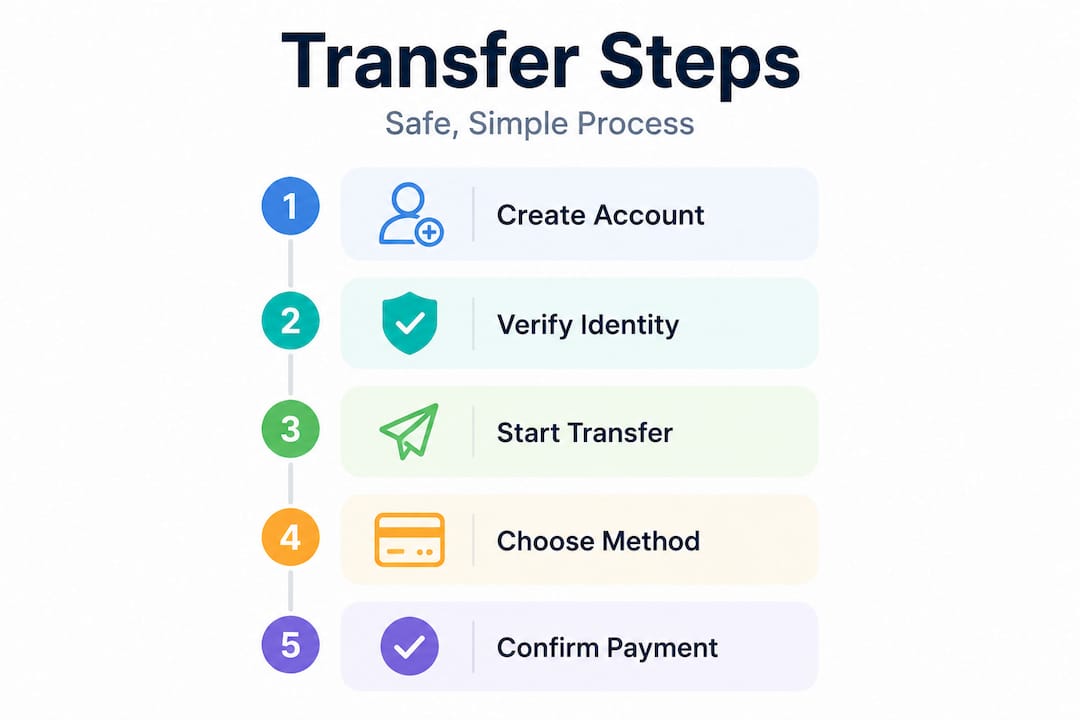
1. Create your account and complete identity verification Register with your email and a secure password. Upload your government-issued ID when prompted. Most licensed providers require this before your first transfer. Expect this to take anywhere from a few minutes to 24 hours for full approval, depending on the platform.
2. Start a new transfer and select your destination country Choose the African country your recipient is in. The available delivery methods will update based on the country selected. Not every provider covers every country or delivery method.
3. Enter the exact transfer amount Type in either the amount you're sending or the amount you want your recipient to receive. The calculator will show both figures instantly, along with the fee and exchange rate. This is where you confirm the total cost.
4. Select the delivery method Choose between bank deposit, mobile money, or cash pickup based on what you confirmed with your recipient earlier. Each method may show a different exchange rate or fee.
5. Enter your recipient's details exactly Type the recipient's full legal name, bank account or mobile number, and any additional details required. Western Union instructs senders to enter the recipient's name and bank account number accurately and review fees before sending. A single typo in an account number can delay or reject your transfer.
6. Review the full summary before paying Look at the total fee, the exchange rate, the total amount your recipient will receive, and the estimated delivery time. This page is your last chance to catch errors.
Before you confirm payment, read every field on the review screen one more time. The few seconds this takes can save hours of troubleshooting later.
7. Pay and save your confirmation number Complete payment using your bank account, debit card, or credit card. Save or screenshot the transaction confirmation number. You'll need this if you contact customer support.
WorldRemit positions its transfers as showing fees and exchange rates upfront, with costs and speed depending on the destination country and receive method. This is exactly the type of transparency you should expect from any provider you use.
Pro Tip: For your first transfer to a new recipient, consider sending a smaller test amount. Confirm it arrives correctly, then send larger amounts with confidence going forward.
Reviewing best international transfer practices before you send can help you avoid the mistakes most first-timers make, even when sending to a different region.
Verifying delivery and troubleshooting common issues
After payment, here's how to make sure your money arrives safely and what to do if things don't go as planned.
What is a normal delivery timeline?
Delivery times vary widely. Bank-to-bank transfers within Africa can take one to three business days. Mobile money transfers often complete in minutes. Cash pickup is typically available within the same hour at many locations. Remitly confirms that transfers can take minutes to several business days, and that accurate recipient details and completed identity verification are essential before initiating.
How to check your transfer status:
- Log into your provider account and navigate to your transaction history
- Look for a status label such as "In Progress," "Completed," or "On Hold"
- Use the provider's tracking link or reference number if available
- Enable SMS or email notifications so you're updated without checking manually
Common issues and how to handle them:
- Transfer is delayed: Check whether your identity verification is fully complete. Some providers hold transfers pending additional documentation.
- Transfer is rejected: This often means a name mismatch or incorrect account number. Contact customer service with your reference number.
- Transfer returned to your account: The recipient's bank rejected the deposit, usually due to account details. Confirm details with your recipient and resend.
- Mobile money not received: WorldRemit notes that mobile wallet delivery depends on the mobile money rails the recipient can access. Your recipient may need to confirm their wallet is active and has not hit its receive limit.
Pro Tip: Always notify your recipient that a transfer is on the way, including the expected amount and the method. They can confirm receipt quickly and alert you if something is missing before it becomes a bigger issue.
What most overlook when sending money to Africa online
Let's step back with a perspective shaped by real-world experience.
Most articles about sending money to Africa focus almost entirely on fees. Compare fees. Find the lowest fee. Done. But after watching how transfers actually play out across different countries, delivery methods, and providers, a different truth becomes obvious: the delivery method match matters far more than saving one or two dollars on a fee.
Consider a sender who chooses the cheapest provider by fee but sends a bank deposit to a recipient in a rural area who doesn't have easy bank access. The money arrives, technically. But the recipient spends hours and transportation costs retrieving it. The "cheap" option ended up being expensive for the person on the other end. When you think about the remittance impact on families and communities, every friction point in delivery reduces the real value of what you send.
The second thing experienced senders do differently: they review every step of the transfer like it's their first time, every time. Familiarity breeds carelessness. A digit transposed in an account number looks right at a glance. It isn't. The few extra seconds to read each field carefully is the most reliable protection you have against errors that take days to untangle.
There's also a healthy skepticism worth developing around exchange rates. When a provider advertises a rate that looks unusually good compared to everything else, it often means something else is being priced in elsewhere. Always run the calculation to the final delivered amount. The rate that looks best at the top of the form may not produce the best outcome at the bottom of it.
The senders who get the most value over time are not the ones who found a single cheapest option and stuck with it forever. They check rates regularly, use comparison tools, and stay flexible about which provider serves their recipient's location best at any given time.
Save more on every transfer with our service
For ongoing savings and reliable transfers, having the right tools matters.
At Ideal Remit, we built a platform specifically for people in your position: sending money to family in Africa and wanting to be sure you're getting a fair deal on every transfer. Our comparison tool pulls live rates and fees so you can see the true cost before you commit to any provider.
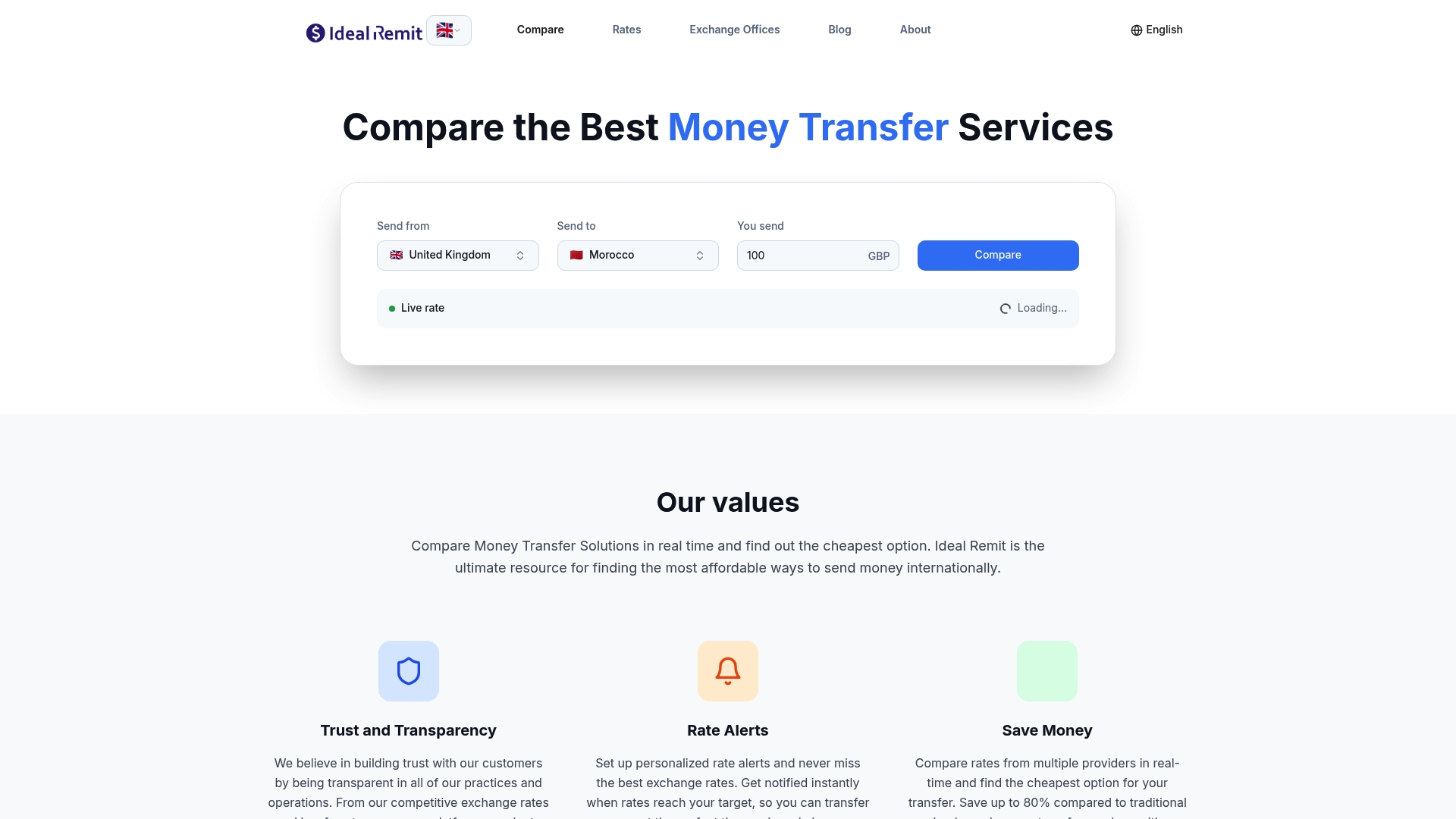
When you compare money transfer rates on Ideal Remit, you see the total amount your recipient will actually receive, not just the advertised fee. You can also set personalized rate alerts so you know when conditions are favorable for sending. Every provider we feature is licensed and regulated, so you send with confidence. If you're ready to start, explore best transfer options for your exact destination and see how much you can save compared to sending through a traditional bank.
Frequently asked questions
What documents are required to send money from the US or EU to Africa?
You'll typically need government-issued photo identification and proof of address, along with your recipient's full banking or mobile wallet details to complete the transfer.
How long do online transfers to Africa take to arrive?
Transfer times can range from minutes to several business days, depending on the provider, delivery method, and destination country.
What is the safest way to send money to Africa online?
NerdWallet recommends using licensed money transfer companies, comparing fees and exchange rate markups, and completing all identity verifications before confirming your transfer.
Are there any hidden fees when transferring money abroad?
Providers sometimes advertise no fees while building profit into the exchange rate; always check the fee plus exchange rate together to know what your recipient will actually receive.
What should I do if my transfer hasn't arrived?
Check the transfer status through your provider's app or website, verify all recipient details are correct, and contact customer service with your accurate recipient details and reference number if the delay continues.
Recommended
Written by
Brahim Oubrik
Brahim Oubrik, a senior data engineer who experienced firsthand the challenges of sending money internationally. Living in France while supporting his family in Morocco, Brahim regularly needed to transfer funds across borders. Drawing on his background in data engineering, Brahim decided to solve this problem not just for himself, but for the millions of others navigating the same difficulties. He built Ideal Remit to bring clarity to the international money transfer market.