International Payment Fraud: Types, Detection, Prevention and How to Stay Protected
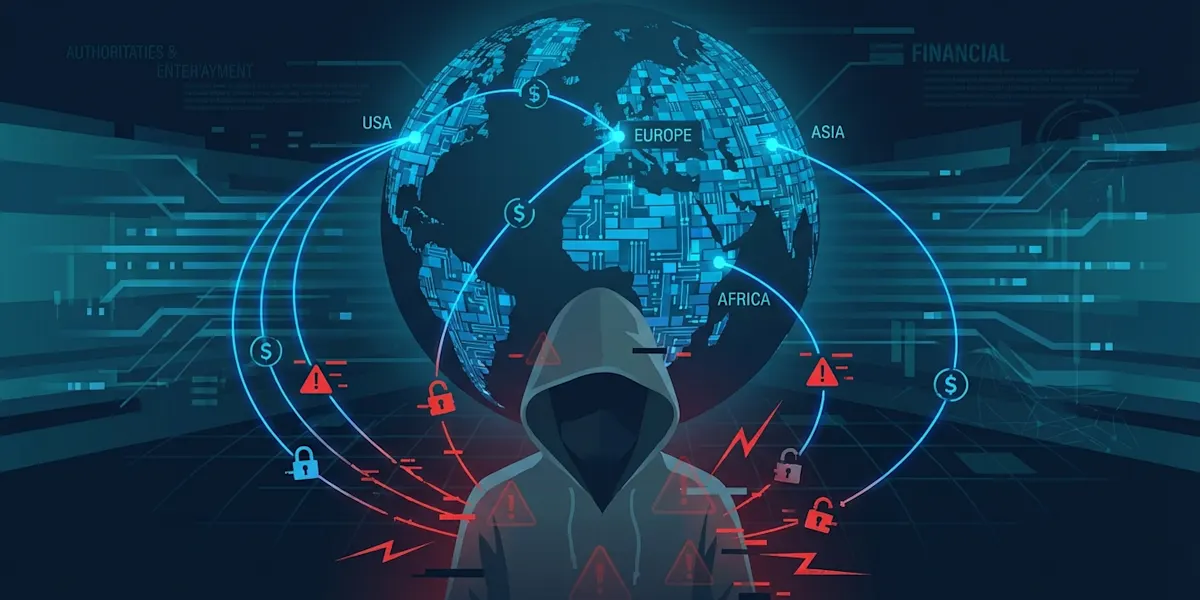
Every year, criminals steal more than $40 billion through cross-border payment schemes. International payment fraud is not an edge case reserved for careless senders.
It is a sophisticated, fast-moving threat that targets consumers sending remittances, small businesses paying overseas suppliers, and large corporations executing multi-million-dollar wire transfers.
International payments are disproportionately targeted for a simple reason: they are harder to unwind.
This guide covers every major fraud type you need to know, how detection systems work, proven prevention strategies for consumers and businesses, and exactly what to do if fraud happens to you.
For broader risk categories including cybersecurity, exchange rate, and operational risks, see the international money transfer risks overview.
What Is International Payment Fraud?
International payment fraud is the deliberate use of deception, unauthorized access, or identity manipulation to steal funds or financial data during cross-border payment transactions.
It encompasses consumer-facing scams, business payment diversion, account takeovers, and systemic institutional fraud across all international transfer methods, from SWIFT wires and online platforms to mobile wallets and cryptocurrency.
What makes international fraud structurally different from domestic fraud is not the technique. It is the compounding complexity of crossing borders.
A fraudulent SWIFT payment routed through three correspondent banks across three jurisdictions may take days to flag.
By that point, the funds have been withdrawn, layered through mule accounts, and moved beyond recovery.
No single law enforcement body holds authority over the full transaction chain. Investigations require mutual legal assistance treaties (MLATs) that take months to execute. Recovery rates for international wire fraud are estimated at under 5%, compared to 15 to 25% for equivalent domestic transfers.
That structural gap is what criminals exploit, and why understanding it is your first line of protection.
International Payment Fraud vs. Domestic Payment Fraud
The fraud techniques may look identical. The outcomes are not.
| Factor | Domestic Payment Fraud | International Payment Fraud |
|---|---|---|
| Jurisdiction | Single regulatory regime | Multiple conflicting regimes |
| Investigation | Single law enforcement authority | Requires MLAT or Interpol coordination |
| Recovery rate | ~15-25% for domestic wire | Under 5% for international wire |
| Settlement speed | Often same-day | 1-5 days (longer exploitation window) |
| Intermediaries | Direct bank-to-bank | 2-4 correspondent banks |
| Consumer protection | Regulation E and chargeback rights apply | Protection weakens or disappears at the border |
| Traceability | Full domestic audit trail | Fragmented across institutions and jurisdictions |
International payment fraud is not simply domestic fraud that crosses a border. It is a structurally different challenge requiring coordinated, multi-jurisdictional responses. That is why consumer vigilance and provider selection matter so much more here than in domestic payments.
Authorized vs. Unauthorized Fraud in International Payments
This is the single most important classification for fraud victims to understand. It determines who bears the financial loss.
Authorized push payment (APP) fraud occurs when the victim is deceived into initiating the payment themselves. The victim presses "send" voluntarily, manipulated through a romance scam, business email compromise, or impersonation scheme. Because the victim authorized the transaction, standard Regulation E protections (which cover unauthorized transfers) generally do not apply.
Unauthorized fraud occurs when a criminal accesses your account without consent and initiates payments through credential theft, account takeover, SIM swap, or malware. Because you did not authorize the transfer, Regulation E and similar frameworks may require the bank to reimburse losses.
The critical trend: APP fraud now exceeds unauthorized fraud in many markets. UK Finance data shows APP fraud losses surpassed card fraud losses in recent years. The UK Payment Systems Regulator mandated APP fraud reimbursement in October 2024, requiring payment providers to compensate victims up to a defined cap. The US has no equivalent mandate yet. That regulatory asymmetry makes the authorized-vs-unauthorized distinction especially consequential for US consumers.
Types of International Payment Fraud
International payment fraud spans a spectrum from individual consumer scams to sophisticated institutional schemes. Some types target the sender (social engineering), some target the recipient (identity fraud), some target the payment infrastructure itself (transaction laundering), and some exploit the provider's systems (account takeover).
Many real-world fraud incidents combine multiple types. Understanding each category is how you recognize them.
Authorized Push Payment (APP) Fraud
Authorized push payment fraud occurs when criminals deceive victims into voluntarily initiating an international payment to a fraudster-controlled account. Unlike unauthorized fraud where criminals access accounts directly, APP fraud exploits human psychology through social engineering, making recovery uniquely difficult because the victim technically authorized the transaction.
APP fraud is the umbrella category covering romance scams, business email compromise, impersonation schemes, and investment fraud when the victim sends the payment themselves. UK Finance reported APP fraud losses of GBP 485 million in 2023 (verify with latest UK Finance data at publication). APP fraud now represents the majority of payment fraud losses in several markets.
The cross-border dimension makes it especially damaging. Even where the sending jurisdiction mandates reimbursement (as the UK now does), recovering funds from a receiving account in another jurisdiction remains near-impossible.
Identity Fraud and Synthetic Identity Fraud
In the international payment context, identity fraud involves criminals using stolen personal information (names, SSNs, passport details purchased from dark web marketplaces) to open fraudulent accounts with money transfer providers, pass KYC checks, and send or receive illicit cross-border payments.
Synthetic identity fraud takes this further. Criminals create entirely fabricated identities by combining real data elements, such as a legitimate SSN paired with a fake name and address, to build personas that pass automated KYC checks. The Federal Reserve estimates synthetic identity fraud costs over $6 billion annually in the US (verify).
This is particularly damaging for international payments because synthetic identities can pass KYC checks at multiple providers simultaneously, creating multi-channel laundering paths. Detection is difficult because the identities take months to build, appear legitimate, and may not match any real fraud victim.
Account Takeover Fraud
Account takeover (ATO) fraud occurs when criminals gain unauthorized access to a legitimate user's money transfer account using stolen credentials and initiate international transfers to accounts they control. ATO is classified as unauthorized fraud, meaning consumer protection frameworks like Regulation E may require provider reimbursement, but proving the transfer was truly unauthorized can be contentious.
The four main ATO attack vectors are credential stuffing (automated testing of leaked username and password pairs against transfer platforms), phishing (fake login pages capturing credentials and 2FA codes in real time), SIM swap (transferring the victim's phone number to an attacker-controlled SIM to intercept SMS-based 2FA), and session hijacking (stealing active browser sessions through malware).
Effective countermeasures include device fingerprinting, behavioral analytics to detect anomalous login patterns, app-based MFA rather than SMS, and biometric verification for high-value transfers.
Card-Not-Present (CNP) Fraud in Cross-Border Payments
Card-not-present fraud involves criminals using stolen card details, purchased from dark web carding forums or harvested via skimming and phishing, to fund international money transfers or make cross-border purchases. Unlike in-person card fraud mitigated by EMV chip, CNP fraud exploits remote transactions where the physical card is never required.
CNP fraud is prevalent in international payments because card-issuer fraud screening is less effective when a transaction originates in a foreign jurisdiction, and 3D Secure adoption varies across countries. The Nilson Report estimates global card fraud losses at over $33 billion annually (verify), with CNP representing more than 80% of card fraud losses.
The EU's PSD2 mandates Strong Customer Authentication (SCA) for card payments, and 3D Secure 2 (EMV 3DS) adds an authentication layer for online transactions. The limitation: SCA mandates are EU and UK-specific. Many corridors outside these regions lack equivalent requirements.
Business Email Compromise and Invoice Fraud
Business email compromise (BEC) is the highest-dollar-loss fraud category targeting business international payments. FBI IC3 data shows BEC losses exceeded $2.9 billion in 2023 (verify with current IC3 report).
The two primary attack patterns are BEC (criminals compromise or spoof an executive's email to instruct finance teams to wire funds to a new account for a "confidential deal") and invoice fraud (criminals intercept or spoof vendor communications, substituting fraudulent bank details on a legitimate invoice and redirecting the next scheduled payment).
International payments are specifically targeted because businesses making regular cross-border payments to foreign suppliers already have established wire transfer workflows. The fraud inserts itself into existing, trusted payment patterns. An emerging acceleration: AI-generated deepfake audio and video calls now impersonate executives to authorize payments directly, making traditional verbal verification less reliable.
Transaction Laundering and Trade-Based Fraud
Transaction laundering involves criminals processing illicit international payments through seemingly legitimate businesses or payment accounts to disguise the origin and destination of stolen funds.
Trade-based money laundering (TBML) is a specific form where criminals manipulate the value, quantity, or description of goods in international trade invoices. A $10,000 shipment invoiced at $100,000 justifies a $90,000 cross-border payment that is actually laundered funds. FATF identifies TBML as one of the most complex and significant forms of money laundering globally.
This matters for consumers and businesses because your provider may unknowingly process transactions linked to laundered funds, potentially facing regulatory action. It also explains why KYC and AML requirements exist and why legitimate transfers are sometimes flagged or delayed.
Man-in-the-Middle and Payment Interception Fraud
Payment interception fraud occurs when criminals position themselves between two communicating parties and alter payment instructions to redirect funds to a criminal-controlled account. Each side believes they are communicating with the other, unaware of the intermediary.
Three common scenarios include email account compromise (criminals monitor a compromised email account, then send modified bank details at the moment a payment is due), real estate wire fraud (criminals intercept closing instructions between a title company and homebuyer, substituting fraudulent wire details for the down payment, causing over $446 million in losses according to FBI data, verify), and SWIFT message manipulation (sophisticated attacks targeting bank messaging systems, with the 2016 Bangladesh Bank SWIFT heist as the landmark example).
Prevention is straightforward: always verify payment instructions through a separate communication channel before sending any funds.
How International Payment Fraud Works: The Fraud Lifecycle
Fraud is not random. It operates as a repeatable, six-stage system, and recognizing the stages is how you interrupt it.
Stage 1: Reconnaissance. Criminals identify targets through social media, data breaches, dark web purchases, or direct social engineering, gathering intelligence about individuals, business payment workflows, or system vulnerabilities.
Stage 2: Approach. Initial contact or access is established through a phishing email, a romance scam first message, a compromised email account, or a fraudulent identity created at a payment provider.
Stage 3: Trust Building and Access. The criminal either builds a relationship with the victim through social engineering or deepens system access through privilege escalation and credential harvesting.
Stage 4: Execution. The fraudulent payment is triggered. The victim sends money under false pretenses (APP fraud), the criminal initiates an unauthorized transfer (account takeover), or a payment instruction is intercepted and modified (man-in-the-middle).
Stage 5: Extraction. Funds are rapidly moved from the receiving account through layering: split into smaller amounts, forwarded through mule accounts, converted to cryptocurrency, or withdrawn as cash across multiple jurisdictions.
Stage 6: Integration. Proceeds are integrated into the financial system through legitimate-appearing transactions, purchases, or reinvestment.
The entire cycle from execution to extraction can occur within hours for electronic transfers. That is why speed of detection is critical, not days later when you notice something is wrong.
Why Cross-Border Payments Are Uniquely Vulnerable
Five structural vulnerabilities make international payments a preferred target for fraud operations.
-
Jurisdictional fragmentation. A single international payment may touch three to four regulatory regimes. No single authority has end-to-end oversight, and cross-border law enforcement cooperation requires MLATs that take months to execute.
-
Settlement delays. SWIFT bank wires take one to five business days, creating a window during which fraud can be executed and proceeds extracted before detection.
-
Correspondent banking opacity. Payments routed through intermediary banks lose transaction context at each hop. The final receiving bank may see limited information about the original sender.
-
Inconsistent KYC and AML standards. Adequate identity verification standards vary across countries, creating weakest-link jurisdictions where fraudulent accounts are easily opened.
-
Currency conversion complexity. Conversions add processing steps and intermediaries, each a potential point of exploitation or delay.
Real-time payment systems (FedNow, Faster Payments, PIX) and SWIFT gpi are reducing settlement delays and improving traceability. But faster payments also mean faster fraud extraction windows, so improved infrastructure cuts both ways.
How to Detect International Payment Fraud
Modern fraud detection operates on two levels: institutional systems (what your provider uses behind the scenes) and individual awareness (what you can recognize yourself). Understanding both helps you choose safer providers and protect yourself where technology falls short.
How Payment Providers Detect Fraud
Leading payment providers deploy seven detection layers simultaneously.
-
Rules-based screening. Predefined triggers flag transactions that exceed thresholds, involve new recipients in high-risk jurisdictions, or show multiple transfers in a short timeframe.
-
Machine learning models. Trained on millions of transactions to identify fraud patterns invisible to rule sets; continuously improve with new data.
-
Behavioral analytics. Analyzes user behavior patterns (typing speed, navigation patterns, session times) to detect account takeover attempts where a criminal has taken over a legitimate session.
-
Device fingerprinting and geolocation. Flags transactions from unfamiliar devices or locations inconsistent with the user's known history.
-
Velocity checks. Monitors the speed and frequency of transaction attempts to detect automated fraud including credential stuffing and card testing.
-
Confirmation of Payee. Verifies that the recipient's name matches the account holder at the receiving bank before the payment is sent. Adopted in the UK and under consideration in other jurisdictions.
-
Consortium data sharing. Providers share anonymized fraud intelligence to detect fraud rings operating across multiple platforms.
No single method is sufficient. The most effective systems layer all seven simultaneously, which is why provider selection matters as much as personal vigilance.
Red Flags Consumers Should Watch For
Technology catches sophisticated fraud patterns. Human awareness catches social engineering. You need both.
-
Urgency pressure. "Send now or lose the opportunity" or "face immediate consequences." Legitimate transactions allow time for verification.
-
Insistence on a specific irreversible payment method. Wire transfer, cryptocurrency, or gift cards only, with no alternatives accepted.
-
Unsolicited contact requesting payment. You did not initiate the interaction.
-
Request to send money before receiving goods, services, or promised funds. Payment before value delivery is the foundation of most consumer fraud schemes.
-
Changed payment details. A known contact suddenly provides new bank account information via email or message.
-
Secrecy demands. "Do not discuss this with anyone" or "your bank will not understand."
-
Inconsistent details. Names, account numbers, or instructions that do not match across communications or previous records.
-
Emotional manipulation. Whether through romance, fear, authority, or greed, the counterparty is controlling your emotional state rather than providing verifiable facts.
Urgency is the primary tool of social engineering. Your most powerful countermeasure is a self-imposed cooling-off period before sending any unexpected or emotionally charged payment.
How to Prevent International Payment Fraud
Fraud prevention requires action at both the individual level (what you control) and the provider level (what you demand from your transfer service). Neither layer alone is sufficient.
8 Steps to Protect Yourself as a Consumer
Step 1: Use only licensed, regulated providers. Verify registration with your national regulator (US: NMLS or FinCEN; UK: FCA Register; EU: national financial authority). A provider's regulatory license is your baseline fraud protection, not a checkbox.
Step 2: Enable multi-factor authentication using an authenticator app. SMS-based 2FA is vulnerable to SIM swap attacks. Use an app-based authenticator (such as Google Authenticator or Authy) or a hardware security key for money transfer accounts.
Step 3: Verify every recipient independently. Confirm identity and bank details through a separate communication channel before sending. Never rely solely on emailed or messaged instructions, even from a known contact.
Step 4: Start with a small test transfer. For any new recipient or provider, send a small amount first and confirm receipt before sending larger sums. This catches account errors and fraudulent recipient details before they cost you.
Step 5: Set transaction alerts for every account event. Enable push notifications for every login, transfer initiation, and payment confirmation. Immediate awareness enables immediate response if your account is compromised.
Step 6: Use unique, strong passwords. Never reuse passwords from other accounts on money transfer platforms. Use a password manager to generate and store distinct credentials for each service.
Step 7: Implement a personal cooling-off rule. Commit to waiting 24 hours before completing any unexpected or emotionally charged payment request. Urgency is the primary tool of social engineering. Removing urgency removes the criminal's advantage.
Step 8: Compare the offered rate to the mid-market rate. This protects against both markup fraud and phishing sites offering unrealistically good exchange rates as bait to capture your credentials or payment details.
Fraud Prevention for Businesses Making International Payments
Business international payment fraud carries higher stakes and different attack vectors than consumer fraud. These organizational controls are the minimum standard.
-
Mandate dual authorization. Require two independent approvers for all international payments above a defined threshold. Approvers must verify independently, not simply counter-sign what the initiator has already confirmed.
-
Implement callback verification for all payment detail changes. If a vendor sends new bank details, call a verified contact number from your own records (not from the email) before updating payment information.
-
Deploy email authentication. Implement DMARC, DKIM, and SPF records to prevent email spoofing of your domain and improve detection of incoming spoofed emails impersonating your vendors.
-
Establish a vendor verification protocol. Document a multi-step process for verifying all new vendors and any changes to existing vendor payment details. Undocumented processes are where fraud slips through.
-
Segregate payment duties. The person who initiates a payment must not be the same person who approves it. Separation of duties eliminates single-point social engineering.
-
Train all employees with payment authority. Conduct regular fraud awareness training covering BEC, invoice fraud, and impersonation tactics. Test with simulated phishing exercises quarterly.
-
Integrate payment systems with ERP. Automated matching between purchase orders, invoices, and payment instructions reduces the risk of fraudulent invoices slipping through undetected.
Choosing a Provider with Strong Fraud Protection
When comparing providers, fraud protection deserves equal weight alongside fees, speed, and exchange rates. The cheapest provider is not the best value if it exposes your funds.
Evaluate providers across six dimensions:
-
Regulatory licensing. Verified with your national regulator; multiple licenses across jurisdictions indicates robust compliance infrastructure.
-
Authentication strength. Supports app-based MFA, biometric login, and security keys. SMS-only 2FA is a security weakness.
-
Transaction monitoring capability. Real-time screening with AI and ML detection, not only rules-based flagging.
-
Confirmation of Payee. Verifies that the recipient name matches the receiving account before funds are sent.
-
Fraud reimbursement policy. What is the provider's stated policy for reimbursing fraud losses? Some providers offer fraud guarantees; others place full liability on the customer.
-
Fund safeguarding. Are customer funds held in segregated, protected accounts (required in UK and EU), or co-mingled with operating funds? Segregation protects you if the provider faces financial difficulty.
International Payment Fraud Statistics and Scale
The scale of international payment fraud is larger than most individual consumers realize.
| Fraud Category | Annual Losses (est.) | Primary Source | Trend |
|---|---|---|---|
| Global cross-border fraud | $40+ billion | Juniper Research / LexisNexis | Rising |
| Business Email Compromise | $2.9B+ (US) | FBI IC3 2023 | Rising with AI |
| APP Fraud (UK) | GBP 485M+ | UK Finance 2023 | Rising |
| Global card fraud | $33B+ | Nilson Report | Stabilizing with SCA |
| Consumer fraud overall | $10B+ (US) | FTC 2023 | Rising |
| Synthetic identity fraud | $6B+ (US) | Federal Reserve | Rising with AI |
All figures require verification against latest published reports at time of publication.
Fraud losses are growing faster than payment volumes, indicating that criminals are becoming more effective even as detection improves. The shift from unauthorized fraud (criminals accessing accounts) to authorized push payment fraud (criminals manipulating victims into sending) represents a fundamental change in the threat landscape. Technology stops the former category effectively. Stopping the latter requires human awareness.
Regulations Governing International Payment Fraud Prevention
The regulatory framework governing international payment fraud spans multiple jurisdictions, and the protections available to you depend heavily on where you send money from.
Global: FATF Recommendations. The Financial Action Task Force sets the international standard for anti-money laundering (AML) and counter-terrorist financing (CTF). Its 40 Recommendations include requirements for customer due diligence, transaction monitoring, and suspicious transaction reporting that form the compliance foundation for payment providers worldwide.
European Union: PSD2 and PSD3. The Payment Services Directive 2 mandates Strong Customer Authentication (SCA) for electronic payments, requiring two-factor verification. PSD3 (proposed) would further strengthen fraud prevention obligations and consumer liability protections across EU member states.
United Kingdom: PSR APP Fraud Reimbursement Mandate. Effective October 2024, the Payment Systems Regulator requires payment providers to reimburse APP fraud victims up to a defined cap. This is the most aggressive consumer protection measure against authorized fraud globally.
United States: BSA, Regulation E, and Wire Fraud Statute. The Bank Secrecy Act requires financial institutions to maintain AML programs and file Suspicious Activity Reports (SARs). Regulation E covers unauthorized electronic fund transfers but generally does not protect against authorized push payment fraud. Title 18 U.S.C. Section 1343 (the federal wire fraud statute) provides criminal penalties but does not create a civil reimbursement right for victims.
The critical gap: the US has no APP fraud reimbursement mandate. Victims of authorized push payment fraud in the US typically bear the full loss. This regulatory asymmetry means your fraud protection varies dramatically depending on where you send money from and which provider you use.
What to Do If You're a Victim of International Payment Fraud
If you suspect you have been a victim of international payment fraud, act immediately. The first hours are critical. Recovery prospects diminish rapidly once funds are withdrawn from the receiving account.
Step 1: Contact your provider's fraud department immediately. Do not call general customer service. Ask specifically for the fraud or disputes team and request a payment recall or account freeze. For SWIFT wires, ask them to initiate a SWIFT gpi recall request directly.
Step 2: Freeze compromised accounts. If you shared credentials, passwords, or personal data with the fraudster, change all passwords immediately and alert your bank to place fraud alerts on connected accounts.
Step 3: Document everything. Save all communications, screenshots, transaction receipts, and reference numbers before anything is deleted or altered. Documentation is essential for both recovery claims and law enforcement investigations.
Step 4: File with FBI IC3 (ic3.gov). For BEC losses over $20,000, file within 72 hours. IC3's Recovery Asset Team (RAT) can coordinate with financial institutions to freeze accounts. Verify the current filing threshold at ic3.gov.
Step 5: Report to the FTC (ReportFraud.ftc.gov). FTC reports feed the Consumer Sentinel Network used by over 3,000 law enforcement agencies across the US.
Step 6: File with your national fraud authority. UK residents should file with Action Fraud. EU residents should contact their national police cybercrime unit. Australian residents should file with Scamwatch.
Step 7: File a police report. Some institutions require a police report reference number to process fraud claims or initiate investigations.
Recovery expectations should be realistic. For international wire transfers, full recovery is rare once funds are withdrawn. However, reporting increases the chance of partial recovery, contributes to building criminal cases, and protects future victims. And critically: do not send additional money to anyone offering to recover your funds. Secondary fraud targeting victims who have already lost money is extremely common.
Comparison: Fraud Risk by International Payment Method
Your choice of payment method is itself a fraud prevention decision.
| Payment Method | Primary Fraud Types | Fraud Risk Level | Recovery Options | Best Protection Tip |
|---|---|---|---|---|
| Bank Wire (SWIFT) | BEC, payment interception, impersonation | High (irreversible) | Very low (recall possible but rare) | Always verify bank details via separate channel |
| Licensed Online Provider (Wise, Remitly, OFX) | APP fraud, phishing, account takeover | Medium | Medium (cancellation windows, some fraud guarantees) | Use providers with Confirmation of Payee |
| Card-Funded Transfer | CNP fraud, card theft | Medium | High (chargeback rights via card network) | Enable 3D Secure on all cards |
| Mobile Money (M-Pesa, bKash) | SIM swap, social engineering | Medium | Low (PIN-based, limited reversibility) | Never share OTPs; use PIN protection |
| Cryptocurrency | Wallet theft, exchange hack, irreversible fraud | Very High | None (no chargeback, no regulatory protection) | Only for users who understand wallet security |
| Cash Pickup (Western Union, MoneyGram) | Romance scams, advance fee fraud | High (preferred by scammers for anonymity) | Very low (cash is untraceable once collected) | Never send to someone you have not met in person |
Card-funded transfers offer the strongest consumer fraud protection through chargeback rights. Licensed online providers offer the best balance of cost, speed, and fraud detection technology for most users. Cryptocurrency carries the highest fraud risk due to irreversibility and the complete absence of regulatory consumer protection.
Trends Shaping International Payment Fraud in 2026 and Beyond
The fraud landscape is evolving faster than most consumers and many businesses track. These six trends define where it is heading.
1. AI-powered social engineering. Deepfake video calls, voice cloning, and AI-generated phishing emails are making impersonation scams dramatically more convincing. Traditional verification methods like verbal confirmation are becoming insufficient. Fraudsters can now replicate a CEO's voice from a 30-second audio sample.
2. Authorized push payment fraud dominance. APP fraud is overtaking unauthorized fraud as the primary loss category in major markets. This shifts the fraud landscape from technical exploitation to psychological manipulation, where the most important defense is human judgment, not technology.
3. Real-time payment expansion increasing fraud speed. As instant payment systems (FedNow, Faster Payments, PIX, UPI) replace slower settlement rails, the extraction window for fraudsters shrinks to seconds. But so does the detection window. Faster payments require real-time fraud controls, and not all providers have caught up.
4. Regulatory shift toward mandatory reimbursement. The UK's PSR APP fraud mandate is the first major regulatory response to the APP fraud crisis. The EU and other jurisdictions are evaluating similar frameworks, potentially shifting fraud liability from victims to providers. This creates strong incentives for providers to invest in prevention.
5. Synthetic identity fraud industrialization. AI tools make creating convincing fake identities cheaper and faster. Fraud-as-a-service operations on the dark web now sell pre-built synthetic identities complete with fabricated credit histories, making large-scale identity fraud accessible to less sophisticated criminal actors.
6. Improving cross-border cooperation. FATF mutual evaluations, SWIFT gpi tracking, and cross-border information-sharing agreements are slowly improving international fraud investigation capabilities. Progress is real but remains slow relative to the speed at which fraud operates.
Frequently Asked Questions About International Payment Fraud
How common is fraud in international money transfers?
Fraud affects a significant volume of international payments, with global cross-border payment fraud losses estimated at over $40 billion annually. However, the vast majority of international transfers complete safely. Fraud rates remain below 0.1% of total transaction volume for licensed, regulated providers. Risk increases substantially when using unlicensed services, responding to unsolicited payment requests, or sending to unverified recipients.
Who is liable when international payment fraud occurs?
Liability depends on whether the payment was authorized or unauthorized. For unauthorized fraud (a criminal accessed your account without consent), Regulation E and similar frameworks may require the bank or provider to reimburse you. For authorized push payment fraud (you were deceived into sending the payment yourself), liability typically falls on the victim in most countries. The UK is an exception: its 2024 PSR mandate requires providers to reimburse APP fraud victims up to a defined cap.
Can banks detect international payment fraud before it happens?
Banks and payment providers use multi-layered detection systems including AI and machine learning models, transaction monitoring, behavioral analytics, and device fingerprinting that intercept the majority of fraudulent transactions before completion. However, no system catches 100% of fraud. Detection is most effective against unauthorized fraud patterns and less effective against authorized push payment fraud, where the victim's behavior appears normal to automated systems because they are genuinely initiating the payment.
What is the difference between payment fraud and a payment scam?
Payment fraud is the broader category encompassing any deceptive or unauthorized activity targeting payments, including account takeovers, card theft, and identity fraud where the criminal acts without the victim's knowledge. A payment scam is a specific type of fraud where the victim is manipulated through social engineering into voluntarily initiating the payment. The distinction matters legally: unauthorized fraud may be reimbursable under consumer protection law, while scam-induced authorized payments often are not.
Is it safe to send large amounts of money internationally?
Sending large amounts internationally is safe when you use a licensed, regulated provider with strong security measures and independently verify the recipient. For large transfers, use providers that offer Confirmation of Payee, consider a small test transfer first, and enable all available authentication features. Regulatory requirements including SAR reporting for transactions above $10,000 in the US provide additional oversight for large movements.
How do I verify if an international payment request is legitimate?
Verify an international payment request by independently contacting the requester through a known, trusted communication channel, not using contact details provided in the payment request itself. For business payments, call the vendor at a phone number from your own records to confirm any changes to bank details. For personal payments, verify the recipient's identity through video call or in-person contact. Check that receiving account details match previous successful transactions before sending.
What role does AI play in international payment fraud?
AI plays a dual role in international payment fraud. Criminals use generative AI to create convincing deepfake video and voice calls for impersonation scams, generate phishing emails indistinguishable from legitimate communications, and produce synthetic identity documents that pass KYC checks. Providers use AI-powered machine learning models to analyze transaction patterns in real time, detect anomalies invisible to rule-based systems, and reduce false positives that would otherwise delay legitimate payments.
Conclusion
Cross-border payment fraud, from sophisticated business email compromise schemes to emotionally manipulative consumer scams, represents a real and growing threat to anyone moving money internationally. But it is a threat that can be systematically reduced through informed decision-making.
Three takeaways matter most. First, understanding the fraud types and how they work is the foundation of protection. Criminals succeed by exploiting knowledge gaps, not just technological ones. Second, choosing a licensed provider with strong detection capabilities, app-based MFA, and a clear fraud reimbursement policy eliminates the majority of risk before you ever send a payment. Third, personal vigilance (verifying recipients independently, resisting urgency pressure, and applying a cooling-off period before unexpected payments) catches what technology cannot.
International money transfers are not inherently dangerous. Billions of transfers complete safely every day. The risk lies not in the payment mechanism but in who controls the destination.
For a detailed breakdown of specific scam types and how they operate, see the wire transfer scams guide. For broader risk categories including cybersecurity, exchange rate, and operational risks, see the international money transfer risks overview. For provider safety comparisons and security ratings, see the provider comparison pages.
Written by
Brahim Oubrik
Brahim Oubrik, a senior data engineer who experienced firsthand the challenges of sending money internationally. Living in France while supporting his family in Morocco, Brahim regularly needed to transfer funds across borders. Drawing on his background in data engineering, Brahim decided to solve this problem not just for himself, but for the millions of others navigating the same difficulties. He built Ideal Remit to bring clarity to the international money transfer market.