International transfer security checklist: safe and affordable
International transfer security checklist: safe and affordable

TL;DR:
- Sending cross-border payments involves risks like errors, scams, and hidden fees that can affect your transfer's success. Verifying recipient details, using official platforms, and ensuring transparent costs are essential steps to prevent costly mistakes and fraud. Post-transfer vigilance and proper documentation further safeguard your transaction, enabling confident international money transfers.
Sending money across borders feels simple until something goes wrong. A single typo in a bank account number can freeze your transfer for days. A convincing scam can drain your account before you even realize what happened. And hidden fees can quietly shrink the amount your recipient actually receives. Whether you're an individual sending support to family abroad or a small business paying international suppliers, every transfer carries real financial risk. A structured security checklist isn't just nice to have. It's your best defense against costly mistakes, fraud, and unexpected surprises.
Table of Contents
- Verify recipient details and payment platform
- Ensure transparent total pricing and avoid hidden fees
- Watch out for scams: recognize, prevent, and respond
- Documentation and compliance: identity, purpose, and source of funds
- Institutional security checklists: SWIFT and large-scale transfer controls
- Beyond the basics: what most checklists miss in international transfer security
- Peace of mind for your next international money transfer
- Frequently asked questions
Key Takeaways
| Point | Details |
|---|---|
| Double-check recipient info | Always confirm your recipient’s legal name and banking details to prevent payment errors or fraud. |
| Clarify all fees in advance | Request a total cost breakdown, including exchange rates and bank fees, to avoid expensive surprises. |
| Stay vigilant for scams | Never transfer under pressure or to unknown parties, and report suspicions immediately for best chances of recovery. |
| Collect documents early | Gather ID and supporting materials before sending large amounts to speed up your transfer and reduce compliance delays. |
| Think beyond checklists | Quick action after sending is as important as planning—monitor payments and speak up fast if you spot problems. |
Verify recipient details and payment platform
The foundation of any safe international transfer starts before you hit send. Accurate recipient details and a verified platform aren't optional steps. They are the backbone of everything that follows.
The most common reason transfers fail or get misdirected isn't fraud. It's simple human error. A wrong digit in an IBAN (International Bank Account Number), a misspelled legal name, or an outdated routing number can send money to the wrong account or freeze it in limbo. Recovering funds from a misdirected transfer can take weeks and isn't guaranteed.
Here's what to verify before confirming any transfer:
- Recipient's full legal name exactly as it appears on their bank account
- Bank account number or IBAN verified digit by digit, not just glanced at
- SWIFT/BIC code (a unique identifier for the recipient's bank, used in international transfers)
- Bank name and branch address, especially for transfers to certain African and Asian markets
- The payment platform itself: only use the official website or verified app, never a link sent by email or text
A practical send-time checklist for individuals should include verifying recipient identity and details digit by digit, confirming the official provider or app, and reviewing the full cost including fees, exchange rates, and any intermediary or recipient bank charges before confirming the transfer.
Checklist essentials before sending: Confirm legal name. Verify every digit of account details. Use only the provider's official app or website. Check total costs. Only then confirm.
Unofficial or cloned apps are a growing problem. Fraudsters create apps that look identical to well-known transfer services, capture your login credentials, and steal your funds. Always download apps directly from official app stores and confirm the developer's name matches the company. Improving global payment efficiency starts with these simple but non-negotiable steps.
Pro Tip: Call your recipient directly to confirm their bank details verbally before your first transfer to a new account. This one extra step eliminates the risk of acting on outdated or compromised information.
Ensure transparent total pricing and avoid hidden fees
Once your recipient is verified, it's time to tackle the next biggest risk: hidden transfer costs. The advertised rate you see on a provider's homepage is rarely the full story.
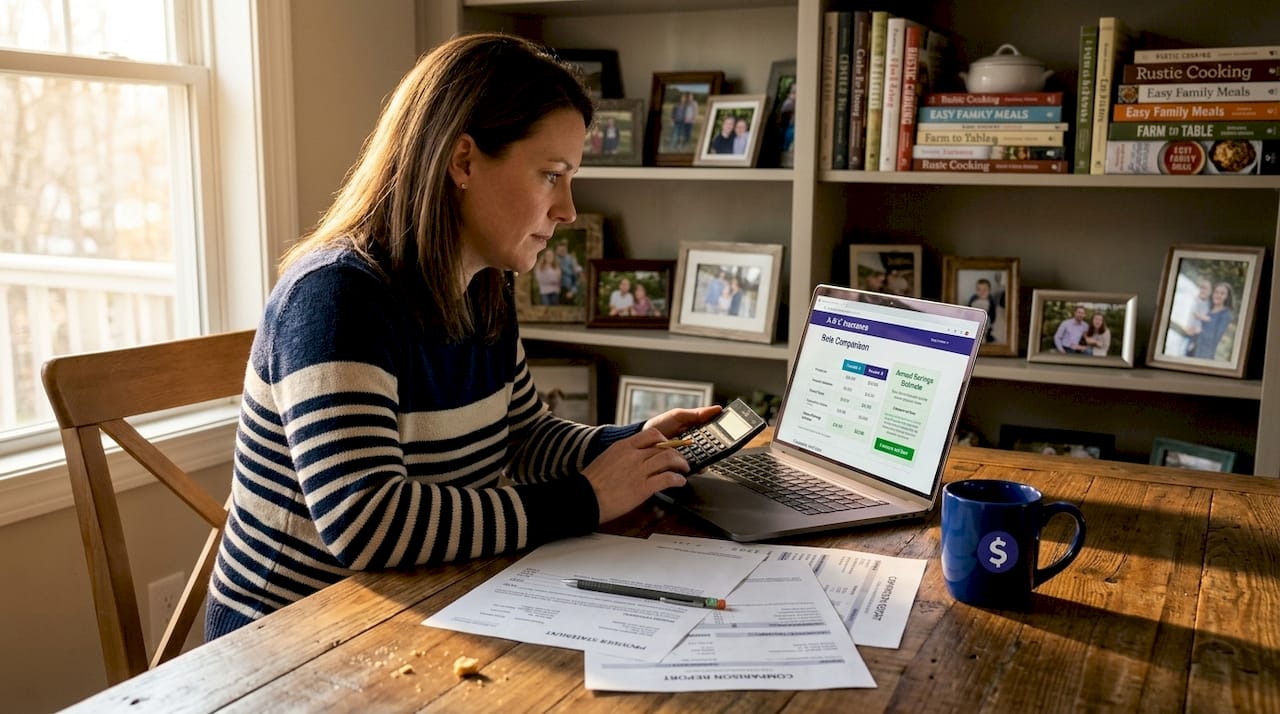
Most providers charge in two ways. First, a flat transaction fee, which is clearly shown. Second, an exchange rate margin, which is the difference between the real mid-market rate (the one you see on Google) and the rate the provider actually offers you. This margin can represent 1% to 4% of your total transfer value without appearing as a separate line item.
| Cost type | Where it appears | Easy to spot? |
|---|---|---|
| Transaction fee | Shown upfront | Yes |
| Exchange rate margin | Baked into the rate | Rarely |
| Intermediary bank fee | Deducted mid-transfer | No |
| Recipient bank fee | Deducted on arrival | Almost never |
The table above shows why recipients sometimes receive less than expected. Intermediary banks, which are banks used to route funds between institutions that don't have direct relationships, can charge their own fees. These are almost never disclosed by the sending provider because the provider doesn't control them.
The FCA review of international payment pricing confirms that good practice requires providers to ensure total pricing transparency so that intermediary bank and recipient fees are not discovered only after the transfer. When a provider can't tell you the exact amount your recipient will receive, that's a red flag.
The all-in cost calculation to run every time:
- Start with the mid-market exchange rate (search the currency pair on Google)
- Compare it to the rate your provider is offering
- Add any fixed transaction fees
- Ask specifically whether intermediary or recipient bank fees apply
- Look for a "recipient receives" guarantee or estimate before confirming
Pro Tip: Always calculate all-in cost by using a comparison tool that shows the actual amount your recipient will receive, not just the send amount. A transfer costing $5 more upfront can still be better value if it guarantees a higher received amount.
Watch out for scams: recognize, prevent, and respond
Cost isn't the only risk. Fraudsters specifically target cross-border payments because the transactions are fast, difficult to trace, and often irreversible. Knowing the warning signs is just as important as knowing the fees.
Top red flags that signal a transfer scam:
- Someone contacts you unexpectedly asking you to wire money urgently
- You're asked to pay foreign officials, lottery prizes, or customs fees via transfer
- The "sender" of a romantic or investment relationship asks for money before meeting
- You receive a check, are asked to deposit it, and then wire a portion elsewhere
- A job offer requires you to receive and forward payments on behalf of an employer
U.S. FTC guidance is clear: wire transfers are hard to reverse, and victims should never wire money to someone they haven't met in person, never pay under pressure or urgency, and should avoid using wire transfer as the only available payment method in any transaction.
"If a stranger asks you to wire money, that's almost always a scam. Legitimate businesses and government agencies don't ask you to pay by wire transfer."
Real-world example: A small business owner receives an invoice from what appears to be a long-standing supplier. The email looks identical to previous ones, but the bank details have changed. This is called a Business Email Compromise (BEC) scam. The business wires $18,000 to a fraudulent account. By the time the real supplier follows up about non-payment, the funds are gone.
U.K. FCA guidance reinforces that money transfer scams often involve impersonation of foreign officials and requests for upfront payments or fees. Reporting immediately when you suspect involvement is critical.
The role of AI and fraud detection in flagging suspicious patterns is growing, but it's not a substitute for personal vigilance.
If you suspect fraud, take these steps immediately:
- Stop the transfer if it hasn't been sent
- Contact your provider or bank directly using numbers from their official website
- Request a recall or reversal, understanding it isn't guaranteed
- Report to the FTC (ftc.gov/complaint) in the U.S. or Action Fraud in the U.K.
- Document every detail: amounts, dates, account numbers, and communications
Pro Tip: Time is everything in fraud recovery. Reporting within the first hour of suspecting a problem gives your provider the best window to intercept the funds before they are dispersed further.
Documentation and compliance: identity, purpose, and source of funds
Beyond scams, ensuring your transfer is compliant can mean the difference between a smooth transaction and being flagged for review. Anti-money-laundering (AML) regulations require providers to verify certain things about you and your transfer.
What providers typically ask for:
- Government-issued photo ID (passport, driver's license, national ID card)
- Proof of address (utility bill or bank statement, usually within 90 days)
- Purpose of transfer (family support, business payment, property purchase, etc.)
- Source of funds documentation for larger transfers (bank statement, pay stub, sale agreement)
Standard AML and KYC (Know Your Customer) procedures for large international transfers and higher-risk situations commonly include identity verification, source-of-funds documentation, and purpose documentation. These steps can prevent delays and reduce fraud risk significantly.
For individuals sending regular family remittances below typical threshold amounts (often $3,000 to $10,000 depending on jurisdiction and provider), the process is usually straightforward. But for larger one-time transfers, such as property purchases or business capital movements, you should expect more detailed documentation requests.
For small businesses, the documentation bar is higher. Providers may want to see invoices, contracts, or proof that the payment corresponds to a legitimate commercial transaction. This isn't bureaucratic inconvenience. It's protection for both parties and reflects global standards around AML and payment efficiency.
Pro Tip: Gather all required documents before initiating a large transfer. Submitting them proactively, rather than waiting for a provider request, can cut processing time significantly and prevent your transfer from being held in a compliance queue.
Institutional security checklists: SWIFT and large-scale transfer controls
For those operating at scale or seeking institutional-grade security concepts, understanding a structured framework adds another layer of protection. The most widely recognized framework for cross-border payment security at the institutional level is the SWIFT Customer Security Controls Framework (CSCF).
SWIFT's CSCF defines a security baseline for banks and larger payment operators that participate in the SWIFT network. It includes mandatory controls (which every participant must meet) and advisory controls (best-practice recommendations), along with an annual attestation process confirming compliance.
Mandatory CSCF elements include:
- Restricting internet access from the payment environment
- Protecting critical systems from malware
- Managing physical and logical access to sensitive systems
- Detecting anomalies in user and system behavior
- Incident response and recovery planning
Small businesses aren't expected to implement a full CSCF. But the thinking behind it translates directly to good habits at any scale.
| Security element | Institutional level | Small business equivalent |
|---|---|---|
| Access control | Restricted system roles | Limit who can authorize transfers |
| Anomaly detection | Automated monitoring | Review transaction history regularly |
| Incident response | Formal protocols | Know who to call immediately if fraud is suspected |
| Annual attestation | Formal third-party audit | Periodic self-review of transfer procedures |
Exploring automation in finance security shows how even small operations can benefit from structured thinking around payment controls. The key takeaway is that checklists work because they impose discipline. You can't rely on memory alone when real money is at stake.
Beyond the basics: what most checklists miss in international transfer security
Standard checklists are powerful. But there are risks that no pre-transfer checklist alone can fully address.
The first is the speed paradox. Faster transfers, now increasingly settling within minutes, leave almost no window to catch errors or fraud after sending. A checklist prevents mistakes before sending, but the moment funds leave your account, time becomes your most critical resource. The conventional wisdom that "careful preparation prevents all problems" is incomplete. Even a perfectly verified transfer can encounter an undisclosed intermediary bank fee on the receiving end, a problem no sender-side checklist will catch.
The second overlooked risk is data sharing. Many users connect transfer apps to their bank accounts or share credentials across devices. These integrations, while convenient, create additional exposure points. A security breach on any connected app can compromise your transfer account even if you've done everything else right.
The third, and arguably most underappreciated, risk is the assumption that once you've sent money, your job is done. Post-send monitoring matters. Checking that your recipient confirms receipt, reviewing your account for any unauthorized activity afterward, and keeping records of every transaction are habits that catch problems before they become permanent losses.
If you suspect fraud, act quickly and contact your payment provider or bank immediately. Reversal isn't guaranteed, so your fastest path to recovery is to report and request reversal or recall routes through the provider.
One editorial example that illustrates this well: a sender confirms all details, uses a verified provider, and pays fair fees. The transfer is flagged by the recipient's local bank for additional review. The sender assumes everything is fine because they did everything right. Three days pass. The recipient urgently needs the funds. A single follow-up call on day one would have resolved the issue within hours. The checklist protects you before sending. Vigilance protects you after.
Pro Tip: Build a habit of post-send monitoring. Check back with your recipient within 24 hours to confirm receipt, and log every transfer with the confirmation number, amount, and date for your records.
Peace of mind for your next international money transfer
You now have a complete security framework: verified recipient details, transparent pricing, scam awareness, compliance preparation, and institutional-grade thinking applied to everyday transfers. The next step is choosing the right platform to put this knowledge into action.
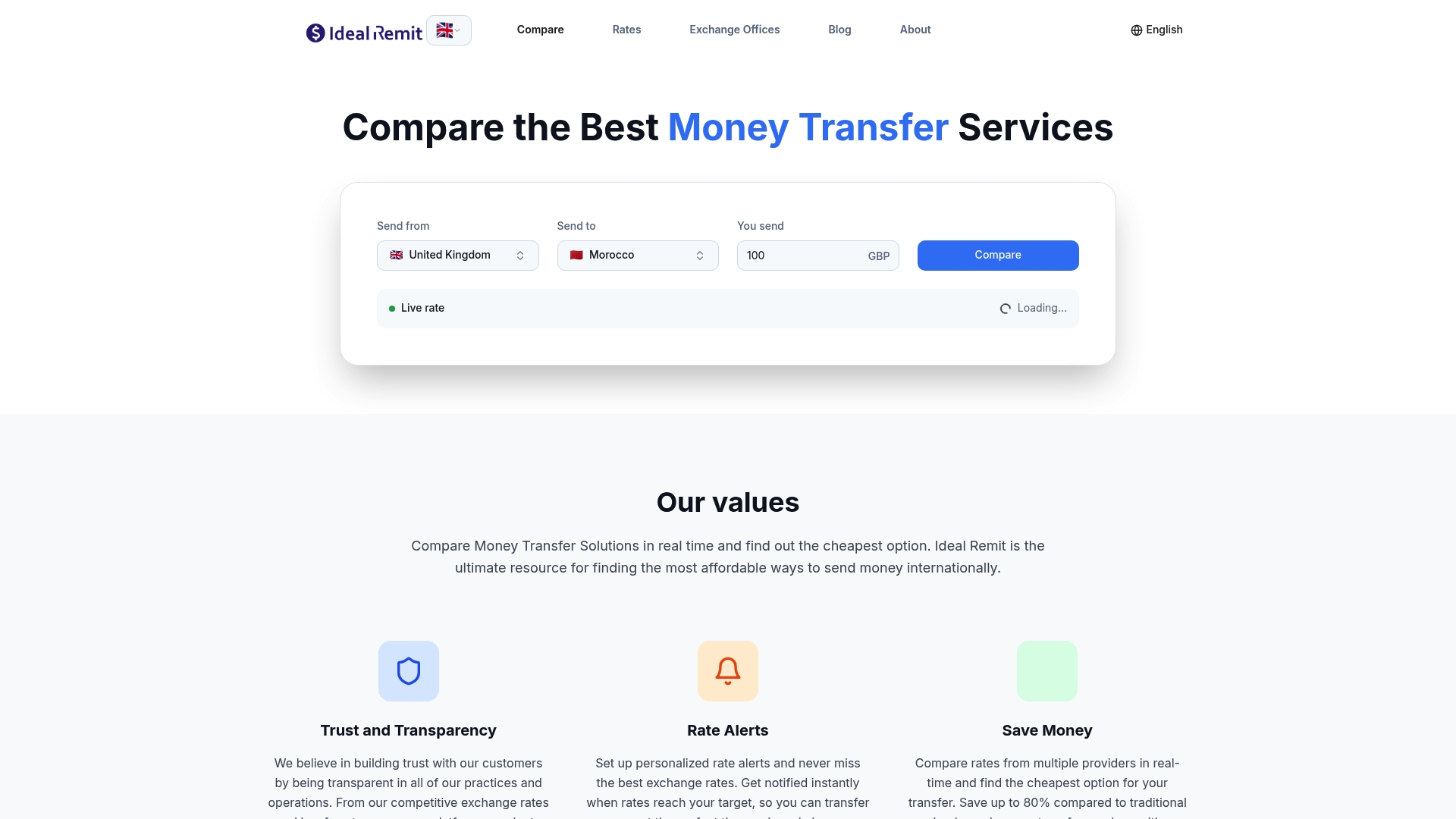
At Ideal Remit, we built our comparison platform specifically for people who care about both security and value. You can compare real-time rates and fees from trusted providers including Western Union, MoneyGram, Remitly, Wise, and many others, all in one place. Our tools help you calculate the exact amount your recipient will receive, set personalized rate alerts, and identify providers offering verified, transparent pricing. With support for transfers to over 100 countries and savings of up to 80% compared to traditional banks, you can send money with confidence. Visit Ideal Remit today and start comparing before your next transfer.
Frequently asked questions
How do I know if my international transfer platform is secure?
Check for verified web addresses, two-factor authentication, and full transparency of fees and rates before sending money. A secure provider will show you the complete cost breakdown including all potential intermediary charges before you confirm.
What should I do if I think I've fallen for a transfer scam?
Contact your bank or provider immediately to request a reversal and report the scam to authorities. As FTC guidance confirms, quick action is your best chance of recovering funds, even though reversal isn't guaranteed.
Why does my provider ask for source-of-funds or reason for transfer documentation?
This is required by law for anti-money-laundering (AML) compliance and helps prevent illegal activity during large or high-risk transfers. These are standard KYC procedures designed to protect both senders and recipients.
Can hidden fees still occur even after checking all costs?
Yes. Some intermediary or recipient bank fees are not disclosed upfront, even by compliant providers. The FCA review specifically flags this as a poor-practice pattern. Always ask your provider whether a guaranteed received-amount applies to your transfer.
Written by
Brahim Oubrik
Brahim Oubrik, a senior data engineer who experienced firsthand the challenges of sending money internationally. Living in France while supporting his family in Morocco, Brahim regularly needed to transfer funds across borders. Drawing on his background in data engineering, Brahim decided to solve this problem not just for himself, but for the millions of others navigating the same difficulties. He built Ideal Remit to bring clarity to the international money transfer market.