MoneyGram International Money Transfer: Complete Guide (2026)
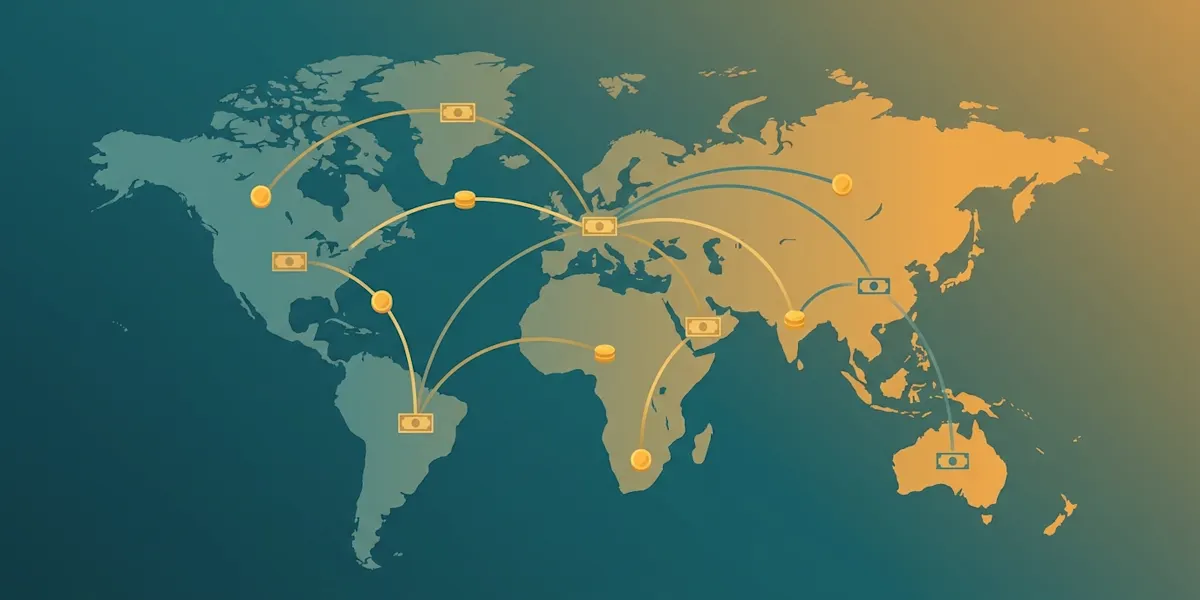
When you need to get cash to someone in a rural town in the Philippines, a village in Nigeria, or a small city in Guatemala, the network matters as much as the fee. That's where MoneyGram international money transfer has held its ground for over eight decades.
This guide covers everything you need to know before using MoneyGram: how it works, the true cost breakdown (including the exchange rate markup most reviews skip), transfer speeds, delivery options, the 2024 data breach, and an honest assessment of who MoneyGram is genuinely best for. By the end, you'll be able to make a clear-eyed decision about whether it's the right service for your transfer.
What Is MoneyGram?
MoneyGram is one of the oldest and largest money transfer networks in the world. Founded in 1940 as Travelers Express and rebranded to MoneyGram in 1998, it is headquartered in Dallas, Texas, and processes more than $200 billion in transactions annually across 200+ countries and territories.
Its defining competitive advantage is physical reach. With more than 350,000 agent locations worldwide, MoneyGram is accessible in places that digital-only services simply cannot serve. That includes rural areas across sub-Saharan Africa, South Asia, and Latin America where recipients may not have bank accounts, smartphones, or reliable internet connections.
MoneyGram is also not standing still as a legacy provider. In recent years it has invested in a fintech pivot: a modernised mobile app, crypto buy/sell functionality, and a partnership with the Stellar blockchain that enables USDC-based transfers to be cashed out at agent locations in select markets. It is more than just a cash transfer desk.
For a broader view of where MoneyGram fits among the full range of international money transfer providers, it's useful to understand the spectrum of services before choosing one.
How Does MoneyGram Work? Step-by-Step
MoneyGram gives you two distinct ways to send: online through its website or app, and in person at an agent location. Both routes end with the recipient receiving funds, but the experience and cost can differ significantly between them.
Online transfers:
- Create a free account at moneygram.com or download the app.
- Enter your destination country and recipient details.
- Enter your send amount and review the fee and exchange rate in the estimator before proceeding.
- Select your payment method: bank account, debit card, or credit card.
- Select the delivery method for your recipient.
- Confirm the transfer and note the reference number for tracking.
In-person transfers:
Visit a MoneyGram agent location, complete the transfer form at the counter, and pay with cash or card. Your recipient can then collect cash at any MoneyGram agent worldwide by presenting their ID and your reference number.
In both cases, recipients do not pay a receiving fee.
Sending Money Online or In the App
The digital experience is clean and functional. Both moneygram.com and the mobile app (available on iOS and Android) support funding via bank account, debit card, and credit card. The app supports biometric login and sends real-time push notifications as your transfer progresses through each stage.
One important habit to build before you start: use the fee estimator on the MoneyGram homepage before entering your details. Fees and exchange rates vary considerably by corridor, transfer amount, and payment method. Checking the estimator first gives you a true cost picture before you've committed to anything.
Sending Money In Person at an Agent Location
In-person transfers are the backbone of MoneyGram's appeal for cash-based senders. Agent locations include Walmart, CVS, grocery chains, post offices, and thousands of independent agents. Use the location finder on the website or app to find the nearest option.
At the counter, you fill out a transfer form, hand over cash or pay by card, and receive a receipt with your reference number. The recipient presents that number and a valid government-issued ID at any MoneyGram agent in their country to collect the funds.
One detail worth noting: in-person fees are not always higher than online fees. For some corridors and transfer amounts, walking into an agent can actually be cheaper. It's worth comparing both options using the estimator before deciding which route to take.
How Recipients Receive Their Money
Delivery options vary by destination country, but MoneyGram offers more payout methods than most people expect.
Cash pickup at any of 350,000+ agent locations worldwide is the flagship option. No bank account is needed. No MoneyGram account is needed. Just a valid ID and the sender's reference number.
Direct bank deposit sends funds directly to the recipient's bank account. Available in most major destination countries.
Mobile wallet transfer delivers funds to supported digital wallets in select markets. Coverage is narrower than Remitly's wallet network but expanding.
Debit card deposit is available in select countries, typically arriving same-day.
Cash home delivery is available in a small number of markets for recipients who cannot travel to an agent location.
The combination of these options, particularly cash pickup without requiring a bank account, is what makes MoneyGram indispensable in certain corridors.
MoneyGram Fees: What You'll Actually Pay
MoneyGram's cost structure has two components: a transaction fee and an exchange rate markup. Most reviews focus on the first and underreport the second. Both matter.
Transaction fees follow a tiered structure. For first-time transfers under $5,000, MoneyGram frequently waives the flat fee entirely as a promotional offer. For subsequent transfers, fees start at around $1.99 for many popular destinations. For transfers above $5,000, fees escalate significantly, reaching $128 to $130 or more depending on the corridor and method.
Exchange rate markup is applied on top of, or instead of, the transaction fee. More on this below.
Credit card funding adds further cost, both through MoneyGram's own surcharge and potentially through a cash advance fee from your card issuer.
A worked example: sending $1,000 to the Philippines via bank account might carry a $0 transaction fee on the first transfer, but a 1.5% exchange rate markup means your recipient receives the equivalent of roughly $985 worth of pesos at the mid-market rate. On repeat transfers, the transaction fee is added on top.
Always use MoneyGram's estimator to verify the current total cost for your specific corridor and amount. Rates fluctuate and the numbers above are illustrative benchmarks, not guaranteed figures.
The Exchange Rate Markup: MoneyGram's Hidden Cost
This is the cost that most competitor articles either skip entirely or bury in a footnote. It deserves a clear explanation.
The mid-market rate is the real exchange rate, the midpoint between global buy and sell prices that you can verify on Google, XE, or any financial data provider. MoneyGram does not offer you this rate. Instead, it applies its own rate, which sits above the mid-market rate by approximately 1% to 3% for most corridors, and as high as 7.59% on some less common routes.
Here's what that looks like in practice. Suppose the mid-market rate is 1 USD = 56.00 MXN. MoneyGram might offer 54.60 MXN per dollar, a difference of 1.40 pesos on every dollar sent. On a $1,000 transfer to Mexico, your recipient receives 54,600 pesos instead of 56,000 pesos. That's 1,400 pesos (roughly $25) that doesn't cross the border, regardless of whether the transaction fee shows as $0.
For comparison, Wise applies the mid-market rate directly and charges a transparent percentage fee. On the same $1,000 transfer, the total cost through Wise is often visible as a single line item, and the recipient receives more. The right choice still depends on delivery method and destination, but the exchange rate difference is real and significant for repeat senders.
The key habit: always check the total recipient amount in the estimator, not just the stated transfer fee.
First Transfer Promotion: What New Customers Get
MoneyGram waives the flat transaction fee on first transfers up to $5,000 and typically offers a promotional exchange rate that is close to or slightly better than the standard markup. For a large first transfer, this is a meaningful saving.
The benefit is one-time only. All subsequent transfers revert to the standard fee and exchange rate markup structure. If you're planning a large transfer, timing it as your first MoneyGram transaction makes good financial sense. Just be sure to price future transfers at the standard rate when deciding whether MoneyGram is your long-term provider.
How to Minimize Your MoneyGram Transfer Costs
A few practical steps reduce what you pay on every transfer.
- Fund with a bank account, not a credit card. Credit card funding adds a surcharge and may trigger a cash advance fee from your issuer.
- Send to a bank account when possible. Bank deposit delivery often comes with a better exchange rate than cash pickup on the same corridor.
- Use the online platform rather than in-store for bank-to-bank transfers. Digital transfers to bank accounts are typically cheaper through the website or app.
- For cash-to-cash transfers, compare in-person and online costs. In-person can be cheaper for some corridors. The estimator makes this comparison quick.
- Always run the estimator before committing. Try different send amounts and methods to find the most cost-effective combination for your specific transfer.
MoneyGram Transfer Speed: How Long Does It Take?
Speed at MoneyGram is determined by the combination of payment method and delivery method chosen. Unlike Remitly's explicit Express/Economy tiers, MoneyGram doesn't frame its speed options that way, but the underlying dynamic is similar.
Cash pickup and mobile wallet transfers arrive within minutes for most corridors. This is one of MoneyGram's genuine strengths for urgent or emergency transfers.
Debit card deposits are typically processed the same day.
Direct bank deposits usually arrive within one to three business days, but can take up to ten days in certain destination countries where banking infrastructure, national holidays, or compliance review processes add delays.
Larger or flagged transfers may be held for additional review, which can extend processing time unpredictably. If speed is critical, cash pickup is the most reliable option.
MoneyGram Transfer Limits: How Much Can You Send?
Standard sending limits are $10,000 per transfer and $10,000 within any rolling 30-day period for most destination countries. US domestic transfers can reach $25,000 in certain cases.
Some corridors have lower caps. Chile, for example, is capped at $5,000. These country-specific limits are shown during the transfer process.
In-person agent locations can sometimes accommodate higher amounts than the online platform allows. If you need to send above the standard online limit, contacting a local agent directly is worth exploring.
If you hit your limit, you'll receive an error message and need to wait for the rolling period to reset. MoneyGram may also request supporting documentation for large or recurring transactions: source of funds, purpose of transfer, or bank statements. This is a standard regulatory requirement, not an indication of suspicion.
If you need to move a large amount across the month, splitting it across multiple transfers at planned intervals is a practical workaround.
Countries and Currencies: Where Can You Send With MoneyGram?
MoneyGram reaches 200+ countries and territories. Online transfers support nearly 50 currencies, with additional currencies accessible through agent locations.
The most active corridors include US to Mexico, the Philippines, India, Guatemala, Nigeria, and the Dominican Republic. For many of these routes, both online and cash pickup options are available, giving senders flexibility based on their recipient's situation.
Cash pickup availability is particularly important in rural parts of Africa, South Asia, and Latin America where digital infrastructure is limited and recipients may not hold bank accounts or mobile wallets. In these regions, MoneyGram's agent network is often the most reliable, and sometimes the only, accessible option.
Exchange rate quality varies meaningfully by corridor. The markup on a US-to-Mexico transfer will differ from a US-to-Nigeria transfer. Always check the estimator for your specific route rather than applying general benchmark figures.
Is MoneyGram Safe? Security, Regulation, and the 2024 Data Breach
MoneyGram is a fully licensed and regulated financial services company. It is registered as a Money Services Business with FinCEN, holds money transmitter licences in all 50 US states, and is regulated by the FCA in the UK and equivalent authorities across the EEA and other markets. It invests approximately $50 million annually in compliance and regulatory infrastructure.
Now for the incident that many readers are researching directly.
The September 2024 data breach involved an unauthorized third party gaining access to MoneyGram's systems between September 20 and 22, 2024, through a social engineering attack targeting the IT help desk. The data accessed included names, contact information, government-issued IDs, and for some customers, Social Security Numbers and criminal investigation information.
MoneyGram restored systems by late September 2024 and offered two years of free identity monitoring through Experian to affected US customers.
What this means for users today: MoneyGram's transfer systems are operational. The breach was a data exposure event, not a theft of funds in transit. However, it is a legitimate concern and worth acknowledging, particularly for users who may have been customers during that window.
Practical steps regardless of when you started using MoneyGram: use a strong, unique password, enable two-factor authentication where available, and monitor your credit report periodically. The Experian monitoring offer for affected customers remains the primary remediation channel.
MoneyGram's Additional Services Beyond Money Transfer
Most competitor articles treat MoneyGram purely as a cash transfer service. It offers considerably more.
Bill payment lets you pay thousands of US companies directly through the MoneyGram app or at agent locations. Utility bills, rent payments, and other recurring obligations can be handled without a separate bank transfer.
Money orders can be purchased, cashed, and tracked at agent locations. For recipients or senders who prefer paper instruments over digital transfers, this remains a practical option.
Mobile top-ups allow you to send airtime or data credit to recipients in select countries, a useful option when the recipient needs connectivity more urgently than cash.
Crypto ramps are where MoneyGram has made its most distinctive fintech investment. Through the app, users can buy, sell, and hold digital currencies. More significantly, the partnership with the Stellar blockchain enables USDC transfers that can be cashed out at MoneyGram agent locations, and cash can be converted to USDC at agents for deposit into a crypto wallet. This cash-in/cash-out bridge between traditional remittance infrastructure and digital assets is genuinely novel and is available in select markets.
For users who move between the crypto and cash worlds, this combination is difficult to find elsewhere.
MoneyGram Pros and Cons: An Honest Assessment
| Detail | |
|---|---|
| Pros | 350,000+ agent locations in 200+ countries, cash pickup with no bank account or app required, multiple delivery options, 80+ years of operational history, first-transfer fee waiver up to $5,000, bill pay and money order services, crypto on/off ramp via Stellar, 24/7 customer support |
| Cons | Exchange rate markup of 1%–3% (up to 7.59% on some corridors), fees escalate sharply above $5,000, credit card funding is expensive, 2024 data breach raised legitimate security concerns, customer service quality is inconsistently rated in verified reviews, delivery options not visible until after sign-up, no recurring transfers or FX hedging tools |
The physical network and the crypto integration are genuine differentiators. The exchange rate markup and the fee structure above $5,000 are genuine limitations. Both deserve equal weight in your evaluation.
MoneyGram vs. Competitors: How Does It Stack Up?
| MoneyGram | Western Union | Wise | Remitly | |
|---|---|---|---|---|
| Agent locations | 350,000+ | 500,000+ | None | 490,000+ (pickup only) |
| Exchange rate | Mid-market + 1%–3% (up to 7.59%) | Mid-market + 1%–5% | Mid-market rate | Mid-market + 0.5%–2.5% |
| Fee structure | Variable; $0 first transfer under $5K | Variable | Transparent % fee | Flat fee + markup |
| Crypto | Yes (Stellar/USDC ramp) | No | No | No |
| Best for | Cash pickup, rural access, crypto ramp | Broadest rural reach | Bank-to-bank, lowest cost | Mobile wallets, Asia/Africa corridors |
Versus Western Union: The two services are structurally the most similar. Both rely on massive physical agent networks. Western Union's network is larger (around 500,000 locations) with deeper rural penetration in parts of Africa and Asia. MoneyGram's crypto integration through the Stellar partnership is the clearest differentiator in its favour.
Versus Wise: Wise uses the mid-market rate and charges a transparent percentage fee, making it significantly cheaper for most bank-to-bank transfers. MoneyGram's advantage is physical: Wise has no agent network and cannot serve recipients who need cash pickup.
Versus Remitly: Remitly generally offers lower costs for bank-to-bank and mobile wallet transfers, particularly to high-volume corridors in Asia and Africa. MoneyGram's broader cash pickup network and in-person sending option give it an edge for cash-based transactions and rural recipients.
Who Is MoneyGram Best For?
MoneyGram suits you well if:
- Your recipient needs cash pickup and does not have a bank account, mobile wallet, or reliable digital access.
- You are sending to a rural or underserved area where other providers have limited or no agent coverage.
- You prefer paying cash in person at a counter rather than funding a transfer digitally.
- You are a first-time sender who benefits from the zero-fee first transfer promotion on amounts up to $5,000.
- You need to pay US bills or handle money orders alongside international transfers from a single platform.
- You move between crypto and cash and need a reliable cash-in/cash-out ramp.
MoneyGram is likely not the right fit if:
- You're making regular bank-to-bank transfers and want the lowest possible cost. The exchange rate markup accumulates meaningfully over time compared to Wise or Remitly.
- You're sending above $5,000 frequently. The fee escalation at that threshold is significant.
- You prioritise exchange rate transparency and want to see a single, honest percentage fee rather than a blended cost.
MoneyGram Scams: How to Protect Yourself
MoneyGram's cash transfer model, which is its greatest strength for legitimate users, is also what makes it a target for fraud. Cash pickup transfers, once collected, cannot be reversed. That finality is the core of the scam risk.
Common scam patterns that exploit MoneyGram:
- Grandparent scams: A caller impersonates a grandchild in trouble and asks for urgent cash via MoneyGram.
- Lottery and prize scams: You're told you've won and must send fees or taxes before collecting.
- Romance scams: Someone you've met online builds trust over weeks or months, then asks for money via cash transfer.
- Government impersonation: A caller claims to be from the IRS, Social Security Administration, or law enforcement and demands immediate payment.
- Purchase scams: You buy something online, pay via MoneyGram, and the seller disappears.
Protective steps:
- Never send money to someone you haven't met in person and verified through a known, trusted channel.
- If you receive an unexpected request, verify it by calling the person back on a number you already have, not one provided in the suspicious message.
- MoneyGram will never ask you to send money to claim a prize.
- If you suspect fraud, contact MoneyGram immediately and file a report with the FTC at reportfraud.ftc.gov. If the transfer hasn't been picked up yet, there may be a short window to cancel.
MoneyGram runs a dedicated fraud awareness programme and actively encourages customers to pause and verify before sending, particularly for unexpected or urgent requests.
Common MoneyGram Complaints and How to Handle Them
Verified customer reviews surface a consistent set of recurring issues. Here's what's actually happening in each case and what you can do about it.
Transfer cancelled without explanation. MoneyGram's compliance system flags transfers automatically based on patterns, amounts, or recipient data. If your transfer is cancelled, the first step is to contact MoneyGram customer support directly and ask for the specific reason. Refunds for cancelled transfers typically process within three to ten business days and return to the original payment method.
Recipient denied at agent location. This usually happens because of a name mismatch between the transfer details and the recipient's ID, or because the transfer is still in processing. Verify the transfer status using your reference number on the app or website before the recipient tries again. Ensure the recipient's name on the transfer matches their ID exactly.
Long refund wait times. Refunds can take up to ten business days in some cases. If the standard timeline has passed without resolution, escalate by contacting MoneyGram's customer relations team in writing and requesting a formal status update. Keeping records of all correspondence speeds up the process.
Account blocked without notice. Like most regulated money transfer services, MoneyGram's compliance review can trigger account blocks when activity patterns raise flags. Contact MoneyGram's support team, explain the situation, and be prepared to submit identity documents and source-of-funds information. Responding promptly with complete documentation is the fastest path to reinstatement.
Frequently Asked Questions
Is MoneyGram safe to use in 2026? Yes. MoneyGram is a licensed and regulated money transmitter with 80+ years of operational history. The 2024 data breach was a serious incident involving personal data exposure, but transfer systems are fully operational. Use strong passwords, enable two-factor authentication, and monitor your credit report.
What is the maximum I can send with MoneyGram? $10,000 per transfer and $10,000 in any rolling 30-day period for most countries. Some corridors have lower caps. In-person agents may accommodate higher amounts in certain cases.
How long does a MoneyGram transfer take? Cash pickup and mobile wallet transfers typically arrive within minutes. Bank deposits take one to three business days and can take up to ten days for certain destinations. Debit card deposits are usually same-day.
Can I cancel a MoneyGram transfer after sending? Yes, if the recipient hasn't collected the funds yet. Contact MoneyGram immediately. Refunds return to the original payment method within three to ten business days.
What ID does my recipient need to pick up cash? A valid government-issued photo ID matching the name on the transfer, plus the sender's reference number. No MoneyGram account is required.
How does MoneyGram make money? Through two revenue streams: transaction fees on each transfer, and an exchange rate markup applied when converting currencies. The markup is the less visible of the two costs.
Does MoneyGram report transfers to the IRS? MoneyGram is required to report transactions over $10,000 to the IRS under the Bank Secrecy Act. Transfers below this threshold are generally not individually reported, though MoneyGram complies with all applicable financial reporting regulations.
What happened in the MoneyGram 2024 data breach? Between September 20 and 22, 2024, an unauthorized party accessed personal customer data including names, contact details, government IDs, and SSNs for some customers, via a social engineering attack on MoneyGram's IT help desk. Systems were restored by late September. Affected US customers were offered two years of free identity monitoring through Experian.
How is MoneyGram different from Western Union? Both operate large physical agent networks and offer cash pickup without bank accounts. Western Union has a larger network (around 500,000 locations) with broader rural coverage in some regions. MoneyGram's most distinct advantage is its Stellar blockchain crypto ramp, which Western Union does not offer.
Can I use MoneyGram for crypto? Yes. The MoneyGram app supports buying, selling, and holding digital currencies. The Stellar partnership enables USDC to be converted to cash at agent locations and vice versa in select markets.
Conclusion
MoneyGram is the right tool for a specific and important job: getting cash to people who need it, in places that digital-only services can't reach, without requiring the recipient to have a bank account, a smartphone, or an app.
Its 350,000+ agent locations, 200+ country reach, and eight decades of operational history make it uniquely positioned for cash-based remittances in rural and underbanked regions. The crypto ramp through Stellar adds a genuinely novel dimension that no direct competitor currently matches.
The honest trade-off is cost. The exchange rate markup of 1% to 3%, and higher on some corridors, makes MoneyGram a more expensive choice than Wise or Remitly for regular bank-to-bank transfers. The fee escalation above $5,000 limits its suitability for larger, frequent transfers. And the 2024 data breach, while resolved operationally, is a legitimate consideration for users concerned about data security.
Before you send, use MoneyGram's fee estimator to see the actual cost for your specific corridor and delivery method. Then compare the total recipient amount against one digital alternative for the same transfer. If your recipient needs cash pickup or lives somewhere only MoneyGram can reach, the answer is likely clear. If you're sending to a bank account in a well-served corridor, the comparison may point elsewhere.
The right choice is the one that gets the most money to your recipient, reliably, and by the method they can actually access.
Written by
Brahim Oubrik
Brahim Oubrik, a senior data engineer who experienced firsthand the challenges of sending money internationally. Living in France while supporting his family in Morocco, Brahim regularly needed to transfer funds across borders. Drawing on his background in data engineering, Brahim decided to solve this problem not just for himself, but for the millions of others navigating the same difficulties. He built Ideal Remit to bring clarity to the international money transfer market.