What Are Romance Scams? How They Work, Warning Signs & How to Protect Yourself
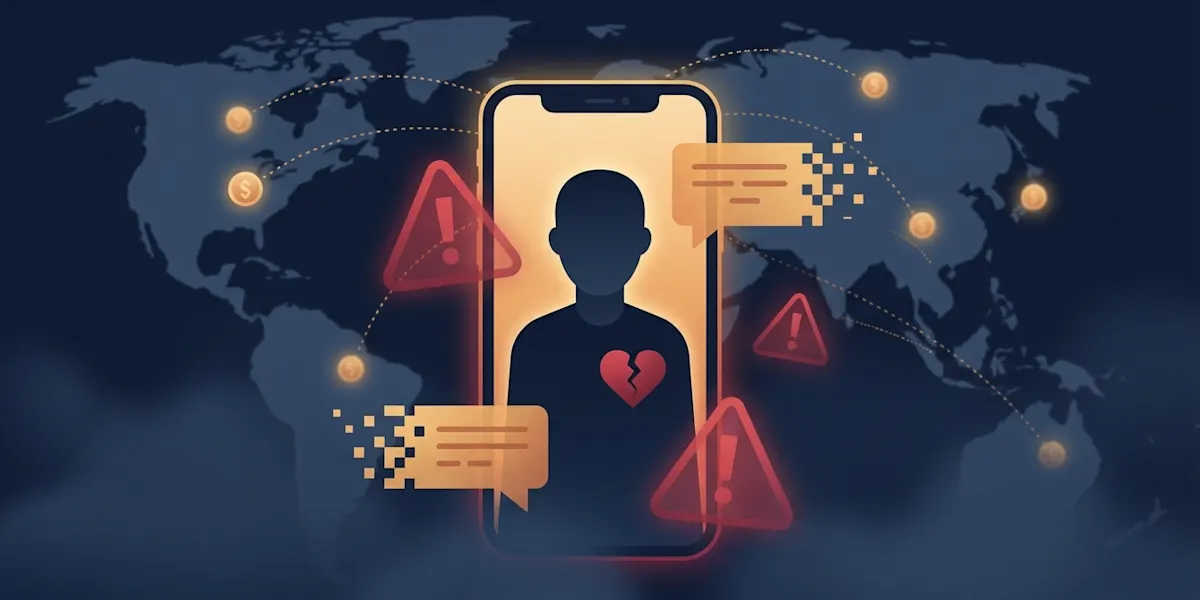
Romance scams cost Americans over $1.14 billion in reported losses in 2023, according to the FTC, making them the single costliest category of consumer fraud in the country. And that figure almost certainly understates the real damage: experts estimate actual losses are 3 to 5 times higher, because most victims never report out of shame or embarrassment.
A romance scam is a confidence fraud in which a criminal creates a fake online identity, builds a fabricated romantic relationship over weeks or months, and then exploits that manufactured emotional bond to extract money, most commonly through international wire transfers, gift cards, or cryptocurrency.
Before you assume this only happens to naive or gullible people, stop. Romance scam victims include physicians, engineers, academics, and military officers. These scams exploit a universal human need for connection and love, not intellectual weakness. If anything, emotionally intelligent, empathetic people are more vulnerable, not less.
This guide explains exactly how romance scams work, the warning signs to watch for, who gets targeted and why, and what to do if you or someone you care about is affected. If you are currently questioning whether an online relationship is real, this page was written for you. Read it without judgment.
What Is a Romance Scam?
A romance scam is a type of fraud in which a criminal creates a fake online identity to build a romantic or emotional relationship with a victim. After weeks or months of trust-building, the scammer fabricates emergencies or opportunities to pressure the victim into sending money, typically through international wire transfers, gift cards, or cryptocurrency.
That definition matters, but the classification matters just as much.
Romance scams are categorized as authorized push payment (APP) fraud because the victim voluntarily initiates the payment. They were deceived by the emotional relationship, not by hacking or any technical exploit. This distinction has painful real-world consequences: because the victim pressed "send" willingly, most consumer protection frameworks, including Regulation E in the United States, do not require banks to reimburse the loss. The scammer's weapon is not technology. It is psychology.
It is also worth drawing a clean line between romance scams and casual catfishing. Catfishing is the act of creating a fake online identity to deceive someone, and it can be motivated by attention-seeking, emotional validation, or social reasons with no financial intent. A romance scam is catfishing with a deliberate criminal purpose: to steal money. Every romance scam involves catfishing, but not every catfish is a romance scammer.
Romance scams are also closely related to, but distinct from, the broader category of international money transfer risks. Wire transfers and international remittance services are the primary tools scammers use to extract and move stolen funds across borders, often making recovery impossible once the money leaves the country.
How Do Romance Scams Work? The 5-Stage Scam Lifecycle
Romance scams follow a remarkably consistent psychological playbook. Whether the operation is run by a single scammer in a rented apartment or a team of dozens inside a Southeast Asian fraud compound, the mechanics are the same.
Understanding each stage is the most powerful defense you have. It transforms vague suspicion into pattern recognition, and pattern recognition is what saves people.
Stage 1: Targeting and First Contact
Scammers do not randomly approach strangers. They identify vulnerability signals and approach targets strategically.
On dating platforms and social media, they scan for indicators: a recently changed relationship status to "single" or "widowed," posts expressing loneliness, active engagement on dating apps, limited social connections, or visible signs of financial stability. The goal is to find someone emotionally available, ideally without a strong social safety net that would provide a reality check.
The platforms used are broader than most people assume. Dating apps like Tinder, Bumble, Hinge, Match, and Plenty of Fish are common starting points. But according to FTC data, Facebook is among the most frequently reported platforms for initial romance scam contact. Instagram, LinkedIn, WhatsApp, Telegram, online gaming communities, and even mobile games like Words With Friends are all active vectors.
The fake persona is built to be attractive, trustworthy, and just out of reach. Common profiles include a military service member deployed overseas, an engineer working on a foreign oil rig, a doctor volunteering with a humanitarian organization, or a successful businessperson traveling internationally. These personas all share one critical feature: they explain why the person cannot meet you in person.
Photos are typically stolen from real social media users, models, or military personnel. Increasingly, organized operations use AI-generated profile photos that cannot be traced back to a real person. At scale, these operations may manage dozens of simultaneous fake profiles, with scripts and AI chatbots handling early conversations.
Stage 2: Grooming and Trust Building
The grooming phase is the scammer's primary investment, and it is what makes romance scams so psychologically devastating compared to other fraud types.
This phase typically lasts 2 to 8 weeks, though sophisticated scammers may invest months in high-value targets. The goal is not just to win the victim's trust. It is to build genuine neurochemical attachment: dopamine responses to incoming messages, oxytocin bonding from perceived intimacy, and emotional dependency on the scammer's presence.
The specific tactics are consistent across documented cases:
Love bombing. The scammer overwhelms the victim with affection, compliments, and expressions of deep connection far sooner than any real relationship would warrant. "I've never felt this way about anyone" in the first week is a manipulation tactic, not a declaration of authentic feeling.
Mirroring. The scammer studies the victim's interests, values, and beliefs, harvested from social media profiles and conversation, then reflects them back. The result is an uncanny sense of compatibility, the feeling that you have finally found someone who truly understands you.
Future faking. Detailed plans for meeting, traveling together, and building a life together create emotional investment. The victim starts imagining a shared future. The emotional stakes grow.
Manufactured vulnerability. The scammer shares fabricated personal struggles: a dead spouse, a difficult childhood, loneliness from working abroad. This creates reciprocal emotional openness. The victim opens up in return, deepening the bond.
Communication intensity. Daily texts, frequent calls, good-morning and goodnight messages create a rhythm of intimacy. The victim begins to structure their day around these interactions.
The result is genuine emotional attachment. Simply telling someone "it's a scam" often fails at this stage, because the victim's emotional brain has formed a real bond. The person behind it is fabricated. The feelings are not.
Stage 3: The Crisis and First Money Request
The money request never comes immediately. It arrives only after the emotional infrastructure is firmly in place, typically after weeks of daily communication.
The pattern is recognizable once you know it: a sudden crisis that is emotionally compelling, financially solvable, time-sensitive, and requires a payment method the victim can access immediately.
The most common fabricated crises include:
- Medical emergency. Hospitalized in a foreign country, surgery required, insurance does not cover it.
- Travel crisis. Wallet stolen, passport confiscated, stranded abroad and desperate to come visit you.
- Legal trouble. Arrested or detained overseas, needs bail money or legal fees.
- Business emergency. A critical deal is falling through, a temporary cash flow problem, will repay as soon as they return.
- Customs or shipping fees. A valuable gift (jewelry, package) is stuck in customs and requires a release fee.
- Military-specific requests. Needs money for a satellite phone, leave paperwork fees, or shipping personal belongings home. Note: no legitimate U.S. military service charges service members for any of these things.
The first request is deliberately modest. Typically $200 to $1,000, a small enough amount to feel reasonable given the perceived depth of the relationship. The scammer may express embarrassment about asking at all: "I'm so ashamed, I've never asked anyone for help."
This initial small payment establishes the pattern. It proves the victim will send money, and it primes them psychologically for the requests that follow.
Stage 4: Escalation and Continued Extraction
After the first payment succeeds, the crisis narrative never resolves. It evolves.
A new emergency replaces the old one: the hospital requires additional surgery, the lawyer needs more fees, a second problem emerges before the first is resolved. Request amounts increase: $500 becomes $2,000 becomes $5,000 becomes $10,000. The emotional pressure escalates in parallel. "I'll die without this surgery." "I can't survive without you." "You're the only one who can help me."
Victims continue sending money for reasons that are psychologically coherent, even when they seem irrational from the outside.
The sunk cost fallacy. The victim has invested weeks or months of emotional energy and thousands of dollars. Stopping now means admitting it was all a lie. The brain resists that conclusion.
Cognitive dissonance. The victim's belief in the relationship conflicts with mounting red flags. Rather than abandon the belief, the brain rationalizes the red flags: "The photos might look odd but maybe they just photograph strangely."
Intermittent reinforcement. The scammer alternates between crisis and warmth: stress followed by expressions of deep love and gratitude. This bonding pattern mirrors the psychological dynamics of abusive relationships, creating emotional dependency rather than distance.
The financial consequences can be catastrophic. FBI IC3 reports document individual losses of $100,000, $300,000, $500,000 and beyond. Victims borrow money, liquidate retirement accounts, take out home equity lines of credit, and accept loans from friends and family, all to support a person who does not exist.
Stage 5: Discovery and Aftermath
Discovery usually arrives through one of a few triggers: a friend or family member intervenes after noticing behavioral changes; a reverse image search reveals the profile photo belongs to someone else; the scammer's story contradicts itself one too many times; the victim runs out of money and the scammer's affection abruptly disappears; or a bank flags unusual activity and warns the victim.
What follows is not simply "finding out you were tricked." It is a specific and severe grief response.
Denial. Many victims initially refuse to accept the person was fake. Some defend the scammer even after being shown evidence.
Shame and self-blame. "How could I have been so stupid?" is the most common reaction, and the primary reason romance scams are massively underreported. Victims blame themselves for the professional manipulation of trained criminals.
Grief. Victims mourn the loss of a relationship that felt completely real. This grief is genuine, because the emotional experience was genuine. The person was fabricated. The feelings were not.
Depression, anxiety, and PTSD. Clinical depression and PTSD symptoms are documented outcomes at rates comparable to domestic abuse survivors. Suicidal ideation is a real and documented risk.
Trust destruction. Many victims report significant difficulty forming genuine relationships afterward.
Being scammed is not a character flaw. These are professional criminals who exploit psychological vulnerabilities that exist in every human being.
Who Are the Scammers?
Romance scammers are not lone opportunists working in isolation. The vast majority operate within organized networks, and understanding who they are makes the threat feel less mysterious and more manageable.
West African scam networks were the historical pioneers of online romance scams, centered primarily in Nigeria and Ghana. Known colloquially as "yahoo boys" or "sakawa boys," these networks operate with shared scripts, stolen photo libraries, and mentorship structures where experienced scammers train recruits. Many function as loosely organized groups rather than rigid hierarchies, and the operations have evolved significantly since the early 2000s when email-based romance scams first proliferated.
Southeast Asian fraud compounds represent a more disturbing and recent development. Large-scale operations documented in Cambodia, Myanmar, and Laos house thousands of workers, many of whom are themselves trafficking victims lured by fake job offers, then forced to operate romance scams under threat of violence. These compounds run industrial-scale operations with performance targets, script libraries, and sophisticated technology infrastructure. Investigative journalists and law enforcement agencies have documented these operations extensively since 2022, and raids have been ongoing.
Individual and small-group operators function worldwide, using publicly available scripts and techniques. They are less organized but still effective, and often target specific communities they understand culturally, including diaspora communities, religious groups, and online hobby networks.
One important nuance: some scammers are themselves victims of trafficking. This does not excuse the harm caused, but it does complicate the simple villain-victim narrative. The criminal enterprise causes devastating damage regardless of how the person operating the keyboard came to be there.
Who Do Romance Scammers Target?
Romance scammers do not target gullibility. They target emotional availability.
Victims include CEOs, engineers, physicians, professors, and military officers. FBI data confirms that no demographic is immune. The common thread among victims is not naivety. It is a human desire for connection.
That said, certain groups face elevated risk:
1. Recently widowed or divorced individuals. Experiencing grief, loneliness, and a desire to rebuild intimate connection, often newly active on dating platforms without experience navigating online risks.
2. Elderly and seniors. Disproportionately targeted and suffering the highest median financial losses. Seniors may be more trusting, less familiar with digital deception techniques, and more socially isolated than younger age groups.
3. Socially isolated individuals. People with limited social networks have fewer "reality check" conversations. The friend who says "wait, something seems off about this person" is one of the most effective safeguards that exists, and isolation removes it.
4. Military families and veterans. Scammers impersonate deployed service members constantly because deployment provides a ready-made explanation for why they cannot meet. Military romance scam personas are among the most commonly reported.
5. LGBTQ+ community. Scammers exploit the desire for discreet relationships, particularly targeting individuals in regions where being openly LGBTQ+ carries social or legal risk. Victims in this group are often reluctant to report, further reducing official statistics.
6. Men. Increasingly targeted. FTC and FBI data shows men report lower frequency than women but lose significantly more money per incident on average. Men are especially vulnerable to pig butchering investment scam hybrids. They are also less likely to report due to stigma, meaning male victimization is almost certainly higher than the data suggests.
7. Immigrants and expatriates. Loneliness in a new country and a desire for cultural connection create genuine vulnerability that scammers actively exploit.
The scammer's skill lies in identifying which emotional need is unmet: connection, validation, companionship, intimacy, and then appearing to fulfill it precisely. That is not a vulnerability unique to any group. It is a universal human condition.
Types of Romance Scams
While the core mechanics remain consistent, romance scams have diversified into distinct variants targeting different demographics, platforms, and financial extraction methods. Knowing which type you might be facing helps you identify it faster.
1. Dating App Romance Scam The classic variant. A scammer creates an attractive profile on a dating platform, matches with targets, then moves communication off-platform quickly to WhatsApp or Telegram, where fraud monitoring is limited. The relationship builds, the crisis arrives, and money is requested. This is the template all other variants adapt.
2. Social Media Romance Scam Begins with an unsolicited friend request or direct message on Facebook, Instagram, or LinkedIn. The scammer "likes" and comments on posts to seem familiar before initiating private conversation. Facebook consistently ranks as one of the most reported initial contact platforms for romance fraud.
3. Military Romance Scam The scammer impersonates a deployed U.S. military service member using stolen photos from real personnel. Deployment provides a permanent excuse for not meeting, and military-themed crises (satellite phone bills, leave paperwork fees, shipping personal belongings home) provide the financial extraction pretext. It bears repeating: the U.S. military charges service members nothing for any of these things. A request for payment is always a scam signal.
4. Cryptocurrency and Pig Butchering Hybrid This is the fastest-growing and most financially devastating variant. The scammer grooms the victim romantically, then introduces them to what appears to be a lucrative cryptocurrency investment opportunity on a fake trading platform. The victim deposits money believing they are investing. The platform shows fabricated "gains" to encourage larger deposits. When the victim tries to withdraw, the platform demands fees or simply disappears. Losses in pig butchering cases regularly reach $50,000 to $500,000 or more. The victim often believes they lost money through bad investments, not a scam.
5. Sugar Daddy or Sugar Mama Scam Targets younger adults, primarily through Instagram and Snapchat. The scammer presents themselves as a wealthy financial provider willing to send money in exchange for companionship, but first asks for a small upfront fee, personal banking details, or gift cards to "prove trust." The gift cards or fees are the extraction method, and no money is ever received.
6. Sextortion Variant The scammer initiates a romantic relationship specifically to obtain intimate images or video from the victim, then threatens to share the material publicly unless the victim pays. This variant is growing rapidly, particularly among younger demographics including minors. Victims often pay repeatedly to avoid exposure.
7. Religious and Faith Community Scam The scammer targets victims through faith-based dating sites, church groups, or religious social media communities. Shared faith becomes an accelerated trust mechanism: "We believe the same things, so you can trust me." Victims in tight-knit communities are also reluctant to report, fearing social embarrassment.
10 Warning Signs of a Romance Scam
These warning signs are recognizable because they reflect the consistent psychological playbook scammers use. If you see one, pause. If you see several, stop all financial contact immediately.
1. Professes love unusually fast. Declarations of love, profound connection, or deep feelings within days or the first week of contact. Genuine emotional bonds take time. Premature declarations are a grooming tactic, not a sign of exceptional chemistry.
2. Claims to be overseas and cannot meet. Every suggested in-person meeting is blocked by a new obstacle: the deployment was extended, the project ran over, the visa was delayed. There is always a reason. There is never a meeting.
3. Avoids video calls or live interaction. Consistent excuses: bad internet connection, broken camera, time zone complications. If they do appear on video, the quality may be poor or movements slightly unnatural. Deepfake technology now enables real-time video impersonation, so a video call is no longer proof of identity on its own.
4. Asks for money, regardless of the reason. This is the line. Any request for money from someone you have never met in person is a critical warning sign. The specific story does not matter. Medical emergency, stranded abroad, legal fees, customs fees: the scenario is fabricated. The request pattern is always the same.
5. Demands specific untraceable payment methods. Wire transfers via Western Union or MoneyGram, gift cards (iTunes, Google Play, Amazon, Steam), or cryptocurrency. These methods are specifically chosen because they are irreversible, difficult to trace, and cross jurisdictional boundaries. A real person in distress can receive a bank transfer. A scammer cannot risk it.
6. Stories are inconsistent or increasingly elaborate. Details about their job, background, or location change between conversations. The crisis narrative grows more complex with each retelling. Early story details do not align with later ones. Small inconsistencies accumulate.
7. Pushes to move communication off-platform immediately. Within the first few messages, they want to continue on WhatsApp, Telegram, or email. This removes the conversation from fraud monitoring systems that dating platforms use. Legitimate connections are comfortable staying on the platform where you met.
8. The profile seems too perfect, yet too thin. High-quality professional photos, vague biographical details, almost no social connections, no tagged photos from friends. Run a reverse image search using Google Images, TinEye, or Yandex. If the photos appear on other profiles or stock photo sites, disengage immediately.
9. Discourages you from telling friends or family. "Our relationship is private." "Your family won't understand what we have." "I don't want to share you yet." Isolation from people who might raise doubts is a deliberate tactic, not a sign of romantic exclusivity.
10. Every financial request comes with urgent time pressure. You must decide now. The window closes tomorrow. The surgery is scheduled for Friday. Artificial urgency removes your ability to think, research, and consult anyone. A genuine partner will understand and respect a 48-hour pause. A scammer will escalate.
If even one of these warning signs is present, pause all financial transactions and consult a trusted friend, family member, or the fraud resources listed below before doing anything else. A genuine partner will understand caution. A scammer will not.
How Romance Scammers Demand Money: Payment Methods and Why They Matter
The payment method a scammer requests is itself a diagnostic signal. They specifically choose methods that are irreversible, difficult to trace, and cross jurisdictional boundaries. Understanding the logic behind each choice helps you recognize a scam in real time.
| Payment Method | Why Scammers Choose It | Traceability | Recovery Prospects | Red Flag Level |
|---|---|---|---|---|
| International wire transfer (Western Union, MoneyGram) | Fast, crosses borders, irreversible once collected, cash pickup eliminates paper trail | Very low (cash pickup is anonymous) | Very low (once collected, funds are gone) | CRITICAL |
| Bank wire (SWIFT) | Handles larger amounts, crosses borders, difficult to recall once settled | Moderate (bank records exist) | Low (recall possible only within hours of transfer) | CRITICAL |
| Gift cards (iTunes, Google Play, Amazon, Steam) | Victim buys cards and reads codes aloud; codes are instantly redeemed and resold; no KYC required | Very low (codes are anonymous) | None (redeemed codes cannot be recovered) | CRITICAL |
| Cryptocurrency (Bitcoin, USDT) | Irreversible, pseudonymous, globally transferable, no central authority to appeal to | Moderate (blockchain is traceable but mixing services obscure trails) | Very low (no regulatory recovery mechanism) | CRITICAL |
| Domestic bank transfer | Routes through money mule accounts that forward funds internationally | Moderate (bank records exist) | Low to moderate (domestic accounts can be frozen faster) | HIGH |
| Mobile payment apps (Cash App, Zelle, Venmo) | Instant, difficult to reverse, limited fraud protection for person-to-person payments | Moderate (platform records exist) | Low (platforms generally do not reimburse authorized payments) | HIGH |
The universal rule is simple: any request for payment via an irreversible method from someone you have never met in person is a scam signal. Full stop.
For anyone who uses international money transfer services to send money to family abroad, this matters directly. Understanding how these payment methods are exploited in romance fraud helps you distinguish between a legitimate transfer you are initiating and one that a scammer has convinced you to make. Choosing a reputable, regulated transfer provider with fraud safeguards in place is one practical layer of protection.
The Financial and Emotional Cost of Romance Scams
The Financial Toll
The numbers are staggering. The FTC's Consumer Sentinel Network recorded over $1.14 billion in reported romance scam losses in 2023. The FBI's Internet Crime Complaint Center (IC3) reported $734 million in romance fraud losses from its own reporting pool during the same period, a different dataset covering different reporters. Both figures represent a fraction of actual losses.
Researchers and fraud experts estimate that real losses are 3 to 5 times higher than what gets reported, because the shame associated with romance scams prevents the majority of victims from ever filing a complaint.
The median individual loss is estimated at $2,000 to $4,400, but medians obscure the catastrophic end of the distribution. FBI IC3 reports document individual cases with losses of $100,000, $300,000, and beyond. Adults over 60 face the highest median losses per incident. Adults aged 18 to 29 file the highest number of reports, suggesting younger people encounter these scams more frequently but lose less per incident on average.
Some victims lose everything: retirement savings, home equity, borrowed money from adult children, liquidated investment accounts. The financial devastation is not a setback. It is a life-altering catastrophe.
The Emotional Cost
The psychological damage of a romance scam often exceeds the financial damage. Both deserve treatment.
Victims of romance fraud experience a specific compound trauma that researchers have compared to the aftermath of domestic abuse:
Shame and self-blame are nearly universal. "How could I have been so stupid?" is the most common response, and it is wrong. Victims were targeted by professional criminals who exploit psychological vulnerabilities that exist in every human being.
Grief for the loss of a relationship that felt completely real. The person was fabricated. The emotional experience was not. Dismissing that grief by saying "it wasn't real" is not helpful and is not accurate.
Clinical depression and anxiety are documented outcomes. Multiple studies have found rates comparable to domestic abuse survivors.
PTSD symptoms, including flashbacks, emotional numbness, and hypervigilance in subsequent relationships, are commonly reported.
Suicidal ideation is a real and documented risk. If you or someone you know is experiencing thoughts of suicide following a romance scam, the 988 Suicide and Crisis Lifeline is available 24 hours a day, seven days a week (call or text 988).
The emotional recovery from romance fraud is not quick, and it is not linear. It requires the same kind of support and compassion we would extend to any survivor of sustained psychological abuse.
How to Protect Yourself from Romance Scams
These are not paranoid precautions. They are the minimum standard of due diligence for any online relationship in 2026.
1. Never send money to someone you have not met in person. This single rule, applied without exception, prevents the vast majority of romance scam losses. No exception. No matter how real the relationship feels, how urgent the emergency sounds, or how long you have been communicating. If you have not met in person, you do not send money. Period.
2. Reverse image search every profile photo. Before investing emotionally in an online connection, upload their photos to Google Images, TinEye, or Yandex. If the photos appear on other profiles, stock photo sites, or news articles about someone else entirely, disengage immediately.
3. Insist on live, interactive video calls early. Request a video call within the first week of communication. Ask them to do something specific and unpredictable: hold up a certain number of fingers, turn their head to the left, show you the window behind them. Deepfake technology is advancing, but live interactive requests are still harder to fake convincingly. Consistent refusal or cancellation is a disqualifying red flag.
4. Keep communication on the dating platform initially. Legitimate platforms have fraud monitoring systems. Scammers push to WhatsApp, Telegram, or email to escape that oversight. Resist the move until you have independent reason to trust the person.
5. Talk to a trusted friend or family member about the relationship. Describe your online partner. Show their profile. Share the conversation. An outside perspective from someone who is not emotionally invested is the single most effective scam-detection tool available. Most romance scams are visible from the outside before they are visible from the inside.
6. Research their claims independently. Verify the employer, military unit, professional credentials, and location through sources completely separate from what they have told you. A real person's identity is verifiable through independent channels.
7. Implement a personal 48-hour cooling-off rule. If you feel urgently pressured to send money, commit to waiting 48 hours. Tell the person you need time to think. A genuine partner will respect that. A scammer will escalate the urgency, fabricate a more severe crisis, or express anger and guilt. That reaction is the answer.
8. Guard your personal information. Do not share your home address, financial details, Social Security number, workplace, or daily routine with someone you have only met online. This information can enable identity theft and makes future manipulation attempts more precise and targeted.
What to Do If You or Someone You Know Is Being Romance Scammed
If You Are a Victim
Step 1: Stop all financial transactions immediately. Do not send any more money, regardless of what the scammer says. If you have scheduled future transfers, cancel them now. Every additional payment compounds the loss and deepens the psychological harm.
Step 2: Do not confront the scammer. Confronting them typically triggers escalation: more manipulation, guilt, emotional pressure, or threats. Simply stop responding.
Step 3: Contact your bank or transfer provider immediately. Request a recall or freeze on any recent transfers. Ask specifically about fraud protection options. Speed is everything here: funds that have not yet been collected by the recipient may be recoverable. Every hour matters.
Step 4: Report to authorities. File with the FTC at ReportFraud.ftc.gov. File with the FBI IC3 at ic3.gov. For losses involving international wire transfers, the IC3's Recovery Asset Team can coordinate with financial institutions to attempt to freeze funds if the report is filed quickly enough. Also report to your national fraud agency: UK residents should contact Action Fraud at actionfraud.police.uk; Australian residents can report to Scamwatch at scamwatch.gov.au; Canadian residents should contact the Canadian Anti-Fraud Centre at antifraudcentre-centreantifraude.ca.
Step 5: Report the scammer's profile to the platform. Dating app, social media site, messaging platform: report the account for removal. This prevents the same persona from victimizing someone else.
Step 6: Seek emotional support. The AARP Fraud Watch Network helpline (1-877-908-3360) offers free support for fraud victims of all ages, not just seniors. Romance scam support communities exist online and provide connection with others who understand exactly what you are experiencing. If you are experiencing depression or suicidal thoughts, contact the 988 Suicide and Crisis Lifeline by calling or texting 988.
If You Suspect Someone You Know Is Being Scammed
Approach with empathy, not accusation. Saying "you're being scammed" or "how could you fall for this" will trigger defensiveness and push the person deeper into isolation. The victim is experiencing genuine emotional attachment. That bond is real to them, even if the person is not.
Ask questions rather than making declarations. "Have you been able to video call them? What happens when you suggest meeting in person?" This invites reflection without confrontation. It plants seeds of doubt without attacking the person's judgment.
Offer to help verify together. "Would you mind if I ran a reverse image search on their photos? Just for peace of mind." Position yourself as a supportive ally doing due diligence, not an adversary challenging their judgment.
Be patient and stay present. Deconstructing a trauma bond takes time. The person may not accept the truth immediately, and they may defend the scammer even after seeing evidence. Maintain the relationship so they have somewhere to turn when they are ready.
Where to Report Romance Scams: Complete Reporting Directory
Reporting a romance scam matters even if you believe money recovery is unlikely. Every report contributes to law enforcement intelligence, helps identify and prosecute scam networks, and potentially prevents future victims from being harmed.
FTC (United States): ReportFraud.ftc.gov. Your report feeds the Consumer Sentinel Network, used by more than 3,000 law enforcement agencies to identify patterns and build cases.
FBI IC3 (United States): ic3.gov. For cases involving international wire transfers or significant losses. The IC3's Recovery Asset Team can coordinate with financial institutions to attempt wire recall for reports filed quickly after the transfer.
CFPB (United States): consumerfinance.gov/complaint. If your financial institution or transfer provider failed to act adequately on your fraud report or refused to assist with recovery efforts.
Local law enforcement: File a police report in your jurisdiction. Some financial institutions require a police report number to process fraud claims formally.
State attorney general: Particularly relevant for scams that have affected multiple people in your state.
The platform where you were contacted: Report the scammer's profile directly to the dating app, social media platform, or messaging service. This triggers profile removal and platform-level fraud reviews.
Your bank or transfer provider: File a formal fraud claim and request a wire recall if applicable. Document every interaction.
International resources:
- UK: Action Fraud at actionfraud.police.uk
- Australia: Scamwatch at scamwatch.gov.au
- Canada: Canadian Anti-Fraud Centre at antifraudcentre-centreantifraude.ca
Frequently Asked Questions About Romance Scams
How do you know if you are talking to a romance scammer?
You may be talking to a romance scammer if they profess love quickly, avoid video calls, claim to live or work overseas, and eventually ask for money through wire transfers, gift cards, or cryptocurrency. Other signs include inconsistent personal details, profile photos that appear in reverse image searches under different names, and pressure to move communication off dating platforms to WhatsApp or Telegram. Trust your instincts. If something feels wrong, verify before investing further.
Can you get money back from a romance scam?
Recovering money from a romance scam is difficult but sometimes possible if you act within hours. Contact your bank or transfer provider immediately to request a wire recall or payment freeze. Uncollected funds may be recoverable. File with the FBI IC3, which has a Recovery Asset Team for time-sensitive wire fraud cases. For completed international transfers involving cash pickup, gift cards, or cryptocurrency, recovery rates are extremely low. Reporting still matters for law enforcement investigations even when financial recovery is not possible.
What do romance scammers want other than money?
Romance scammers primarily want money, but they also seek personal information for identity theft (Social Security numbers, passport details, banking credentials), intimate images for sextortion and blackmail, and unwitting money mules. Victims may be asked to receive and forward funds, making them complicit in money laundering without realizing it. Some scammers also use the romance relationship as a gateway to investment fraud, directing victims to deposit funds on fake cryptocurrency platforms.
Are romance scams only on dating apps?
Romance scams occur far beyond dating apps. Facebook is among the most frequently reported platforms for initial romance scam contact, according to FTC data. Scammers also operate on Instagram, LinkedIn, X/Twitter, WhatsApp, Telegram, online gaming platforms, faith-based community forums, and mobile games like Words With Friends. Any platform that allows direct messaging between strangers can be used to initiate a romance scam. Dating apps are common starting points but far from the only vector.
Can romance scammers fake video calls?
Yes, romance scammers can now fake video calls using deepfake technology that generates a real-time synthetic face and voice. While basic deepfakes may show visual artifacts such as slight lag, unnatural eye movement, or blurring around the hairline, the technology is advancing rapidly. To test authenticity, ask the person to perform a specific, unpredictable action live: hold up a certain number of fingers, turn their head, or show you something behind them. However, video verification alone is no longer sufficient proof of identity.
Do romance scammers ever fall in love with their victims?
In virtually all documented cases, romance scammers do not develop genuine feelings for their victims. Scammers operate from scripts, often manage multiple victims simultaneously, and treat the interaction as a financial operation. The emotions expressed are calculated manipulation tactics refined through experience or provided by organized criminal networks. Victims frequently hold onto hope that the feelings were real, which is a natural grief response, but this belief delays recovery and can lead to re-victimization by the same scammer operating under a new identity.
How long do romance scams last before the scammer asks for money?
Romance scammers typically wait 2 to 8 weeks before making their first money request, though high-value targets may be groomed for months. The grooming period depends on the scammer's assessment of the victim's financial capacity and emotional attachment level. The first request is usually modest ($200 to $1,000) to test willingness. If successful, requests escalate in frequency and amount. Some victims report sending money for over a year before recognizing the fraud, with total losses reaching hundreds of thousands of dollars.
Are men targeted by romance scams?
Yes, men are increasingly targeted by romance scams. While women file more reports overall, FBI and FTC data shows men lose significantly more money per incident on average. Male victims are especially vulnerable to pig butchering investment scam hybrids, sextortion, and scams initiated through LinkedIn or gaming platforms. Men are also less likely to report due to stigma, meaning male victimization rates are likely substantially higher than reported data suggests. Romance scams exploit the human need for connection, a vulnerability that crosses all gender lines.
Conclusion
Romance fraud, the exploitation of human connection for financial gain, is not a niche crime affecting a few unlucky people. It is a billion-dollar criminal industry targeting anyone who seeks companionship, love, or intimacy online.
Three principles will protect you above all others.
First: never send money to someone you have not met in person. No exceptions, no matter the story, no matter the urgency, no matter how long you have been talking.
Second: verify before you trust. Reverse image search, live video interaction, independent fact-checking, and a trusted confidant's perspective are your strongest tools. Use them before emotional investment makes it harder.
Third: if something feels wrong, it probably is. Your instincts evolved to detect social deception. Trust them even when your emotions resist.
If you are currently questioning whether your online relationship is real, the fact that you are searching for answers suggests your instincts are already speaking. Listen to them.
And if you have already sent money and now realize you were deceived: you are not stupid, you are not weak, and you are not alone. You were targeted by professionals who exploit the best parts of human nature. What you experienced was real. The person was not. Report the romance scam, seek support, and know that recovery, financially and emotionally, is possible.
Written by
Brahim Oubrik
Brahim Oubrik, a senior data engineer who experienced firsthand the challenges of sending money internationally. Living in France while supporting his family in Morocco, Brahim regularly needed to transfer funds across borders. Drawing on his background in data engineering, Brahim decided to solve this problem not just for himself, but for the millions of others navigating the same difficulties. He built Ideal Remit to bring clarity to the international money transfer market.