How to Pay Suppliers Overseas Without Losing Money to Fees
For most small and mid-size businesses, the right way to pay suppliers overseas comes down to how often you pay and how much you trust the relationship. Use global ACH or a multi-currency AP platform for recurring, lower-value payments to established vendors. Use a bank wire or a documentary instrument like a letter of credit for large, one-off, or higher-risk transactions.
Two exceptions break that rule. If your supplier's country has limited banking infrastructure or capital controls, wire transfer through SWIFT may be the only option regardless of amount. And if a contract specifies a payment method (common in manufacturing and import agreements), you follow the contract even if a cheaper rail exists.
- Recurring, trusted supplier, under $10,000: global ACH or virtual card
- One-off, high-value, or new supplier: wire transfer or letter of credit
- Frequent payments across multiple currencies: AP automation platform with batch processing
Quick fact: Wire transfer errors in beneficiary details, wrong account numbers, mismatched account names, or an incorrect SWIFT/BIC code, are a leading cause of delayed or rejected international payments. Get the beneficiary details right before you worry about anything else.
Key Takeaways
Matching payment method to supplier risk and payment frequency, not just the lowest advertised fee, is what actually controls cost on overseas supplier payments.
| Point | Details |
|---|---|
| Match method to use case | Use ACH or an AP platform for recurring low-value payments, wire or letters of credit for large one-offs. |
| Beneficiary accuracy first | Confirm account name, IBAN or account number, and SWIFT/BIC directly with the supplier before sending. |
| FX margin beats the flat fee | Percentage-based and markup fees on cards and wallets often exceed a bank's flat wire fee at scale. |
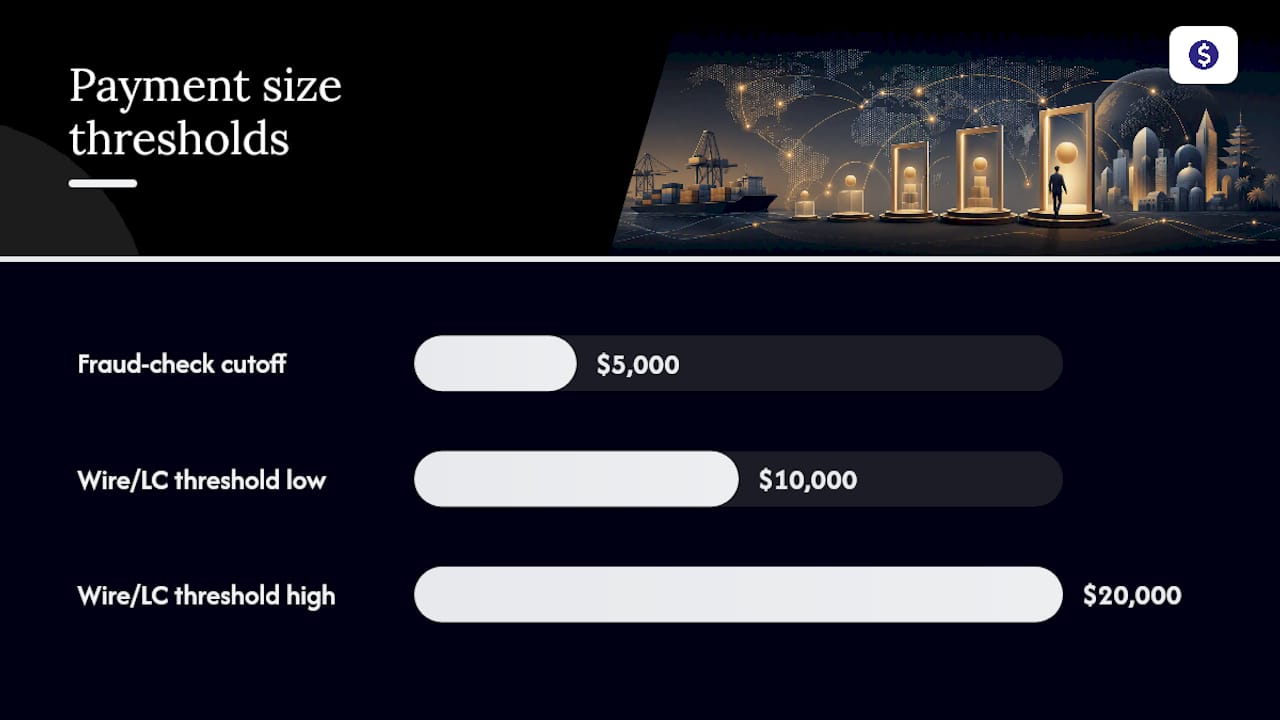
| Verify before you pay | Call a known contact to confirm any new or changed banking details, especially above $5,000. |
| Compare rates before sending | Idealremit's live rate comparison and calculators help you spot FX leakage before you commit to a provider. |
Table of Contents
- What Are the Main Ways to Pay Suppliers Overseas?
- Which Payment Method Actually Costs the Least?
- How Do I Choose the Right Payment Method for a Supplier?
- What Details Do You Need to Pay an Overseas Supplier?
- How Can You Cut FX Costs on Supplier Payments?
- Is It Worth Switching to an AP Automation Platform?
- How Idealremit Helps You Validate Rates Before You Send
- Why Most Advice on Paying Suppliers Overseas Misses the Point
- Compare Rates Before You Commit to a Provider
- Sources
- FAQ
What Are the Main Ways to Pay Suppliers Overseas?
Seven payment rails cover almost every overseas supplier payment scenario a US business will encounter. Each one trades off speed, cost, and control differently, and picking the wrong one for the job is where most SMBs lose money without realizing it.
- International wire transfer (SWIFT). Your bank sends funds through the SWIFT network, often routing through one or more intermediary banks before reaching the beneficiary. Delivery typically takes one to five business days, depending on the corridor and how many banks sit in the chain. Best for large, infrequent payments or new suppliers where traceability matters more than speed.
- Global ACH. A batch-based electronic transfer that clears through local payment networks in the recipient's country instead of the SWIFT system. Cheaper than wire transfers and reliable for recurring payments, though it moves slower, often two to four days, and isn't available in every country.
- Credit and virtual cards. Useful for smaller purchases or suppliers who accept card payments. Virtual cards add a layer of fraud control since you can issue single-use numbers with spending caps, but card networks charge foreign transaction fees that stack on top of the FX margin.
- PayPal and digital wallets. Fast (often same-day) and simple to set up, but percentage-based fees and wallet-to-wallet FX markups make this one of the more expensive options at scale.
- Peer-to-peer transfer apps. Built for lower-volume, lower-dollar transfers between individuals or freelancers. Convenient for a single contractor payment, impractical for managing dozens of supplier relationships.
- Paper checks. Slow, often two to four weeks for international clearing, and increasingly rare in B2B trade. Still shows up with older or smaller overseas suppliers who haven't modernized their receivables.
- Letters of credit and documentary collections. Trade finance instruments where banks act as intermediaries verifying that shipping and title documents match contract terms before releasing funds. Slower and more expensive to set up, but they dramatically reduce the risk of paying for goods that never arrive.
A newer wrinkle worth knowing: certain corridors now support instant, low-cost domestic-style rails, India's UPI linked with Singapore's PayNow is one example. These rails are fast and cheap but only work if both countries participate, so check availability before you build a payment plan around them.
Which Payment Method Actually Costs the Least?
Cost isn't just the transfer fee. It's the fee plus the FX margin plus whatever intermediary banks skim off the top, and those three components vary wildly by method.
Banks typically charge a flat wire fee, often a moderate amount, on top of an FX margin baked into the exchange rate you're quoted. Consumer and merchant platforms like PayPal instead charge percentage-based fees, sometimes with an added markup on the exchange rate itself. On a large payment, a percentage fee structure can cost far more than a flat wire fee, even if the wire "feels" more expensive upfront.
- Wire/SWIFT: Flat fee plus FX margin. Cost-effective at high dollar amounts, expensive for frequent small payments.
- Global ACH: Lower flat fees, smaller FX margin, but slower and geographically limited.
- Cards and wallets: Percentage fees compound quickly at scale; best for occasional, smaller purchases.
- Letters of credit: Highest setup and bank handling costs, but the cost buys risk protection you can't get any other way.
Speed variability matters just as much as sticker price. SWIFT payments can clear in a day in well-connected corridors like US to UK, or stretch to five business days when multiple intermediary banks and time-zone cutoffs get involved. A payment sent Friday afternoon in New York often doesn't touch a bank in Southeast Asia until Monday local time.
Recoverability is where the risk differences show up. Wires and ACH payments are hard to reverse once sent, which is exactly why letters of credit exist for large or unfamiliar suppliers: the bank holds funds until shipping documents prove the goods actually moved. Card payments offer some chargeback protection domestically, but that protection weakens or disappears entirely on cross-border commercial transactions.
How Do I Choose the Right Payment Method for a Supplier?
Run every supplier relationship through the same five questions before you pick a rail.
- How often do you pay this supplier? Monthly or weekly payments justify setting up ACH or an AP platform integration. A single purchase order doesn't.
- How large is a typical payment? Above roughly $10,000 to $20,000, the added security of a wire or letter of credit usually outweighs the extra cost.
- What country and currency is the supplier in? Some countries lack ACH infrastructure entirely, forcing you back to wire transfer regardless of preference.
- Can the supplier handle electronic payments and documentation? Newer or smaller suppliers sometimes still require paper-based processes.
- How much risk are you willing to carry? New supplier, no track record: lean toward a documentary instrument. Long-standing relationship: open-account terms with ACH or wire are fine.
Ask suppliers directly: "What's your preferred receiving bank and currency?" and "Can you confirm your IBAN or account number and SWIFT/BIC in writing, separate from the invoice?" That second question catches a surprising number of invoice-fraud attempts before they cost you money.
Red flags include a supplier who suddenly changes bank details by email, resists providing a phone number for verification, or pushes hard for an unusual payment method right before a large order ships. If any of that happens, stop and verify by phone using a number you already had on file, not one in the suspicious email.
Pro Tip: Call your supplier's accounts receivable contact directly to verify new banking details before sending any payment over $5,000. It takes five minutes and it's the single cheapest fraud check available to you.
What Details Do You Need to Pay an Overseas Supplier?
Getting the paperwork right the first time is the difference between a payment that clears in two days and one that sits in limbo for two weeks, as explained in this guide to payment compliance documentation for international trade.
Every international payment needs, at minimum, the beneficiary's full legal name exactly as it appears on their bank account, the bank's name and address, the account number or IBAN, and the SWIFT/BIC code. Mismatches between the account name on the invoice and the account name on file at the bank are one of the most common reasons payments bounce back. Some countries add their own requirements on top of the basics.
| Country/Region | Extra Field Required |
|---|---|
| European Union / UK | IBAN plus BIC |
| India | IFSC code plus account number |
| China | Bank branch code plus beneficiary address |
| Mexico | CLABE account key |
For batch payments, map your accounting export to the format your bank or platform expects, usually a CSV or an MT101 file for corporate wire batches. Field order and currency codes matter; a misplaced column can misroute an entire batch. Log the FX rate applied to every payment alongside the invoice number so your reconciliation doesn't require guesswork later, and match each payout to its purchase order before you close the books.
Don't skip the tax paperwork. US businesses paying foreign suppliers for services should collect a completed Form W-8BEN or W-8BEN-E from the vendor to establish foreign status, distinct from the W-9 you'd collect from a domestic contractor.
How Can You Cut FX Costs on Supplier Payments?
The margin your bank builds into the exchange rate is usually the biggest hidden cost in any overseas payment, bigger than the flat transfer fee in most cases. A few tactics close that gap.
- Lock in a forward contract if you know you'll owe a supplier a fixed amount in 60 or 90 days. This protects your margin from currency swings between now and the invoice due date.
- Set rate alerts so you're not transferring the moment an invoice arrives, but when the exchange rate actually favors you.
- Hold a multi-currency balance if you pay the same supplier country repeatedly. Converting once at a good rate beats converting on every invoice.
- Batch smaller recurring payments into a single monthly run to cut the number of times you pay a flat fee.
- Ask suppliers to invoice in their local currency when possible; paying in local currency instead of US dollars often shifts the FX conversion to the party with the better rate access.
Fee-sharing is also negotiable. Large or repeat suppliers will sometimes split wire fees or accept a slightly lower FX rate in exchange for payment reliability, worth raising directly rather than assuming it's fixed. For more on structuring these tactics, Idealremit's guide to saving on money transfers breaks down the math on batching versus one-off transfers.
Is It Worth Switching to an AP Automation Platform?
If you're paying more than a handful of overseas suppliers a month, manually keying wire details into your bank's portal is where errors creep in and where your AP staff loses hours they don't have. That's the signal to evaluate an AP automation platform rather than sticking with manual bank transfers.

Three features actually drive return on investment: multi-currency payment support so you're not juggling separate processes per country, batch payment processing so a hundred invoices go out in one run instead of a hundred individual transfers, and a supplier self-service portal. Letting suppliers enter and validate their own banking details against country-specific formatting rules cuts the manual entry errors that cause delayed payments in the first place.
On the integration side, look for a platform with a direct ERP connector, QuickBooks, NetSuite, or Xero, rather than one that requires manual CSV exports every cycle. An API option matters if your finance stack is custom-built.
How Idealremit Helps You Validate Rates Before You Send
Before committing to a rail, put the quote next to what's actually available. Idealremit compares live exchange rates and fees across a wide network of transfer providers covering more than 100 countries, so you can see the real spread between what your bank quotes and what the market is actually offering.
- Rate alerts notify you when a currency pair hits a threshold you set, useful for timing a large supplier payment.
- Live exchange rate tracking shows you the current market rate versus what a provider is charging.
- Savings calculators estimate what you'd save switching from a bank wire to a lower-cost provider on a given transfer amount.
Pro Tip: Run your next large invoice through a rate alert and a calculator before you send it. A one or two percent FX margin doesn't sound like much until you calculate it against a $40,000 payment.
Why Most Advice on Paying Suppliers Overseas Misses the Point
Most guidance on this topic treats payment method selection like a shopping decision: which provider has the lowest advertised fee. That's backwards. The real decision is a risk calculation dressed up as a cost comparison, and businesses that get burned usually picked the cheapest option for the wrong kind of transaction.
A $500 recurring payment to a supplier you've worked with for three years and a $50,000 order from a factory you found last month are not the same problem. The first is a cost-optimization question. The second is a trust question, and no amount of fee-shopping fixes a trust problem. That's where the industry's fixation on documentary instruments actually earns its reputation: letters of credit are slow and annoying, but they exist because someone, eventually, needed the bank to verify a shipment before releasing money.
What gets underweighted is the beneficiary-detail problem. Finance teams obsess over FX margins while a mistyped SWIFT code or mismatched account name causes the actual delay. Fix your onboarding process before you fix your rate shopping. And use tools that show you the real market rate before you commit. Guessing at fairness is how businesses overpay for years without noticing.
Compare Rates Before You Commit to a Provider
Every method described above still runs into the same variable: what exchange rate you're actually getting. Idealremit exists to answer that question before you send the money, not after you get the confirmation email and wonder if you overpaid. Instead of calling three banks or digging through provider fee pages, you check live rates, fees, and available routes across a wide network of transfer companies in one place, side by side.
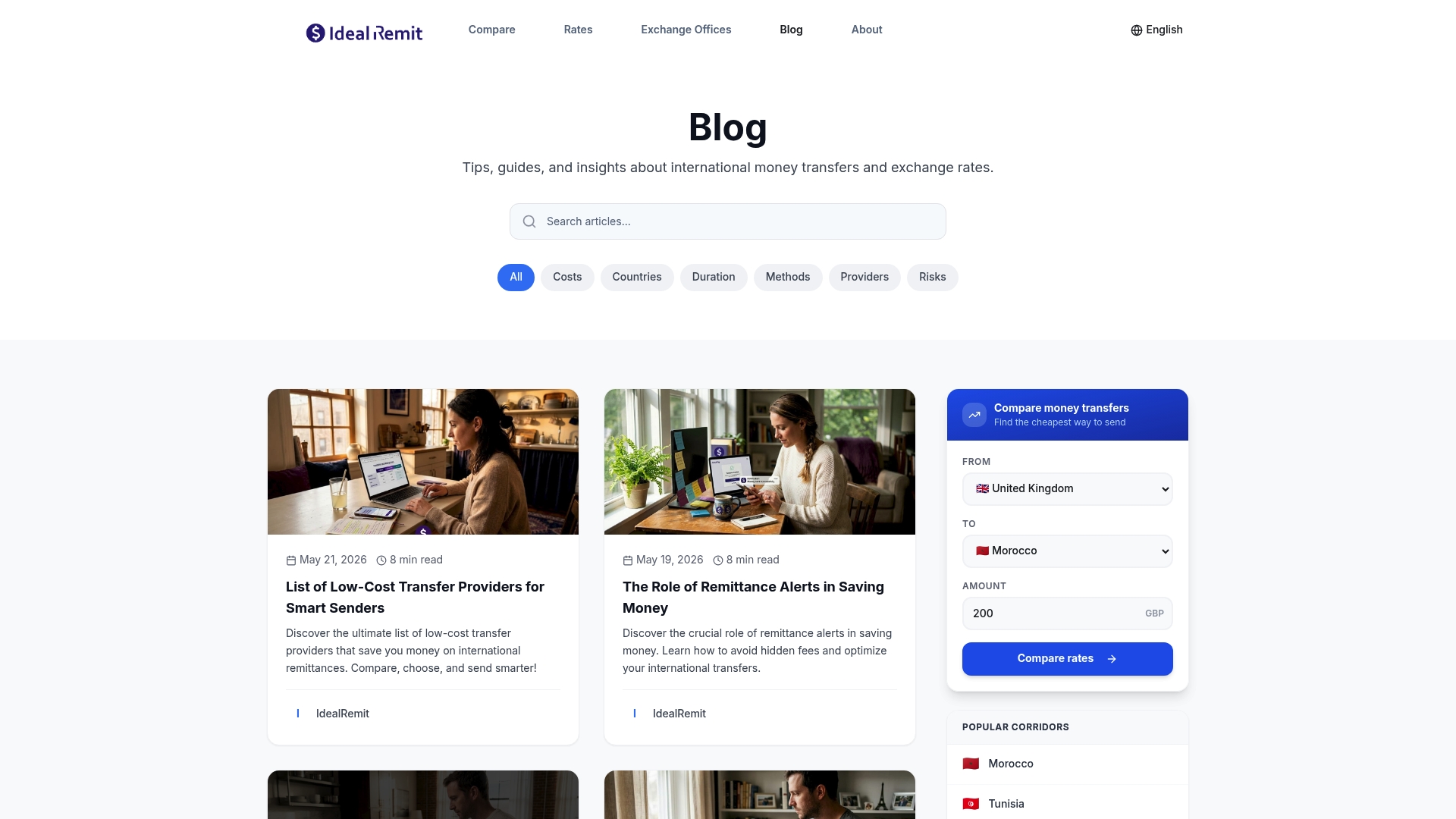
That comparison matters most on the payments where the margin is largest in dollar terms, your bigger, less frequent supplier transfers, where a percentage point of FX markup can equal hundreds of dollars. Set a rate alert for the currency pair you use most, or run a transfer amount through the calculator to see what you'd save switching providers. Head to the Idealremit blog to start comparing rates for your next supplier payment.
Sources
- Understanding the basics of wire transfers for domestic and international payments - Grasshopper Bank
- How long do wire transfers take? - SWIFT
- 6 Best Ways to Pay Overseas Suppliers in 2026 - Tipalti
- Best way to pay overseas suppliers - Wise
FAQ
How do I pay contractors overseas?
For individual overseas contractors, global ACH, a digital wallet, or a peer-to-peer transfer app usually works best for smaller, recurring payments; use a wire transfer for larger one-time projects. Collect a completed Form W-8BEN before your first payment to document their foreign status for tax purposes.
How can I avoid the 3% foreign transaction fee?
Foreign transaction fees mostly hit credit card payments; paying by bank wire, global ACH, or a multi-currency account avoids that specific charge, though you'll still pay an FX margin. Comparing providers' exchange rates directly, rather than assuming the advertised fee is the whole cost, catches markups that a flat fee doesn't show.
What payment methods actually work for international transactions?
Wire transfer, global ACH, credit and virtual cards, digital wallets, and letters of credit all work internationally, though availability depends on the supplier's country. Corridor-specific rails, like instant transfer links between certain countries, offer faster and cheaper options where they exist.
How can I get paid internationally as a supplier?
Provide your buyer with accurate banking details, including your account name exactly as registered, account number or IBAN, and SWIFT/BIC code, to avoid processing delays. Setting up a receiving account in your local currency, where your buyer supports it, generally reduces the FX cost that would otherwise fall on you.