Make the Recipient Get More KES: Send Money to M-PESA From the U.S.

You can send USD to an M-PESA mobile wallet in Kenya using an online remittance service or a partner network, and the transfer usually lands in minutes. The metric that actually matters is not the advertised fee but the final KES the recipient receives for your USD, since exchange rate and fee combine to set that number. Before you pay, check the pre-payment disclosure and keep a copy. Confirm the recipient’s M-PESA mobile number is active and correctly formatted first.
TL;DR:
- Exchange rate margins often outweigh advertised fees, meaning the final amount received in KES can be significantly less than expected despite low or zero fees.
- Using bank or ACH funding usually adds extra days to the transfer process, whereas debit cards or mobile money funding often deliver funds within minutes.
- Confirm the recipient’s active M-PESA number beforehand and verify details with a recent message to prevent misdirected funds caused by typing errors.
- A higher final KES amount is achieved by comparing providers based on the actual delivered amount, not just the advertised fee or exchange rate presented upfront.
- Tracking every quote’s exchange rate, fees, and final payout is essential for avoiding hidden costs and ensuring the recipient gets the maximum amount.
Table of Contents
- Steps to send money directly to an M-PESA wallet
- What really drives the cost of sending to M-PESA
- What your recipient needs and how they’ll use the funds
- How fast transfers land and what to do when they don’t
- A practical checklist for comparing providers and protecting yourself
- Why the delivered amount should be your only real yardstick
- Compare live M-PESA quotes before you send
- Sources
- FAQ
Steps to send money directly to an M-PESA wallet
Most online transfer services follow the same basic flow, whether you use a website or an app.
- Create an account and verify your identity, usually with a driver’s license or passport and a Social Security number for larger transfers.
- Select Kenya as the destination country and choose M-PESA as the payout method.
- Enter the USD amount, the recipient’s full legal name, and their M-PESA mobile number in the correct format (the recipient’s local number, often shown with the +254 country code in the app).
- Choose your funding method: bank debit or ACH transfer is usually cheaper than a debit or credit card.
- Review the pre-payment disclosure, which lists the exchange rate, provider fee, and expected KES amount, then confirm and pay.
- Save the receipt or screenshot of the disclosure, then track the transfer using the confirmation number provided.
Most services text or email a confirmation once the recipient’s wallet is credited, and the recipient typically gets an M-PESA notification at the same time.
Pro Tip: Double-check the recipient’s phone number against a recent message from them. A single wrong digit can send funds to someone else’s wallet.
What really drives the cost of sending to M-PESA
The advertised fee is only part of the cost. The exchange-rate margin, the spread between the market rate and the rate a provider actually gives you, often matters more than the fee itself, and some providers advertise “zero fee” transfers while quietly widening that margin.
Average transfer costs vary widely by funding method. Card and mobile money funding tend to cost less than cash or bank-account funding, with global averages of 4.39% for credit or debit cards, 5.29% for mobile money, 7.01% for cash, and 8.69% for bank-account funding. That gap alone can be worth checking before you pick a funding method.

Say you’re sending $500. Another might charge a $0 fee but a rate that only delivers 63,200 KES. The second option looks cheaper on the surface and costs you more in practice.
What to record from every quote:
- The exact exchange rate offered, not the market rate you saw elsewhere.
- The provider fee in dollars, separate from any rate markup.
- The final KES amount the recipient will actually receive.
- The promised delivery window and any conditions attached to it.
Mobile-money routes can change how much value actually reaches the recipient, which is worth understanding before you commit to a provider.
What your recipient needs and how they’ll use the funds
The recipient needs an active, registered M-PESA account tied to their Kenyan mobile number, typically written as 07XX XXX XXX locally or +254 7XX XXX XXX internationally. Ask them to confirm the number by sending you a screenshot of their M-PESA menu rather than reading it off memory.
A few practical points worth knowing before you send:
- Providers set per-transfer and daily limits, and larger transfers may trigger extra identity checks or short holds.
- Cash-out agent fees make small withdrawals disproportionately expensive, since the fee eats a much larger share of a small amount than a large one.
- Ask the recipient whether they plan to withdraw cash or spend directly from the wallet, since that changes which provider and amount make sense.
- If they’re keeping funds in the wallet for merchant payments or bill pay, the cash-out fee question becomes irrelevant.
Recipient behavior should shape your choice of provider as much as the quoted rate does.
How fast transfers land and what to do when they don’t
Many mobile-wallet transfers complete in seconds to minutes once you fund with a debit card or bank balance already on file. Funding by ACH or bank transfer instead of a card often adds a day or two, since the money has to clear your bank first.
Delays usually come from one of a few sources: identity verification holds, a mismatched recipient name or phone number, ACH settlement time, or local liquidity issues at the agent level. Here’s how to work through one:
- Pull up your saved pre-payment disclosure and transaction ID before contacting anyone.
- Check the provider’s tracking tool or confirmation message for a status update.
- Contact provider support directly with the transaction ID and recipient details.
- If the provider confirms delivery but the recipient says the wallet was never credited, ask the recipient to check their M-PESA transaction history by dialing the statement code, since notifications sometimes fail even when the credit posted.
- If the issue isn’t resolved, use your cancellation or error-resolution rights under the Remittance Transfer Rule to file a formal dispute.
For a longer breakdown of common delay causes, see why remittance delays happen and how to fix them.
A practical checklist for comparing providers and protecting yourself
Before sending, run each provider’s quote through the same short list:
- What funding method are you using, and does it change the rate or fee?
- What exchange rate is quoted, and how does it compare to the market rate?
- What is the provider fee, separate from the rate?
- What is the final KES amount the recipient will get?
- What are the transfer limits, and will this amount trigger extra verification?
- What is the promised delivery time?
Save every pre-payment disclosure and receipt. U.S. remittance rules require providers to disclose the rate, fees, and expected delivery amount before you pay, and that paperwork is what you’ll need if a dispute comes up later. Rate alerts and side-by-side comparison tools can help you lock in a good quote before rates shift. For more tactics on cutting transfer costs, see how to save on money transfers.
Pro Tip: Re-check your quote right before you hit send, especially for larger amounts. Exchange rates can move enough in a few hours to change your delivered total.
Why the delivered amount should be your only real yardstick
Fees and marketing get the attention, but the number that matters is what actually lands in KES. A transparent pre-payment disclosure tells you that number before you commit, and comparing it across two or three providers takes less time than most people expect. Our aim is to make that comparison easier and cut down on the guesswork that lets weak exchange rates hide behind low advertised fees.
— Brahim
Compare live M-PESA quotes before you send
Running the same USD amount through several providers by hand takes time, and rates shift throughout the day. Live quotes are pulled from a network of providers so you can see the final KES delivered side by side instead of hunting through separate apps.
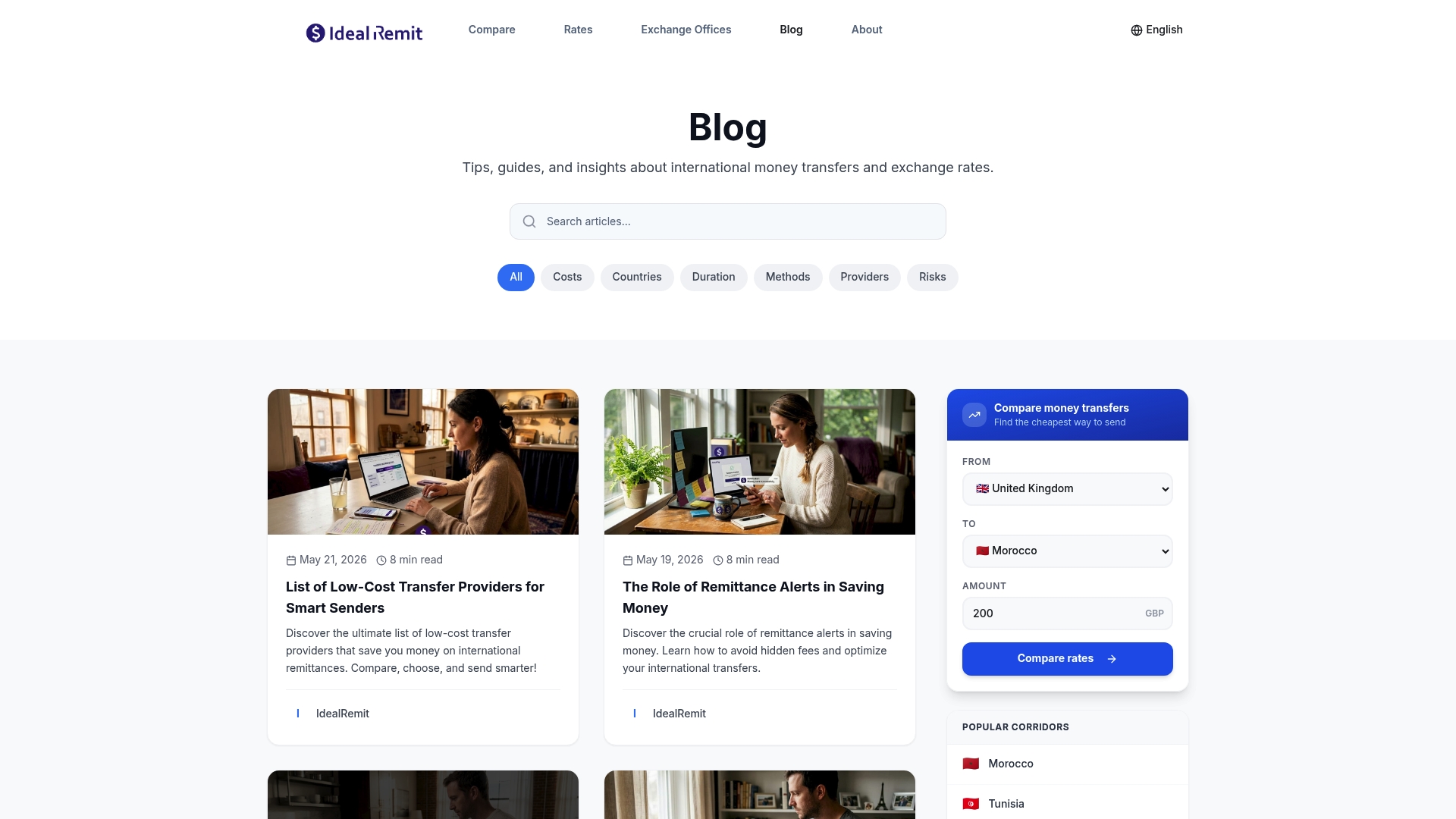
- Enter your corridor and amount to see delivered KES from multiple providers at once.
- Set a rate alert so you’re notified when the exchange rate moves in your favor.
- Follow a provider link directly from the comparison to complete your transfer.
This is a comparison platform, not a money transfer provider itself, so you still complete the transfer with the provider you choose. Start by browsing all supported providers to see current rates for your corridor.
Sources
- Remittance Prices Worldwide (RPW) — Q3 2025
- World Bank — Kenya mobile money sector analysis
- CFPB — Remittance transfers small entity compliance guide
FAQ
Can Zelle send money to M-PESA?
No, Zelle only supports transfers between U.S. bank accounts and cannot send funds internationally to M-PESA or any other mobile wallet. You’ll need a dedicated international remittance service that supports Kenya and M-PESA payouts instead.
Is M-PESA available in the United States?
M-PESA itself is a Kenyan mobile money service and is not available for account registration in the United States. However, U.S. residents can send USD to a recipient’s M-PESA wallet in Kenya through online remittance services that offer M-PESA as a payout option.
How do I send money to M-PESA from the United States?
Choose an online remittance service, select Kenya and M-PESA as the payout method, then enter the amount and the recipient’s M-PESA mobile number. Review the pre-payment disclosure showing the exchange rate and expected KES amount before confirming payment.
Can Cash App send money to M-PESA?
Cash App does not support direct transfers to M-PESA or other international mobile wallets. Sending to M-PESA requires a service built for cross-border remittances that explicitly lists Kenya and M-PESA as a payout destination.
What information does my recipient need to give me?
Your recipient needs to provide their full legal name and their active M-PESA-registered mobile number, typically shown as +254 followed by nine digits. Confirming this number directly with them before you send helps avoid delays or misdirected funds.