International Money Transfer Via Cash Pick Up: Ultimate Guide
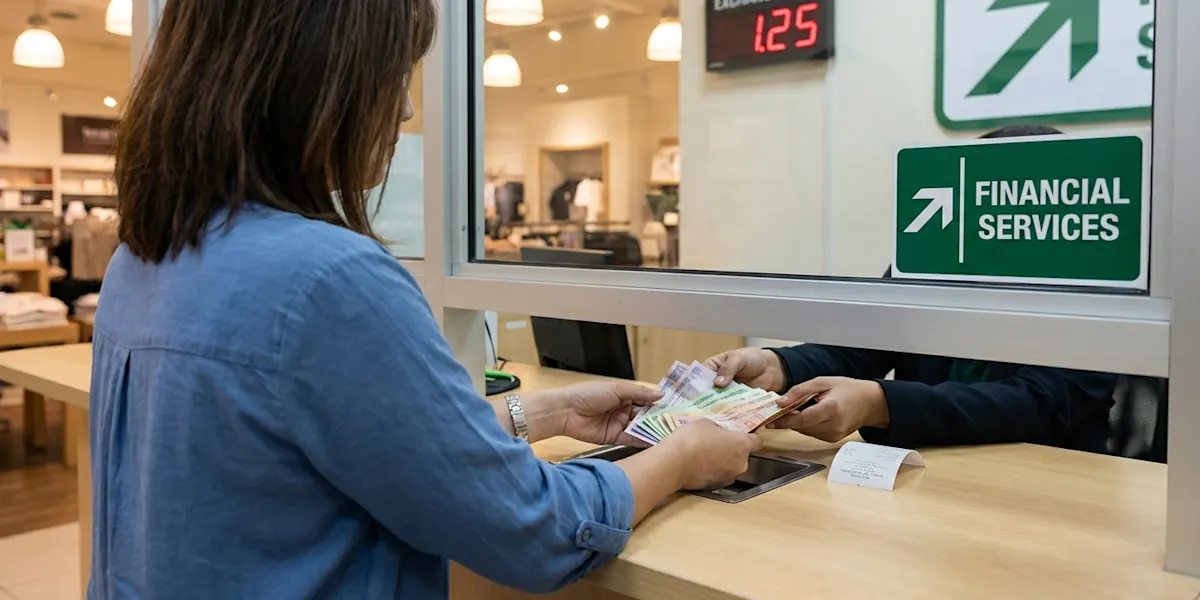
When you send money to a recipient who doesn't have a bank account, or needs funds within minutes, cash pick up is often the fastest solution.
This guide covers how cash pick up works from both sides, what it actually costs (including the exchange rate margin most guides ignore), how top providers compare, and when cash pickup is and isn't the right choice.
Every cash pickup guide ranking on Google right now is written by a company selling its own service. This one neutrally compares them all.
What Is International Money Transfer via Cash Pick Up?
International money transfer via cash pick up is a delivery method in which the recipient collects physical cash from an authorized agent location.
It serves recipients who lack bank accounts or need immediate access to funds, with agent networks spanning 200+ countries.
One distinction worth making early: cash pickup is a delivery method, not a transfer method. The transfer itself can be initiated online, through an app, by phone, or in person.
You can send from your couch in Chicago and your mother in Manila walks into an agent location and collects cash. The sending and receiving are separate steps.
Cash pickup comes in three speed tiers, and this is the single biggest driver of what you'll pay:
- Express / Instant — funds available in minutes. Highest fee.
- Standard — available within hours or by next business day. Moderate fee.
- Economy — 1 to 3 business days. Lowest fee.
Most people assume cash pickup is always the most expensive option. It isn't. Economy-tier pickups on popular corridors can come surprisingly close to bank deposit costs on smaller amounts.
The speed tier you select at checkout has more impact on your total cost than most other variables combined.
How Does Cash Pick Up Work?
There are six steps, from the moment you send to the moment your recipient walks out with cash.
Step 1: Choose a provider. Western Union, MoneyGram, Remitly, Ria, WorldRemit, and others all offer cash pickup. Your choice depends on where you're sending, agent coverage, and total cost.
Step 2: Enter transfer details. Provide the recipient's full legal name (exactly as it appears on their government ID), the pickup country, and the amount.
Step 3: Pay for the transfer. Options include debit card, credit card, bank transfer, or cash at an agent branch. Payment method affects both fee and speed. Debit cards are usually the sweet spot. Credit cards may trigger a cash advance fee. Bank transfers are cheapest but slowest.
Step 4: Receive your reference number. The provider generates a unique tracking number (Western Union calls theirs an MTCN). This number is the key to the entire transaction.
Step 5: Share the reference number with your recipient. Text, WhatsApp, email. Send it through one channel and confirm through another. Without it, your recipient cannot collect.
Step 6: Recipient collects cash. Your recipient visits an authorized agent location with their ID and reference number. The agent verifies identity, and cash is paid out in local currency.
What the Sender Needs to Know
The most important detail you'll enter is the recipient's name. It must be their full legal name exactly as printed on their government-issued ID. Not a nickname. Not a shortened version.
A sender in London types "Bobby Reyes." The recipient in Cebu presents a passport that reads "Roberto Reyes." Pickup denied.
The sender now has to contact the provider to amend the name, and that process can take 24 to 48 hours. Meanwhile, the recipient has wasted a trip. This is the number one cause of failed cash pickups across every provider.
After payment, save your reference number. Screenshot it. This is what your recipient needs to collect their money.
What the Recipient Needs to Do
Here are the steps the recipient needs to accomplish
- Get the reference number from your sender. Don't go to the agent without it.
- Bring valid government-issued photo ID. The name must match what the sender entered.
- Find the nearest agent location using the provider's app or website. Not every store displaying a provider's sign handles all services.
- Visit during business hours and provide your reference number and ID.
- Count your cash before leaving. If the amount is less than expected, ask the agent to explain deductions at the counter.
Tip: If the name on your ID doesn't match what the sender entered, the agent will refuse payout. Contact the sender to correct it through the provider. This amendment can take 24 to 48 hours, so getting it right the first time matters.
Cash Pick Up vs. Other Delivery Methods
Cash pickup is one of several delivery methods. The best choice depends on your recipient's circumstances.
| Delivery Method | Speed | Typical Fee Range | Bank Account Required? | Best For |
|---|---|---|---|---|
| Cash Pick Up | Minutes to 3 days | $3–$25+ | No | Unbanked recipients, urgent transfers |
| Bank Deposit | 1–3 business days | $1–$15 | Yes | Recurring transfers, larger amounts |
| Mobile Wallet | Minutes to hours | $1–$10 | No (needs mobile money account) | Recipients using M-Pesa, GCash, bKash |
| Home Delivery | 1–3 days | $5–$30 | No | Elderly or mobility-limited recipients |
Bank Deposit
Cash pickup wins when the recipient doesn't have a bank account or needs money today. For everything else, bank deposit is cheaper, more convenient, and doesn't require travel. Over 12 monthly transfers, bank deposit can save 30 to 60% in fees alone.
Mobile Wallet
Mobile wallets like M-Pesa (Kenya), GCash (Philippines), and bKash (Bangladesh) allow recipients to receive money instantly on their phone. Where these platforms are established, they often beat cash pickup on both speed and cost. Cash pickup remains better when the recipient doesn't own a smartphone or doesn't have a mobile money account.
In corridors like US-to-Kenya or US-to-Philippines, mobile wallets have largely overtaken cash pickup as the preferred delivery method. But cash pickup providers won't always advertise that, because cash pickup generates higher margins for them.
If your recipient already uses one of these platforms, check whether your provider supports mobile wallet delivery before defaulting to cash pickup.
Home Delivery
Some providers offer home delivery in select corridors, primarily the Philippines and parts of India. It's more convenient for elderly or mobility-limited recipients but more expensive, slower, and available in very few countries.
Benefits and Limitations of Cash Pick Up
What it does well
- No bank account required on either end. The only viable option for the estimated 1.4 billion unbanked adults worldwide.
- Fast. Express transfers ready in minutes.
- Wide global coverage. Western Union alone has 500,000+ agent locations in 200+ countries.
- Simple for non-tech-savvy recipients. No apps, no passwords. Just ID and a reference number.
- Works in rural areas where bank branches are scarce but retail agent locations exist.
- Immediate access to physical cash. No waiting for bank clearing.
Where it falls short
- Higher fees than bank deposit. Typically $5 to $15 more per transfer. Over a year of monthly sends, that's $60 to $180 extra.
- Exchange rate markups reduce the received amount beyond the visible fee. A 2% margin on $500 means your recipient gets roughly $10 less before fees.
- Requires travel to a physical location. In rural areas, that could mean a costly bus ride.
- Limited by agent business hours. Evenings, weekends, and holidays may not be covered.
- Safety concerns carrying cash from a known money transfer location.
- Transfer limits typically cap at $2,999 to $10,000 per transaction.
- Name mismatches between sender input and recipient ID cause the most common pickup failures.
Despite these limitations, cash pick up remains the only viable option for millions of unbanked recipients. The point isn't to avoid it. The point is to choose it with full awareness.
Best Cash Pick Up Providers Compared
The best provider depends on the corridor, amount, and urgency. No single service wins everywhere.
| Provider | Agent Locations | Speed | Fee Level | Key Strength | Best For |
|---|---|---|---|---|---|
| Western Union | 500,000+ in 200+ countries | Minutes (express) | Higher | Widest global network | Remote areas, unusual corridors |
| MoneyGram | 350,000+ worldwide | Minutes to next day | Mid-range | Walmart partnership (US) | US senders, larger amounts |
| Remitly | Varies by corridor | Minutes to 3 days | Competitive | Economy tier savings | Philippines, India, Latin America |
| Ria | 500,000+ (via partners) | Hours to next day | Lower | Competitive pricing | Latin America, Asia |
| WorldRemit | Varies by corridor | Minutes to next day | Competitive | Strong Africa coverage | Sub-Saharan Africa |
Fees for the same $500 transfer to the same country can vary by $15 to $20 across providers, with exchange rate differences adding another $10 to $30 to the gap. That's potentially $50 in savings for 10 minutes of comparison.
For the US-to-Philippines corridor, Remitly's economy tier often delivers the most pesos per dollar.
For Africa-wide coverage, WorldRemit's network is strong. For sheer location density in remote areas, Western Union's physical footprint is hard to match. For Latin America on a budget, Ria consistently prices well.
Always compare for your specific transfer using each provider's fee calculator. The table reflects general patterns, not guaranteed pricing.
Cash Pick Up Fees and Exchange Rates Explained
Cash pick up fees typically range from $3 to $25 per transfer. But the fee you see is rarely the full cost.
Transfer fees depend on four variables: amount, destination country, payment method, and speed tier. Express costs the most. Economy costs the least.
Exchange rate margins are where the real cost hides. Providers don't give you the mid-market rate. They add a margin, typically 1 to 5%.
Here's what that looks like: you're sending $500 to the Philippines. The mid-market rate is 1 USD = 56.00 PHP.
Provider A charges a $5 fee and offers 54.50 PHP per dollar. Recipient gets: ($500 - $5) × 54.50 = 26,977 PHP
Provider B charges $0 and offers 53.20 PHP per dollar. Recipient gets: $500 × 53.20 = 26,600 PHP
Provider A charges a visible fee. Provider B advertises "no fee." But Provider A delivers 377 more pesos. At the mid-market rate, that $500 would be 28,000 PHP. Both providers kept a significant chunk through the margin.
Some providers advertise "0% fee" then recover through a wider exchange rate margin. There's no free transfer.
The rule: always compare the total amount your recipient receives, not just the fee. Most provider websites show this during the quote step.
How to Choose the Right Pick Up Service
1. Compare total cost, not just fees. Enter your transfer on 2 to 3 provider websites and compare the amount your recipient will actually receive.
2. Match speed to urgency. Economy tiers save real money when your recipient can wait a day.
3. Check agent coverage near your recipient. Use the provider's location finder for the specific city or town before sending. A great price is worthless if the nearest pickup point is two hours away. Network size varies dramatically between providers and between urban and rural areas. Western Union has the largest physical footprint. MoneyGram is strong through retail partnerships, including Walmart in the US. Digital-first providers may have fewer locations but often price more competitively.
4. Verify transfer limits. Per-transaction caps typically range from $2,999 to $10,000 for verified accounts. Unverified or new accounts face lower limits. For amounts above $3,000, expect requests for documentation like proof of income or source of funds to satisfy anti-money laundering requirements.
5. Check document requirements. Senders need valid ID and proof of address for account creation. Recipients need government-issued photo ID with a name matching what the sender entered. In some countries, only specific ID types are accepted, so confirm with the provider before sending.
6. Verify the provider is licensed. FinCEN registration (US), FCA authorization (UK), or equivalent. If a service doesn't display licensing information, walk away.
For a first transfer, test with a small amount to verify the process works before committing larger sums.
Who Should Use Cash Pick Up?
Migrant workers sending regular remittances to family in countries with limited banking access. When your family doesn't have a bank account, cash pickup is how the money gets there.
Anyone supporting elderly relatives who don't use bank accounts or smartphones. Walking to a familiar store to collect cash is straightforward.
Emergency senders who need funds to arrive in minutes. Medical bills, urgent rent, unexpected travel.
People sending to rural areas where bank branches are scarce but retail agent locations exist nearby.
One-time senders who don't want to set up recurring bank-to-bank infrastructure for a single transfer.
If your recipient has a bank account and doesn't need funds urgently, bank deposit is usually cheaper. Cash pickup is the right tool for specific situations, not a default.
Safety and Regulations
Cash pickup through licensed providers is regulated and generally safe. But "generally safe" still leaves room for things to go wrong if you're not careful.
- Only use licensed providers. Check for FinCEN (US), FCA (UK), or equivalent registration. If you can't verify licensing, don't send.
- Never send money to someone you haven't verified. Romance scams, impersonation schemes, and fake emergencies account for a large share of cash pickup fraud. If someone you've only met online asks for a cash transfer, stop.
- Keep your reference number private. Share only with the intended recipient. Anyone with the reference number and a matching ID could potentially collect the funds.
- Recipients: count cash before leaving the counter. If the amount is less than expected, ask the agent to explain deductions before you walk out.
- Avoid picking up large amounts at night or in unfamiliar areas. Practical personal safety, not paranoia.
- Be wary of advance-fee fraud. Nobody legitimate asks you to send money to claim a prize, unlock an inheritance, or pay a processing fee.
- Verify agent locations through official channels. Use the provider's app or website to find authorized locations, not third-party directories.
All legitimate providers hold money transmitter licenses and comply with anti-money laundering (AML) and KYC (Know Your Customer) regulations. In the US, this means FinCEN registration and state-by-state licensing. In the UK, the FCA authorizes money transfer services. Australia has AUSTRAC. Other countries maintain equivalent bodies.
When a provider asks for your ID, proof of address, or source of funds, they're fulfilling a legal obligation that protects both sides of the transaction. These requirements exist to prevent money laundering and fraud. If a provider can't show licensing credentials, use a different one. The few dollars you might save aren't worth sending money through an unregulated channel.
Frequently Asked Questions
How long does a cash pick up transfer take?
Between a few minutes and 3 business days depending on provider and speed tier. Express transfers through Western Union or MoneyGram are ready in minutes. Economy options take 1 to 3 business days but charge lower fees.
How much does it cost to send money for cash pick up?
Fees typically range from $3 to $25 per transfer. The total cost also includes the exchange rate margin, which can add 1 to 5%. Always compare the total amount your recipient receives across providers, not just the upfront fee.
What does my recipient need to collect?
A valid government-issued photo ID and the reference number you provide after sending. The name on the ID must exactly match the name you entered. Some providers also require a security question answer.
Can I send money for cash pick up without a bank account?
Yes. Most providers accept debit cards, credit cards, or cash at agent locations. Western Union and MoneyGram accept in-person cash payments. Online-only providers typically require a bank account or card.
Is cash pick up safe?
Through licensed providers, yes. The main risks are personal safety carrying cash and falling for scams. Use licensed providers and never send money to strangers.
What is the maximum amount I can send?
Limits vary by provider, corridor, and verification level. Typical per-transaction limits range from $2,999 to $10,000. For large transfers, expect requests for proof of income or source of funds.
What is the difference between cash pick up and bank deposit?
Cash pick up: recipient collects physical cash at an agent location. Bank deposit: funds go directly into the recipient's account. Cash pickup is faster and doesn't require a bank account but costs more. Bank deposit is cheaper and more convenient but requires an active account.
Can I track my cash pick up transfer?
Yes. Providers issue a reference number (MTCN at Western Union) that you can use to check status through their app, website, or customer service.
Conclusion
Cash pick up gets money into your recipient's hands fast, without requiring a bank account, a smartphone, or any digital infrastructure. For urgent transfers to unbanked recipients, it remains one of the most accessible options globally.
The key factors: total cost (fee plus exchange rate margin), speed tier, and agent coverage near your recipient. Compare 2 to 3 services for your specific corridor, verify agent locations, and if it's your first time, test with a small amount. The right choice depends on your recipient's situation, not on which company's marketing you saw first.
Written by
Brahim Oubrik
Brahim Oubrik, a senior data engineer who experienced firsthand the challenges of sending money internationally. Living in France while supporting his family in Morocco, Brahim regularly needed to transfer funds across borders. Drawing on his background in data engineering, Brahim decided to solve this problem not just for himself, but for the millions of others navigating the same difficulties. He built Ideal Remit to bring clarity to the international money transfer market.