International Money Transfer Methods: All You Need to Know
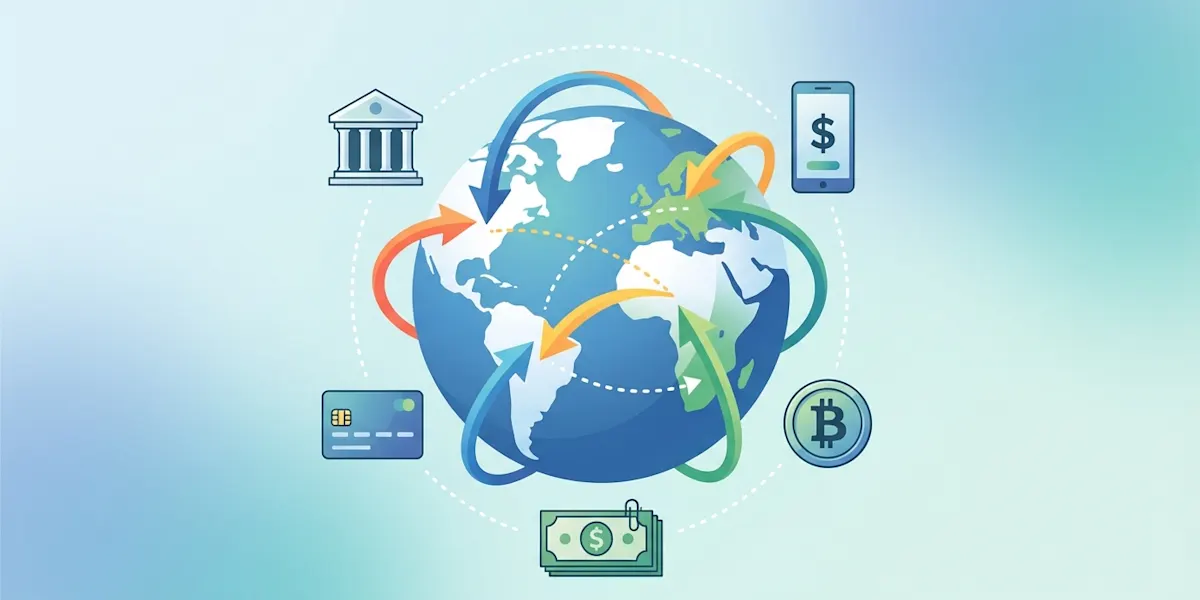
Sending money across borders might feel overwhelming the first time. There are forms to fill, fees to compare, and exchange rates to decode. But here's the good news: it doesn't have to be complicated.
An international money transfer is simply the process of sending money from one country to another. Whether you're supporting family back home, paying for overseas tuition, or closing a business deal abroad, you're making an international money transfer.
The method you choose matters. It affects how much the recipient gets, how fast they get it, and how much you pay in fees. In this guide, we'll walk you through every major transfer method available today, break down their pros and cons, and help you pick the right one for your situation.
Let's get started.
What Are the Most Popular International Money Transfer Methods?
There's no shortage of ways to send money internationally. Some methods have been around for decades, while others are relatively new. Each comes with its own set of advantages and trade-offs.
Below, we've outlined the most popular options so you can compare them side by side.
Bank Wire Transfers
Bank wire transfers are the traditional heavyweight of international money movement. You walk into your bank (or log into your online banking portal), provide the recipient's banking details, and the bank handles the rest.
This method uses a global messaging network called SWIFT (Society for Worldwide Interbank Financial Telecommunication) to route your money through a chain of banks until it reaches the destination account. It's a system that has been in place since the 1970s, and most major banks around the world participate in it.
Pros:
- Highly secure and regulated
- Suitable for large amounts
- Widely available at most banks globally
Cons:
- Fees can be steep, often ranging from $25 to $50 per transfer (sometimes more)
- Exchange rate markups are common, meaning banks add a margin on top of the mid-market rate
- Transfers can take 3 to 5 business days, sometimes longer if intermediary banks are involved
Bank wire transfers are a solid choice when you're sending large sums and security is your top priority. However, for smaller, more frequent transfers, the fees can add up quickly.
Online Money Transfer Services
This is where the landscape has changed dramatically in recent years. Online money transfer services, sometimes called fintech remittance platforms, let you send money abroad using just your phone or computer.
Companies like Wise (formerly TransferWise), Remitly, WorldRemit, and many others operate in this space. You create an account, enter the recipient's details, choose how you want to pay (bank transfer, debit card, or credit card), and the service does the rest.
Pros:
- Lower fees compared to traditional banks
- Competitive or mid-market exchange rates
- Fast delivery, often within minutes to a few hours
- Convenient, with user-friendly apps and websites
Cons:
- Transfer limits may apply, especially for new users
- Not all services cover every country or currency
- Verification processes can take time for your first transfer
If you value speed, convenience, and cost-effectiveness, online transfer services are often the best starting point. We recommend comparing a few platforms before committing, as fees and exchange rates vary between providers.
PayPal and Digital Wallets
You probably already have a PayPal account. And if you do, you can use it to send money internationally. Other digital wallets like Skrill, Payoneer, and Neteller offer similar functionality.
The process is simple. You log in, enter the recipient's email address or account details, choose the amount, and send. If the recipient also has an account on the same platform, the transfer can be almost instant.
Pros:
- Extremely easy to use, especially if both parties already have accounts
- Fast transfers between users on the same platform
- Good for smaller, casual transfers
Cons:
- Fees can be surprisingly high for international transfers (PayPal charges around 5% in some cases)
- Exchange rate markups are significant
- Recipients may face additional fees when withdrawing funds to a local bank account
Digital wallets are convenient for quick, small transfers between people who share the same platform. But if you're sending a significant amount, the fees and poor exchange rates can eat into your money. Always check the total cost before hitting "send."
Money Transfer Operators (MTOs)
Western Union and MoneyGram are the two names most people recognize here. These money transfer operators have been in the business for decades. Western Union, in fact, has been moving money since the 1800s.
MTOs offer multiple delivery options. You can send money for bank deposit, mobile wallet credit, or cash pickup at thousands of agent locations worldwide. This flexibility is their biggest strength.
Pros:
- Massive global network with hundreds of thousands of agent locations
- Cash pickup option is ideal for recipients without bank accounts
- Available both online and in physical locations
Cons:
- Fees can be high, especially for cash-to-cash transfers
- Exchange rates are often less favorable than online-only services
- In-person transfers require a visit to a physical location
If your recipient doesn't have a bank account or lives in a remote area, MTOs are often the most practical option. The cash pickup feature is a lifeline in many developing countries where banking infrastructure is limited.
Cryptocurrency Transfers
Cryptocurrency is the newest player in the international money transfer game. Using digital currencies like Bitcoin, Ethereum, or stablecoins (such as USDT or USDC), you can send value across borders without relying on banks or traditional financial institutions.
You send crypto from your digital wallet to the recipient's wallet. They can then hold it, convert it to local currency through an exchange, or spend it directly where crypto is accepted.
Pros:
- Very low transaction fees, especially for large amounts
- Fast transfers, often completed in minutes regardless of destination
- No intermediaries or banking hours to worry about
Cons:
- Both sender and recipient need crypto wallets and some technical knowledge
- Cryptocurrency values can be volatile (though stablecoins reduce this risk)
- Regulatory uncertainty in many countries
- Converting crypto to local currency may involve additional fees and steps
Crypto transfers are best suited for tech-savvy users who understand the risks. If both you and your recipient are comfortable with digital currencies, this can be one of the cheapest and fastest methods available. For first-time senders, though, the learning curve may be steep.
International Money Orders
A money order is a prepaid payment instrument. You purchase it at a post office, bank, or authorized retailer, and mail it to your recipient abroad. The recipient then cashes it at their local bank or post office.
This is one of the oldest methods of sending money internationally, and while it's less common today, it still has its place.
Pros:
- No need for a bank account on either end
- Relatively secure since it's prepaid
- Available at many post offices and retail locations
Cons:
- Very slow, as it depends on physical mail delivery
- Limited to smaller amounts (often capped around $700 to $1,000)
- Risk of loss or theft during transit
- Fees can be disproportionately high for the amounts sent
We would only recommend money orders in situations where digital options aren't accessible. For most people, there are faster and more cost-effective alternatives.
Foreign Currency Drafts (Demand Drafts)
A foreign currency draft is essentially a check issued by your bank in the recipient's local currency. You request the draft from your bank, and the bank debits your account at the applicable exchange rate plus a fee. You then mail or hand-deliver the draft to the recipient, who deposits it in their bank.
Pros:
- Secure, as the bank guarantees the payment
- Useful for formal transactions like tuition payments or property purchases
Cons:
- Slow, as it involves physical delivery and bank processing on both ends
- Exchange rates and fees are set by the issuing bank
- Becoming increasingly rare as digital methods take over
Demand drafts are still used in some countries for specific purposes, particularly in South Asia for tuition and property transactions. But for everyday transfers, digital methods are almost always a better choice.
What Method Should I Choose?
Now that you know your options, the real question is: which one fits your situation? The answer depends on a few key factors.
Consider the amount you're sending. For large transfers like tuition payments, property purchases, or business transactions, bank wire transfers or online money transfer services are your best bet. They're built to handle significant sums securely. For smaller, everyday amounts, digital wallets or online services offer better value.
Think about speed. If your recipient needs money urgently, online transfer services and digital wallets are the fastest options. Many deliver funds within minutes. Bank wires and MTOs can take several days. Money orders and demand drafts? Even longer.
Factor in cost. This is where most first-time senders get caught off guard. The cheapest-looking option isn't always the cheapest. You need to look at three things: the transfer fee, the exchange rate markup, and any receiving fees. Online money transfer services typically win on overall cost, offering lower fees and better exchange rates than banks or MTOs.
Check your recipient's access. Does your recipient have a bank account? If not, MTOs with cash pickup options or mobile wallet services are your best alternatives. Not everyone has the same financial infrastructure, and the best method for you has to also work for them.
Evaluate convenience. If you want to send money from your couch at midnight, online services and digital wallets have you covered. If you prefer speaking to someone face-to-face, a bank or MTO agent location might feel more comfortable, especially for your first transfer.
Here's a quick way to think about it:
- Sending a large amount securely? Bank wire transfer or online money transfer service.
- Need the money there fast? Online transfer service or digital wallet.
- Recipient has no bank account? Western Union, MoneyGram, or mobile wallet.
- Want the lowest fees? Compare online transfer services, as they consistently offer the best rates.
- Both parties are tech-savvy? Consider cryptocurrency for minimal fees.
We always suggest comparing at least two or three options before making your first transfer. A few minutes of research can save you a meaningful amount of money.
Conclusion
Sending money internationally doesn't have to be stressful or confusing. The key is understanding your options and matching the right method to your specific needs.
For most first-time senders, online money transfer services strike the best balance between cost, speed, and convenience. But every situation is different. Your transfer amount, your recipient's location and access to banking, and how quickly the money needs to arrive all play a role in determining the best fit.
Take a moment to compare fees and exchange rates before you send. Read reviews of the platform you're considering. And don't hesitate to start with a small test transfer to build your confidence.
Your money is working hard for you. Make sure it gets where it needs to go efficiently, affordably, and safely.
Written by
Brahim Oubrik
Brahim Oubrik, a senior data engineer who experienced firsthand the challenges of sending money internationally. Living in France while supporting his family in Morocco, Brahim regularly needed to transfer funds across borders. Drawing on his background in data engineering, Brahim decided to solve this problem not just for himself, but for the millions of others navigating the same difficulties. He built Ideal Remit to bring clarity to the international money transfer market.