International Money Transfer: Ultimate Guide for Beginners
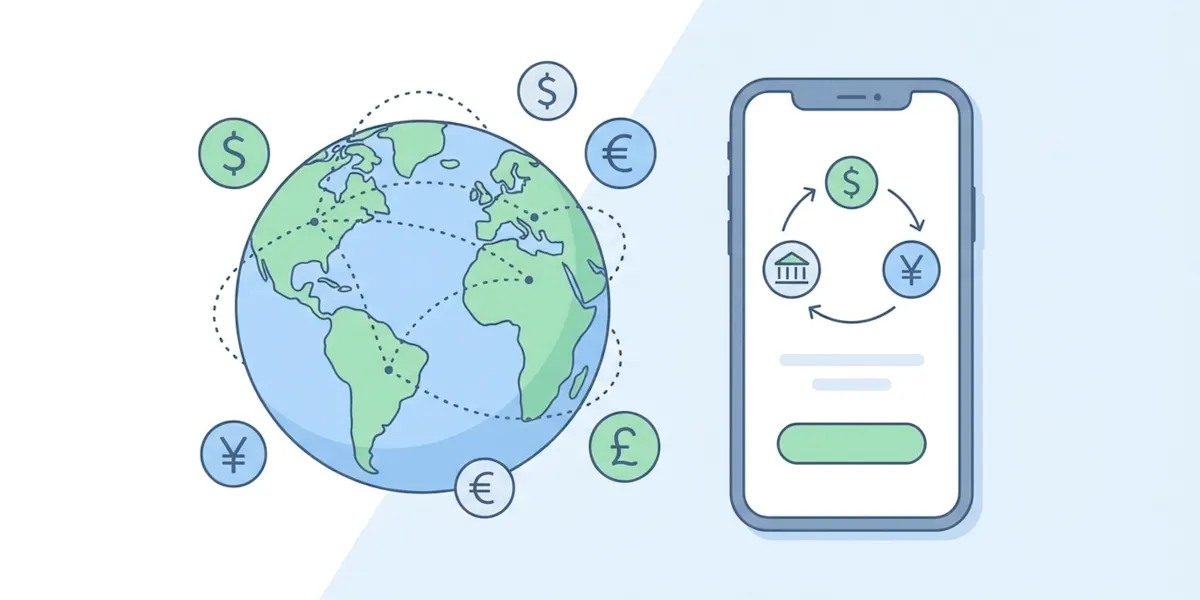
Sending money across borders might sound complicated. It doesn't have to be.
International money transfer is simply the process of moving funds from one country to another. Whether you're supporting family overseas, paying for goods from a foreign supplier, or covering tuition at a university abroad, you're making an international money transfer.
In this guide, we'll walk you through everything you need to know as a first-timer. You'll learn how these transfers work, the different methods available, what they cost, and how to pick the right service. By the end, you'll feel confident enough to send your first cross-border payment without second-guessing yourself.
Let's get started.
What Is International Money Transfer?
An international money transfer is any movement of money from a sender in one country to a recipient in another. It's also called a cross-border transfer, a remittance, or a foreign wire.
This is different from a domestic transfer, where both parties share the same country and typically the same currency. When money crosses borders, it usually needs to be converted from one currency to another. That conversion is where things like exchange rates and extra fees come into play.
Think of it this way. A domestic transfer is like mailing a letter across town. An international transfer is like mailing that letter overseas. The destination is farther, more parties handle it along the way, and the rules are a bit different.
International transfers are used by millions of people every day. Migrant workers send earnings home to their families. Businesses pay international vendors. Students receive funds for living expenses abroad. The reasons are endless, but the core concept stays the same: money leaves one country and arrives in another.
How Does It Work?
The basic process is simpler than most people think. Here's how it typically unfolds.
First, you choose a service provider. This could be your bank, an online platform, or a money transfer company. You provide the recipient's details, including their name, location, and how they'd like to receive the funds.
Next, you fund the transfer. You might pay using your bank account, a debit card, a credit card, or even cash. The provider then converts your money into the recipient's local currency using an exchange rate.
Once the conversion happens, the funds travel through a network of financial institutions. These institutions, often called correspondent or intermediary banks, relay the payment until it reaches the recipient's bank or pickup location.
Finally, the recipient gets the money. They might see it deposited directly into their bank account, collect cash at a local agent, or receive it through a mobile wallet.
Several parties are involved in this chain. You have the sender, the sending provider, potentially one or more intermediary banks, the receiving provider, and the recipient. Each party may add a small fee or margin, which is why understanding costs is so important.
What Are the Different Methods for Sending Money Abroad?
Not all transfers are created equal. The method you choose affects cost, speed, and convenience. Let's break down the most common options. For a deeper comparison, check out our full guide on transfer methods.
Bank Wire Transfer
This is the traditional route. You visit your bank (or use online banking) and initiate a wire transfer to a foreign account.
Bank wires are reliable and well-suited for large amounts. However, they tend to be more expensive. Most banks charge a flat fee, and their exchange rates often include a markup. You'll also find that bank wires can take several business days to arrive.
If you already have a relationship with your bank and value security over speed, this is a solid option. Just be prepared for higher costs compared to newer alternatives.
Online Money Transfer Services
Companies like Wise, Remitly, and OFX have transformed the industry. These platforms let you send money entirely online or through a mobile app.
The biggest advantage here is cost. Online services typically offer better exchange rates and lower fees than traditional banks. They're also fast. Many transfers arrive within hours or by the next business day.
I recommend online services for most beginners. They're user-friendly, transparent about pricing, and designed specifically for cross-border payments.
Cash Pickup
Services like Western Union and MoneyGram allow your recipient to collect cash in person at a local agent location. This is especially useful when the recipient doesn't have a bank account.
Cash pickup is widely available. Agent networks span hundreds of thousands of locations in over 200 countries. The trade-off is that fees can be higher, especially for smaller amounts.
If your recipient lives in a rural area or prefers handling physical cash, this method offers unmatched accessibility.
Mobile Wallet Transfer
Mobile money is booming, particularly in Africa and Southeast Asia. Services like M-Pesa allow recipients to receive funds directly on their phone.
You send money through a transfer provider, and it lands in the recipient's mobile wallet almost instantly. From there, they can pay bills, buy goods, or withdraw cash at an agent.
This method is fast, affordable, and incredibly convenient for recipients in regions where mobile money is widely adopted.
Money Orders and Drafts
This is the old-school approach. You purchase a money order or bank draft in the recipient's currency and mail it or have it delivered.
Honestly, this method is slow and becoming less common. It can take weeks for the recipient to receive and cash the document. We mention it for completeness, but for most people, there are better options available today.
How Long Do Cross-Border Transfers Take?
Speed matters. When someone is waiting for your money, every day counts.
Transfer times vary widely depending on the method, the countries involved, and the provider you choose. Here's a general overview.
Bank wire transfers usually take between one and five business days. Online transfer services often deliver within minutes to two business days. Cash pickups can be almost instant, sometimes ready in minutes. Mobile wallet transfers are typically completed within minutes to a few hours.
Several factors influence speed. The currency pair matters. Popular routes like USD to EUR are processed faster than less common corridors. Weekends and public holidays in either country can cause delays. Compliance checks, where providers verify the transaction for security, can also add time.
If speed is your priority, look for providers that specialize in the corridor you need. Some services are blazingly fast on specific routes. For more details on timing, visit our guide on transfer speed and duration.
What Does It Cost to Send Money Internationally?
Cost is usually the biggest concern for beginners. And rightly so. The total cost of a transfer comes from multiple sources, and some of them aren't obvious.
Transfer Fees
Most providers charge a flat fee, a percentage of the amount sent, or a combination of both. For example, you might pay $5 flat or 1% of your transfer amount. These fees are usually displayed upfront before you confirm the transaction.
Exchange Rate Markup
This is where many providers make their real profit. They offer you an exchange rate that's slightly worse than the mid-market rate (the "true" rate you see on Google). The difference is their margin.
Let's say the mid-market rate for USD to INR is 83.00. Your provider might offer 82.20. On a $1,000 transfer, that small difference costs you roughly $9.60 in hidden markup.
Hidden Fees
Some providers advertise "zero fees" but compensate with a poor exchange rate. Others may charge the recipient a fee on their end. Intermediary banks involved in the transfer chain can also deduct small amounts along the way.
We always recommend checking the total amount your recipient will actually receive, not just the fee you pay upfront. That's the true measure of cost. For a complete breakdown of pricing, explore our guide on transfer costs.
How to Choose the Best Service Provider?
An international money transfer service provider is any company or institution that facilitates cross-border payments. This includes banks, online platforms, and traditional money transfer operators.
With so many options, choosing the right one can feel overwhelming. Here are some practical tips.
Compare total costs. Don't just look at the fee. Compare the total amount your recipient will receive across different providers. Many comparison tools online make this easy.
Check the speed. If your transfer is urgent, prioritize providers known for fast delivery on your specific corridor.
Verify licensing and security. Reputable providers are licensed and regulated. In the US, look for companies registered with FinCEN (Financial Crimes Enforcement Network) and licensed as money transmitters in the states they operate.
Read reviews. Real user experiences reveal a lot about reliability, customer service, and hidden issues that marketing won't tell you.
Consider convenience. Do you prefer managing everything from your phone? Some providers have excellent apps. Do you want in-person support? A bank or a company with local agents might be better.
Popular providers include Wise (known for low-cost, mid-market rate transfers), Remitly (strong for remittances to developing countries), Western Union (massive global agent network), and your own bank (convenient if you're already a customer).
No single provider is the best for everyone. The right choice depends on where you're sending, how much, how fast, and how you want to pay.
What Laws and Regulations Apply?
International money transfers are heavily regulated, especially in the United States. These laws exist to prevent money laundering, terrorism financing, and fraud.
In the US, the primary regulatory body is FinCEN, which operates under the Department of the Treasury. All money transfer companies must register with FinCEN and comply with the Bank Secrecy Act (BSA). This means they're required to verify your identity, monitor transactions, and report suspicious activity.
You'll likely encounter Know Your Customer (KYC) requirements. When you sign up for a service, you'll need to provide identification such as a government-issued ID, your Social Security number, and sometimes proof of address. This is normal and required by law.
There are also limits on how much you can send without additional reporting. Transactions over $10,000, or patterns of transactions that appear to be structured to avoid this threshold, must be reported to authorities.
Additionally, the US government maintains sanctions lists managed by the Office of Foreign Assets Control (OFAC). You cannot send money to individuals, entities, or countries on these lists. Providers automatically screen transfers against these lists.
These regulations can feel like a hassle, but they protect both you and the financial system. Legitimate providers make compliance seamless, so you usually won't notice it beyond the initial sign-up process.
What Risks Should You Be Aware Of?
Every financial transaction carries some risk. International transfers are no exception. Being aware of potential pitfalls helps you avoid them. For a comprehensive overview, check our guide on transfer risks.
Fraud and Scams
This is the biggest risk for beginners. Scammers may pose as family members in distress, romantic interests asking for money, or businesses offering deals that seem too good to be true.
Never send money to someone you haven't verified. Be especially cautious with requests that create urgency or pressure you to act immediately.
Exchange Rate Fluctuations
Currency values change constantly. If you lock in a rate today, it might be better or worse tomorrow. For large transfers, even a small fluctuation can mean a significant difference in what your recipient gets.
Some providers offer rate alerts or the ability to lock in a rate for a future transfer. These tools can help you manage this risk.
Incorrect Recipient Details
Sending money to the wrong account is more common than you'd think. A single wrong digit in a bank account number can redirect your funds entirely. Always double-check recipient information before confirming.
Recovery of misdirected funds is difficult and sometimes impossible, especially once the money has been collected.
Unregulated Providers
Using unlicensed or unregulated transfer services puts your money at risk. These operators may disappear with your funds or fail to deliver them. Stick with well-known, regulated providers to protect yourself.
Delays and Frozen Transfers
Compliance checks can sometimes freeze or delay your transfer. While this is usually resolved quickly, it can be stressful if your recipient is waiting. Providing accurate information upfront and using a reputable provider minimizes this risk.
Conclusion
International money transfer doesn't need to be intimidating. At its core, you're simply sending money from one country to another, and today's tools make that easier than ever.
Start by understanding your options. Compare providers based on total cost, speed, and convenience. Pay attention to exchange rates, not just fees. Verify that your provider is licensed and regulated. And always double-check your recipient's details before you hit send.
With the knowledge from this guide, you're well-equipped to make your first cross-border transfer with confidence. Take your time, do your research, and you'll find a service that fits your needs perfectly.
Written by
Brahim Oubrik
Brahim Oubrik, a senior data engineer who experienced firsthand the challenges of sending money internationally. Living in France while supporting his family in Morocco, Brahim regularly needed to transfer funds across borders. Drawing on his background in data engineering, Brahim decided to solve this problem not just for himself, but for the millions of others navigating the same difficulties. He built Ideal Remit to bring clarity to the international money transfer market.