How to Transfer Money Internationally: Methods, Fees, and What to Know Before You Send
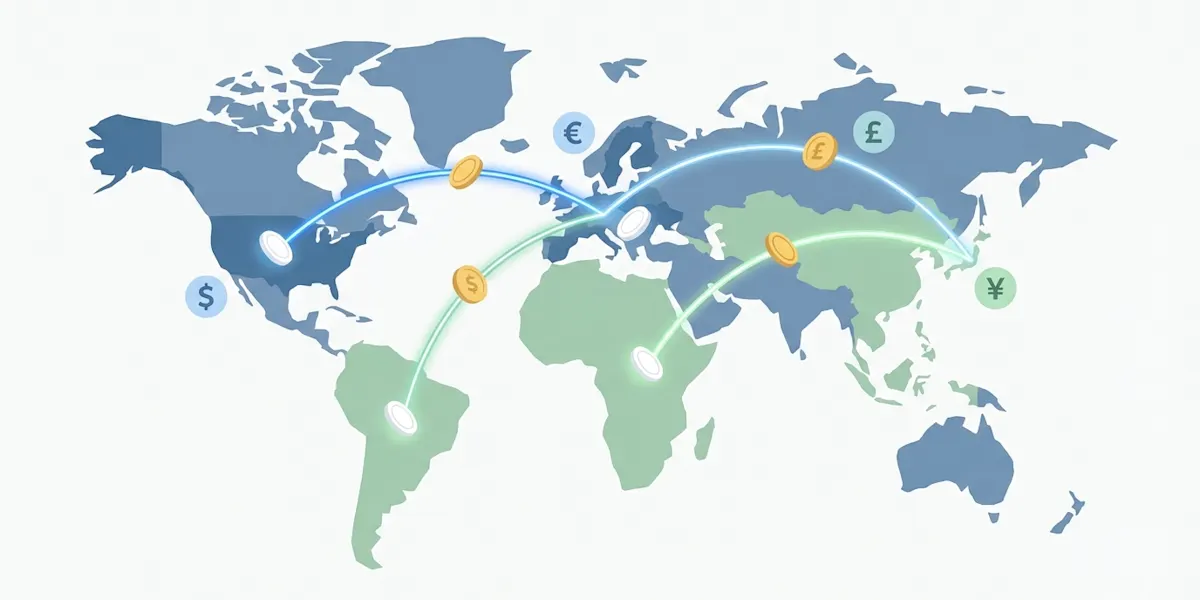
Whether you're supporting family overseas, paying a foreign vendor, or moving a large sum as an expat, international money transfer is something most people do without fully understanding the real cost. The advertised fee is rarely the whole story. This guide covers every major transfer method, how to calculate the true cost of each, how long you should expect to wait, and the compliance requirements most articles don't bother to mention. By the time you finish reading, you'll have everything you need to make a smart, informed decision.
What You Need Before You Send Money Internationally
Gathering the right information before you start a transfer saves you from getting stuck halfway through the process. Here's what you'll typically need on hand.
Recipient's full legal name — exactly as it appears on their bank account. Even a small discrepancy can cause a transfer to be rejected or held.
You'll also need:
- Bank account number or IBAN (International Bank Account Number), used widely in Europe and many other regions
- SWIFT/BIC code — the unique identifier for the recipient's bank
- Recipient's bank name and full address
- Recipient's address (required by some services and corridors)
The specific identifiers vary by country. Mexico uses a CLABE number (18-digit bank code). The UK uses a sort code alongside the account number. Australia uses a BSB number. If you're not sure what applies for your destination, ask your transfer provider or check your recipient's bank details.
Most services also require identity verification on your end before your first transfer goes through. A government-issued ID (passport or driver's license) is standard. Some providers may ask for proof of address or source-of-funds documentation for large transfers.
Have all of this ready before you start. It makes the process faster and reduces the chance of errors that are difficult to undo.
The Main Methods for Transferring Money Internationally
Not all transfer methods are equal. The right one depends on what you're optimizing for. Here's a quick map before we go deeper into each:
- Bank wire transfers (SWIFT): universally accepted but typically the most expensive
- Dedicated online transfer services: usually cheaper and faster than banks
- Peer-to-peer apps (PayPal, Xoom): convenient when both parties have accounts
- Cash pickup services (Western Union, MoneyGram): best when the recipient has no bank account
- Bank-to-bank transfers via online banking: straightforward but fees apply
- International money orders: an older method, slower, but still useful in certain corridors
Think of it as a decision tree. Speed your priority? Go with a debit card-funded transfer through an online service. Cost your focus? A bank-funded transfer through Wise or OFX will likely be cheapest. Recipient doesn't have a bank account? Cash pickup through Western Union or MoneyGram is your best option.
Bank Wire Transfers (SWIFT)
SWIFT (Society for Worldwide Interbank Financial Telecommunication) is the global messaging network that banks use to communicate international payment instructions. When you walk into your bank or initiate a wire through its portal, this is almost certainly the infrastructure behind it.
The convenience comes at a price. Outgoing wire fees at most major US banks typically run $25 to $50. On top of that, the recipient's bank may charge an incoming fee, often $10 to $20. Then there's the exchange rate markup, which is where banks quietly recoup even more: most banks mark up the mid-market rate by 3 to 5%, sometimes more for less common currencies.
Delivery typically takes 1 to 5 business days, depending on the corridor and whether correspondent banks are involved along the route.
One lesser-known tip: some banks, including Bank of America, waive the outgoing wire fee if you send in the recipient's local currency rather than US dollars. The exchange rate they apply may still not be competitive, but it's worth checking before you assume the full fee applies.
Banks are the most universally accepted method, which matters for certain business or legal transfers. For everyday personal use, though, there are cheaper options.
Dedicated Online Money Transfer Services
Services like Wise, Remitly, OFX, and Xe exist specifically to move money across borders more efficiently than traditional banks. They've built optimized local payment networks, which means your dollars often don't physically travel overseas the way a SWIFT wire does. Instead, the service uses local banking infrastructure in the destination country to fund the transfer, cutting out intermediate steps and their associated costs.
The result: fees are typically well under 1% on bank-funded transfers, and most of these services use the mid-market exchange rate (the rate you see on Google or XE.com) or something very close to it. Some, like Wise, are explicit about charging a small transparent percentage on top of the mid-market rate rather than hiding a markup in the quoted rate.
Coverage, transfer limits, and available delivery methods vary by service and corridor. What's best for sending to the Philippines may not be best for sending to Brazil. Always run the specific amount and destination through the service's estimator before assuming any single provider is cheapest for your use case.
Peer-to-Peer Payment Apps (PayPal, Xoom, Venmo International)
PayPal is widely known, and that familiarity makes it a popular default for international transfers. But convenience has a cost. Cross-border transfers funded by a PayPal balance or bank account typically carry a fee around 5%, plus an exchange rate markup that can exceed 3%. Send $500 and you could easily lose $40 or more to fees and the rate spread combined.
PayPal works best when both sender and recipient already have accounts. If the recipient doesn't, Xoom (PayPal's dedicated remittance service) extends the reach considerably. Xoom supports bank deposits, cash pickup, and home delivery in select countries across roughly 160 destinations. Daily sending limits through Xoom can reach $50,000, which covers most personal transfer needs.
The exchange rate markup on Xoom can still exceed 3% depending on the corridor, so it's not the cheapest option. But the reach and delivery flexibility make it genuinely useful when other services don't cover the destination or delivery method you need.
Cash Pickup Services (Western Union, MoneyGram)
When the recipient doesn't have a bank account, cash pickup is often the only practical solution. Western Union operates across more than 200 countries with over 500,000 agent locations worldwide. MoneyGram also covers 200+ countries through approximately 400,000 locations. Together, they serve corridors that most digital-first services haven't reached.
Same-day transfers are possible when you fund the transaction with a debit or credit card, which is the main appeal for urgent situations. The trade-off is cost: card-funded transfers carry higher fees, and exchange rate markups can range anywhere from under 1% to over 6% depending on the destination corridor.
One key limitation with MoneyGram: online transactions are capped at $5,000 per transfer. Western Union's limits vary by destination, with some corridors allowing up to $50,000 (such as transfers to India) while others are more restricted (Mexico, for example, is often capped around $5,000).
These services are the right choice when speed and accessibility matter more than cost, or when no other method can reach the recipient.
Bank-to-Bank Transfers Using Online Banking
If you'd rather not create an account with a third-party service, most major US banks let you initiate an international wire directly through their online portal. The process at banks like Chase, Bank of America, and Wells Fargo follows a similar pattern:
- Log in to online banking and navigate to "Pay & Transfer" or the wire/international transfer section
- Add your recipient with their SWIFT/BIC code and account number or IBAN
- Specify the destination currency and amount
- Review the quoted exchange rate and fees before confirming
- Submit the transfer
US federal law requires banks to give consumer remittance transfer senders a 30-minute cancellation window after submission. Use it if you spot an error.
Fees at major US banks currently run $40 to $50 per outbound international wire. Factor in the exchange rate markup and you're typically paying more than you would through a dedicated service. But for some business transactions, the familiarity and paper trail of a traditional bank wire carry value.
International Money Orders
International money orders are an older method that most people no longer reach for, but they still have a niche. The process: purchase a money order for the amount you want to send, mail it to the recipient, and they cash it locally.
Speed is the obvious drawback. Physical mail adds days or weeks to the process, and there's always a risk of loss or theft in transit.
That said, money orders remain useful when digital options aren't accessible, when the recipient prefers a physical instrument, or for certain corridors where international banking is less developed. The US Postal Service (USPS) sells international money orders and caps them at $700 per order. Fees are low, typically a few dollars, but the limit and the time involved make this a last-resort method for most people.
How to Compare the True Cost of an International Transfer
Most people look at the fee and think they understand the cost. They don't.
The exchange rate markup is where providers make the majority of their money on international transfers. It doesn't appear as a line item. It's baked into the rate they quote you versus the rate that actually exists in the market.
Here's how to calculate the real cost of any transfer:
- Look up the mid-market rate on Google (search "USD to EUR") or XE.com. This is the real, interbank exchange rate with no markup applied.
- Compare it to the rate your provider is quoting. If the mid-market rate is 1.09 USD/EUR and your bank quotes 1.05, that's a 3.7% markup.
- Calculate the dollar cost of the markup. On a $1,000 transfer with a 3% markup, you're losing $30 in the exchange rate alone before any fee is added.
- Add the flat fee. A $5 fee from a service with a 0.5% markup is far cheaper than a "$0 fee" from a service hiding a 4% markup in the rate.
Concrete example: You're sending $1,000 to Germany.
- Provider A charges no flat fee but applies a 3% exchange rate markup: you lose $30
- Provider B charges a $5 flat fee with a 0.5% exchange rate markup: you lose $10
Provider B costs $20 less despite charging a visible fee. This is why the advertised fee is often the least important number to look at.
| Method | Typical Flat Fee | Exchange Rate Markup | Total Cost on $1,000 (Est.) |
|---|---|---|---|
| Bank wire (SWIFT) | $25–$50 | 3–5% | $55–$100 |
| Online transfer service | $0–$10 | 0–1% | $5–$20 |
| PayPal / Xoom | ~5% | 2–4% | $50–$90 |
| Western Union / MoneyGram | $5–$20 | 1–6% | $15–$80 |
| Bank online portal | $40–$50 | 3–5% | $70–$100 |
Always calculate both components before you commit to a provider.
How Long Does an International Money Transfer Take?
Transfer speed depends heavily on the method you choose and how you fund the transfer.
General timeframes:
- Within minutes: debit card-funded transfers through services like Wise or Remitly, or cash pickup transfers
- 1–2 business days: bank-funded transfers through online services (Wise, OFX, Xe)
- 3–5 business days: traditional SWIFT bank wires, especially to less common corridors
Several factors can push transfers past these estimates:
- Banking hours in the destination country: if your transfer arrives outside local banking hours, processing waits until the next business day
- Public holidays: both the sending and receiving countries' holiday calendars matter
- Compliance holds: first-time transfers, large amounts, or unusual patterns can trigger a manual review
- Correspondent banks: SWIFT wires often pass through one or more intermediary banks before reaching the recipient's institution, each adding processing time
The practical tip: if you need money to arrive by a specific date, don't cut it close with a bank wire. Paying the modest premium to use a debit card-funded transfer through a specialist service can shave days off the timeline and gives you much more predictability.
Transfer Limits: How Much Can You Send Internationally?
There is no US legal cap on how much you can send internationally. The limits you encounter come from the banks and services you use, not federal law.
By method:
- Bank wire transfers: typically $25,000 to $250,000+ depending on your account type and verification level
- Wise: no stated maximum, though large transfers may require additional documentation
- OFX: minimum of $150, no published maximum (large transfers handled by a dedicated team)
- Xe: up to approximately $535,000 per transfer
- Western Union: varies by corridor; commonly $5,000 to Mexico, up to $50,000 to India
- MoneyGram: capped at $5,000 per online transaction
There is one regulatory threshold worth knowing: any transfer of $10,000 or more triggers mandatory reporting by the financial institution to FinCEN (the Financial Crimes Enforcement Network). You don't file anything yourself. Your bank or transfer service handles it automatically. But you should be aware it happens.
What you should never do is structure transfers specifically to stay under $10,000 to avoid reporting. This practice is called smurfing, and it's a federal crime under the Bank Secrecy Act, regardless of whether the underlying funds are legitimate. If you have a legitimate reason to send a large amount, send it as a single transaction and document it properly.
Tax and Legal Reporting Requirements for International Transfers
Most articles treat this topic as a footnote. It deserves more attention than that.
Sending money internationally isn't itself a taxable event. But depending on the amounts, the accounts involved, and the nature of the transfer, you may have disclosure obligations.
FBAR (FinCEN Form 114) If you have a financial interest in, or signature authority over, foreign financial accounts with a combined value exceeding $10,000 at any point during the calendar year, you must file an FBAR annually with FinCEN. The deadline is April 15, with an automatic extension to October 15. This applies even if the accounts earned no income.
FATCA / Form 8938 US taxpayers with foreign financial assets above $50,000 (for single filers residing in the US) must also file Form 8938 with their federal tax return. Thresholds are higher for married filers and those living abroad. Note that FBAR and Form 8938 are separate filings with different thresholds.
Form 709 (Gift Tax Return) If you give more than $19,000 to any one person in 2025 (the annual gift exclusion), you may need to file Form 709 with the IRS. For gifts to a non-US-citizen spouse, the threshold is $190,000 in 2025. Filing doesn't mean you owe gift tax; it just reduces your lifetime exemption.
Form 3520 If you receive a gift or inheritance from a foreign person above certain IRS thresholds ($100,000 for foreign individuals; $16,649 for foreign corporations or partnerships in 2024), you must report it on Form 3520.
The key principle across all of these: the transfer itself isn't what triggers tax liability. Disclosure of foreign accounts and large gifts is the obligation. The source of the funds and how they're used may have separate tax implications.
If you're making large or recurring international transfers, particularly involving foreign accounts or significant gifts, consult a tax professional with international experience before filing season arrives.
How to Send Large Amounts Internationally
Moving $10,000 or more internationally requires a bit more planning than a routine remittance.
Banks are technically capable of handling large wires, but their fees and exchange rate markups don't scale down as the amount goes up. A 4% markup on $50,000 is $2,000 lost in the exchange rate alone, compared to $500 at 1%. This is where specialist services become genuinely important.
For large transfers, consider:
- OFX: designed specifically for large bank-to-bank transfers, with dedicated dealers who can negotiate rates for high-value transactions
- Wise (large transfers tier): transparent mid-market-based pricing regardless of amount
- Currency brokers: for very large transfers (typically $50,000+), specialist brokers like Key Currency or Currencies Direct can offer competitive rates and tools that retail services don't provide
Two tools worth knowing about for large transfers where timing matters:
- Forward contracts: lock in today's exchange rate for a transfer you'll make in the future, protecting you against adverse currency movements
- Rate alerts: set a target rate with your provider; they notify you when the market hits it
Before sending any large transfer, verify the recipient's bank details carefully. Wire transfers to a wrong account are very difficult to recover. Most services recommend a small test transfer first when sending to a new recipient.
For large or unusual transfers, expect enhanced identity verification. Providers may ask for documentation explaining the source of funds, the purpose of the transfer, or the relationship to the recipient. This is standard compliance practice, not a red flag.
How to Avoid Common Mistakes and Scams When Sending Money Abroad
Errors in international transfers are costly and often irreversible. Here's what to watch for.
Double-check every detail before submitting. A single wrong digit in an IBAN or account number can send your money to a completely different person. There's no guaranteed path to recovery once a transfer is processed to a wrong but valid account. Verify the SWIFT/BIC code, account number, and recipient name against an independent source, not just the details someone sent you in an email.
Use regulated services only. Before using any transfer provider, confirm they are registered with relevant financial authorities. In the US, money service businesses are registered with FinCEN. In the UK, services are authorized by the FCA. In the EU, look for an electronic money institution (EMI) license. A quick check of a regulator's public register takes two minutes and can save you everything.
Never share one-time passwords (OTPs) or security codes with anyone, including someone claiming to represent your bank or transfer service. Legitimate institutions will never ask for these over the phone or via message.
Business email compromise (BEC) is a real and growing threat. Scammers intercept or spoof email communications between businesses and redirect invoice payments to fraudulent accounts. If you receive new wire instructions by email, call the recipient on a known number to verify before sending. This is especially important for large vendor payments.
Avoid sending transfers on weekends when currency markets are closed. Providers typically use the last available Friday rate, which may be less favorable than a rate set during active trading hours.
Even large, sophisticated institutions make errors. The IRS once accidentally sent approximately 13 million stimulus payments to invalid bank accounts, resulting in significant recovery efforts. If errors happen at that scale, taking an extra minute to verify your own details is never wasted.
Best Services for International Money Transfers: Quick Comparison
No single service is best for everyone. The right choice depends on your destination, amount, delivery preference, and how you're funding the transfer.
| Service | Typical Fee | Exchange Rate Markup | Coverage | Max Transfer | Speed | Best For |
|---|---|---|---|---|---|---|
| Wise | 0.4–1.5% | Mid-market rate | 80+ countries | No set max | Minutes to 2 days | Low fees, transparency |
| Remitly | $0–$3.99 | Varies by corridor | 170+ countries | Varies | Minutes (Express) | Remittances to family |
| OFX | $0 (over $10K) | 0.4–1.5% | 190+ countries | No set max | 1–2 days | Large bank-to-bank transfers |
| Xe | $0 | 0.4–1.5% | 130+ currencies | ~$535,000 | 1–4 days | Large transfers, rate tracking |
| Western Union | $5–$25+ | 1–6% | 200+ countries | Varies | Minutes (cash) | Cash pickup, unbanked recipients |
| MoneyGram | $1.99–$10+ | 1–5% | 200+ countries | $5,000/online | Minutes (cash) | Cash pickup, urgent transfers |
| Xoom (PayPal) | $2.99–$4.99 | 2–4% | 160+ countries | $50,000/day | Hours to 1 day | PayPal ecosystem users |
| Your bank | $40–$50 | 3–5% | Global (SWIFT) | $25K–$250K+ | 1–5 days | Trusted familiarity, compliance paper trail |
Use this as a starting point. Always run your specific corridor and amount through the service's own estimator before committing, since rates and fees vary significantly by destination.
Step-by-Step: How to Send Money Internationally (Using an Online Transfer Service)
The process is similar across most major services. Here's what to expect from start to finish.
Step 1: Create and verify your account. Sign up on the provider's website or app. You'll be asked to upload a government-issued ID (passport or driver's license) and sometimes proof of address. Verification usually takes a few minutes but can occasionally take longer.
Step 2: Enter the destination and amount. Select the destination country and enter the amount you want to send (or the amount you want the recipient to receive). The service will show you a live quote including the exchange rate and fee breakdown.
Step 3: Add recipient details. Enter the recipient's full legal name, bank account number or IBAN, and SWIFT/BIC code. Some services also ask for the recipient's address and bank address.
Step 4: Choose your funding method. A bank account transfer (ACH) is the cheapest option. A debit card is faster but may cost slightly more. Credit card funding is typically the most expensive and sometimes unavailable.
Step 5: Review the total cost. Before confirming, check the exchange rate against the mid-market rate and make sure the total fee is what you expected. This is your last clear chance to catch a discrepancy.
Step 6: Confirm and submit. Authorize the transfer. You'll receive a confirmation email or reference number.
Step 7: Track the transfer. Most services provide real-time tracking. Use the reference number from your confirmation to monitor progress. You'll typically receive a notification when the funds arrive.
First-time transfers may take slightly longer as the service runs additional verification checks. Subsequent transfers to the same recipient are usually faster.
Frequently Asked Questions
Is there a limit on how much money I can send internationally?
There is no US legal maximum on international transfers. Limits come from the service you use: banks typically allow $25,000 to $250,000+ per wire, Xe allows up to approximately $535,000, and cash pickup services like MoneyGram cap online transfers at $5,000. For very large amounts, contact the provider directly to discuss options.
Do I have to pay taxes on an international money transfer?
Sending money you already own to your own overseas account is not a taxable event. Gifts above $19,000 to any one person in 2025 may require filing Form 709 with the IRS (though not necessarily paying tax). Receiving income from abroad may be taxable depending on its source and nature. Consult a tax professional for transfers that involve large gifts, foreign income, or foreign account balances.
How long does an international wire transfer take?
Debit card-funded transfers through online services like Wise or Remitly can arrive within minutes. Bank-funded transfers through those same services typically take 1 to 2 business days. Traditional SWIFT bank wires take 3 to 5 business days, sometimes longer for complex corridors or if a compliance hold is triggered.
What information do I need to send money internationally?
You need the recipient's full legal name, bank account number or IBAN, SWIFT/BIC code, and the recipient's bank name and address. Country-specific identifiers may also apply: CLABE for Mexico, sort code for the UK, BSB for Australia. Some services and corridors also request the recipient's home address.
Can I cancel an international money transfer after sending?
US federal law requires providers to give you a 30-minute cancellation window for consumer remittance transfers. After that, whether a cancellation is possible depends on how far the transfer has progressed. If you realize a mistake immediately, contact the provider's customer support right away. There is no guarantee of recovery once funds have been credited to the recipient's account.
What is the cheapest way to send money internationally?
For most transfers, a bank-funded transfer through a specialist service like Wise, OFX, or Xe offers the best combination of low fees and competitive exchange rates. The key is to compare the total cost, fee plus exchange rate markup, not just the advertised fee. For very large amounts (typically $50,000+), a currency broker may offer better rates than any retail service.
Conclusion
There is no single best way to transfer money internationally. The right method depends on where you're sending, how much, how fast it needs to arrive, and whether your recipient has a bank account.
What matters most in any comparison is the total cost: the flat fee plus the exchange rate markup. A service with no visible fee can easily cost three times more than one with a small transparent fee, because the real markup is hidden in the exchange rate. Always look up the mid-market rate and compare it against what your provider is quoting before you commit.
If you're sending large amounts or dealing with foreign accounts regularly, take the reporting requirements seriously. FBAR, Form 8938, and Form 709 exist whether or not your provider reminds you of them. A few hours with a qualified tax advisor is cheap insurance against penalties that can dwarf the cost of any transfer fee.
Before your next international money transfer, run your specific amount and corridor through a comparison tool like Monito or the estimator on Wise, OFX, or Xe. Two minutes of comparison can save you significantly more than two minutes' worth of fees.
Written by
Brahim Oubrik
Brahim Oubrik, a senior data engineer who experienced firsthand the challenges of sending money internationally. Living in France while supporting his family in Morocco, Brahim regularly needed to transfer funds across borders. Drawing on his background in data engineering, Brahim decided to solve this problem not just for himself, but for the millions of others navigating the same difficulties. He built Ideal Remit to bring clarity to the international money transfer market.